


WEST NILE – A multi-embassy funded Strengthening Environmental Accountability and Climate Action Project in West Nile and Karamoja (SEA-WNK) under the Embassy of Denmark programme Partnerships for Accountability Civic Engagement and Rights (PACER) is yielding tangible results in six districts of West Nile and Karamoja, where rising populations, weak enforcement of regulatory frameworks and low environmental awareness have accelerated degradation of natural resources, leading to climate injustices.
Implemented by Rural Initiative for Community Empowerment (RICE) West Nile as the lead partner alongside Sustainable Plan and Action for Community Empowerment (SPACE), Friends of Zoka, and the African Centre for Energy and Mineral Policy (ACEMP) in Adjumani, Madi Okollo, Obongi, Zombo, Amudat and Nakapiripirit districts, the project forms part of the larger Programme for Accountability Civic Engagement and Rights (PACER) supported by the Embassy of Denmark in partnership with the Embassies of Ireland, Sweden and the Kingdom of the Netherlands.
The goal of the project is to improve protection and sustainable utilisation of natural resources among communities in the West Nile and Karamoja sub-regions.
The four-year project, running from August 2024 to December 2027, targets 78,800 people through awareness drives. So far, it has reached 22,102 people, of whom 58.6 per cent are women.
Rolex Aleku, the SEA-WNK Project Consortium Monitoring, Evaluation, Accountability and Learning (MEAL) Coordinator, explained the urgency of the intervention.
“Communities in Karamoja and West Nile have low awareness of environmental protection. With the low enforcement of the laws, the population is increasing daily and depending on natural resources for survival, which brings environmental degradation. This project fits into addressing that reality,” Aleku said.
The project has so far facilitated the planting of 24,464 trees in the four West Nile districts through linkages that enabled communities to access seeds from the National Forestry Authority (NFA) and other partners.
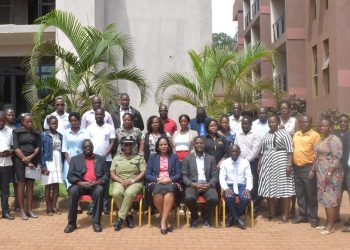
More than 230 Climate Action Champions (CACs) have also been trained, including 100 by RICE West Nile, 50 by SPACE, 50 by Friends of Zoka and 30 by ACEMP in Karamoja.
Additionally, 22,102 citizens, including 12,973 women, 9,129 men and 342 persons with disabilities, have been engaged through structured civic platforms.
The project also supported the dissemination of the Madi Okollo District charcoal ordinance and oriented 224 political and technical leaders on environmental regulatory frameworks.
District Natural Resource Committee coordination meetings have been revived in Amudat, Adjumani, Nakapiripirit, Obongi, Zombo and Madi Okollo, improving collaboration among environmental stakeholders.
In another milestone, communities voluntarily began vacating wetland buffer zones in Alibabibito, Rupo and Oyakamami to protect water sources. At least 26 of the 76 residents settled at Alibabito landing site have already relocated following compliance monitoring visits.
In Obongi District, District Natural Resources Officer Onzimai Henry Pastore said strengthened collaboration and enforcement had reduced encroachment and deforestation in protected reserves.
“We have realised some encroachment and deforestation in reserves has reduced after we confiscated the tools of those who were encroaching,” he said.
The district has also introduced quarterly compliance monitoring on waste management, plastic disposal and related environmental concerns.
The project’s “software approach” — centred on awareness creation, policy advocacy, capacity building and linkages to livelihoods — is also delivering economic benefits.
Mwamba Kassim, a Climate Action Champion and Chairperson of Ngoma Saving Group in Waka Parish, said training by RICE West Nile inspired him to mobilise youths into eco-friendly enterprises.
After forming a youth group of 10 members in February 2026, they began saving money, accessed funding and ventured into climate-smart agriculture.
“We harvested seven boxes of tomatoes and earned about Shs2.45 million. We refunded what we borrowed and opened maize plantations on eight acres to help refugees with food after the UNHCR ration was cut,” Kassim said.
The group has since expanded to 80 acres of maize plantation and constructed a local bridge to reduce flooding. Kassim credited the project with steering idle youths away from charcoal burning and illegal fishing.
Similarly, Abdul Rahman, a former charcoal burner since 2019, joined the Ngoma group, bought three goats, planted maize and started poultry keeping. He said the Climate Action Champions inspired him to embrace sustainable livelihoods, which have since improved his financial stability.
In Zombo District, Abeditho Adrogy, who works with SPACE, said he has planted 1,200 coffee trees, 130 pine trees and several eucalyptus trees.
“We sensitise farmers to stop bush burning. We teach mulching and digging trenches to control rainwater. I got all this knowledge from SPACE under RICE West Nile,” Adrogy said.
Local leaders have applauded the project for transforming communities.
Adaku John, the outgoing LC III Chairperson of Uleppi Sub-county in Madi Okollo District, said residents had embraced climate-smart farming, poultry keeping and goat rearing.
“More than 26 households have so far moved from the buffer zone and fish production has even increased,” he noted.
Senior Assistant Chief Administrative Officer of Obongi District, Ulema Mudashir Noah, said buffer zones in areas such as Palorinya are now protected while reserved forests are being better managed.
However, he cited challenges including inadequate waste management infrastructure and transport constraints.
Veronica Wairimu, the Communication Officer at RICE West Nile, emphasised that the project mainly focuses on awareness creation and empowering communities.
“It is more of a software project that increases awareness. We have trained over 230 climate community champions and created linkages for youths to livelihood opportunities,” she said.
The project is also conducting research with Muni University, including a study on Lake Opeta in Karamoja, while linking beneficiaries to government programmes such as the Parish Development Model (PDM), irrigation support initiatives and seedling supply schemes.
Despite the progress registered so far, stakeholders have called for increased support in enforcing environmental regulations, provision of seedlings, maize hullers, irrigation equipment and improved market access to sustain and scale up the gains.
As the project enters its third year, officials and communities remain optimistic that continued collaboration will protect the environment while improving livelihoods for thousands of people across West Nile and Karamoja.