

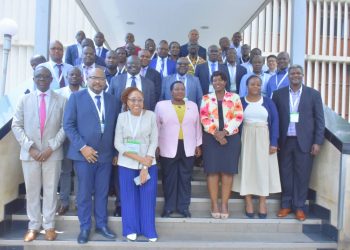
Refined headline: School-Based Diabetes Program Sparks New Hope for Prevention in Western Uganda How the World Diabetes Foundation’s School Program Is Transforming Diabetes Prevention By Kitts D. Mabonga Awareness of diabetes and its complications remains critically low in Uganda, with an estimated 75% of people living with the condition undiagnosed. This gap has made prevention and early detection an urgent public health priority. In response, the World Diabetes Foundation (WDF) launched a school-based diabetes prevention program targeting Mbarara District and Isingiro District, home to a combined population of about 900,000 people. The initiative focuses on primary prevention, particularly tackling obesity and reducing the risk of diabetes through education and lifestyle changes. A School-Centered Approach The program places schools at the heart of community transformation. Its key strategy is promoting healthy lifestyles while equipping students, teachers, and parents with knowledge about diabetes prevention. To ensure effectiveness, a project monitoring group was established to oversee implementation, develop educational materials, and guide health promotion efforts. A baseline Knowledge, Attitudes, and Practices (KAP) survey was also conducted to measure impact. Key Interventions The initiative rolled out several practical and community-driven activities: Training and mentorship: Students aged 10–18, along with teachers and parents, were trained as peer educators through tailored one-day camps. Physical activity promotion: Schools received sports equipment and were encouraged to develop playgrounds to keep learners active. School food gardens: Gardens were introduced to promote healthy eating, supply fresh produce for school meals, and encourage better nutrition practices within communities. Weekly health education: Trained educators conducted regular sessions on diabetes awareness and prevention. Health camps and screenings: Six large health camps were organized, offering free medical check-ups and glucose testing. Individuals diagnosed with diabetes were referred to Mbarara Community Hospital for further care. Mass media outreach: Educational TV and radio programs were broadcast to raise awareness about diabetes risk factors and healthy living. Measurable Impact By the end of the project, the results reflected significant progress: 998 students, 400 parents, and 392 teachers trained as peer educators Over 19,900 students sensitized on diabetes prevention and management 1,188 teachers and 3,506 parents reached with awareness messages 100 school food gardens established Approximately 750,000 people reached through media campaigns Multiple reports and school competitions conducted to sustain engagement Most notably, follow-up KAP surveys showed substantial improvements in diabetes knowledge, increased consumption of fruits and vegetables, and higher levels of daily physical activity. A Model for the Future The program demonstrates how schools can serve as powerful platforms for public health interventions. By combining education, community involvement, and practical lifestyle changes, the initiative has not only raised awareness but also inspired long-term behavioral change. As Uganda continues to grapple with rising non-communicable diseases, this model offers a scalable and sustainable pathway to prevention—starting with the youngest members of society

Refined headline: School-Based Diabetes Program Sparks New Hope for Prevention in Western Uganda How the World Diabetes Foundation’s School Program Is Transforming Diabetes Prevention By Kitts D. Mabonga Awareness of diabetes and its complications remains critically low in Uganda, with an estimated 75% of people living with the condition undiagnosed. This gap has made prevention and early detection an urgent public health priority. In response, the World Diabetes Foundation (WDF) launched a school-based diabetes prevention program targeting Mbarara District and Isingiro District, home to a combined population of about 900,000 people. The initiative focuses on primary prevention, particularly tackling obesity and reducing the risk of diabetes through education and lifestyle changes. A School-Centered Approach The program places schools at the heart of community transformation. Its key strategy is promoting healthy lifestyles while equipping students, teachers, and parents with knowledge about diabetes prevention. To ensure effectiveness, a project monitoring group was established to oversee implementation, develop educational materials, and guide health promotion efforts. A baseline Knowledge, Attitudes, and Practices (KAP) survey was also conducted to measure impact. Key Interventions The initiative rolled out several practical and community-driven activities: Training and mentorship: Students aged 10–18, along with teachers and parents, were trained as peer educators through tailored one-day camps. Physical activity promotion: Schools received sports equipment and were encouraged to develop playgrounds to keep learners active. School food gardens: Gardens were introduced to promote healthy eating, supply fresh produce for school meals, and encourage better nutrition practices within communities. Weekly health education: Trained educators conducted regular sessions on diabetes awareness and prevention. Health camps and screenings: Six large health camps were organized, offering free medical check-ups and glucose testing. Individuals diagnosed with diabetes were referred to Mbarara Community Hospital for further care. Mass media outreach: Educational TV and radio programs were broadcast to raise awareness about diabetes risk factors and healthy living. Measurable Impact By the end of the project, the results reflected significant progress: 998 students, 400 parents, and 392 teachers trained as peer educators Over 19,900 students sensitized on diabetes prevention and management 1,188 teachers and 3,506 parents reached with awareness messages 100 school food gardens established Approximately 750,000 people reached through media campaigns Multiple reports and school competitions conducted to sustain engagement Most notably, follow-up KAP surveys showed substantial improvements in diabetes knowledge, increased consumption of fruits and vegetables, and higher levels of daily physical activity. A Model for the Future The program demonstrates how schools can serve as powerful platforms for public health interventions. By combining education, community involvement, and practical lifestyle changes, the initiative has not only raised awareness but also inspired long-term behavioral change. As Uganda continues to grapple with rising non-communicable diseases, this model offers a scalable and sustainable pathway to prevention—starting with the youngest members of society

Why Kawempe RCC Kagenyi Withdrew Orders On Katanga Land
Youth break the silence on puberty, periods, and violence in a bold community awakening
GROW Project:  A catalytic initiative designed to unlock the full potential of women entrepreneurs 
Seeta University Secures National Accreditation to Offer Bachelor of Pharmacy Programme
Pool Cranes fired up after tough loss to hosts in South Africa
Ministries sound alarm over budget Shortfalls as service delivery falters
South Africa’s opposition leader gets five year prison sentence, after an eight year legal battle 
Man apprehended in connection with defilement of an eight-year-old girl
VP Alupo passes-out over 1200 prisons officers, urges responsible lifestyles
The phone that stole a surgeon’s life
Trial of Ggaba Child Murder Suspect Adjourned Over ill Health Concerns

Tag: cross boarder

Refined headline: School-Based Diabetes Program Sparks New Hope for Prevention in Western Uganda How the World Diabetes Foundation’s School Program Is Transforming Diabetes Prevention By Kitts D. Mabonga Awareness of diabetes and its complications remains critically low in Uganda, with an estimated 75% of people living with the condition undiagnosed. This gap has made prevention and early detection an urgent public health priority. In response, the World Diabetes Foundation (WDF) launched a school-based diabetes prevention program targeting Mbarara District and Isingiro District, home to a combined population of about 900,000 people. The initiative focuses on primary prevention, particularly tackling obesity and reducing the risk of diabetes through education and lifestyle changes. A School-Centered Approach The program places schools at the heart of community transformation. Its key strategy is promoting healthy lifestyles while equipping students, teachers, and parents with knowledge about diabetes prevention. To ensure effectiveness, a project monitoring group was established to oversee implementation, develop educational materials, and guide health promotion efforts. A baseline Knowledge, Attitudes, and Practices (KAP) survey was also conducted to measure impact. Key Interventions The initiative rolled out several practical and community-driven activities: Training and mentorship: Students aged 10–18, along with teachers and parents, were trained as peer educators through tailored one-day camps. Physical activity promotion: Schools received sports equipment and were encouraged to develop playgrounds to keep learners active. School food gardens: Gardens were introduced to promote healthy eating, supply fresh produce for school meals, and encourage better nutrition practices within communities. Weekly health education: Trained educators conducted regular sessions on diabetes awareness and prevention. Health camps and screenings: Six large health camps were organized, offering free medical check-ups and glucose testing. Individuals diagnosed with diabetes were referred to Mbarara Community Hospital for further care. Mass media outreach: Educational TV and radio programs were broadcast to raise awareness about diabetes risk factors and healthy living. Measurable Impact By the end of the project, the results reflected significant progress: 998 students, 400 parents, and 392 teachers trained as peer educators Over 19,900 students sensitized on diabetes prevention and management 1,188 teachers and 3,506 parents reached with awareness messages 100 school food gardens established Approximately 750,000 people reached through media campaigns Multiple reports and school competitions conducted to sustain engagement Most notably, follow-up KAP surveys showed substantial improvements in diabetes knowledge, increased consumption of fruits and vegetables, and higher levels of daily physical activity. A Model for the Future The program demonstrates how schools can serve as powerful platforms for public health interventions. By combining education, community involvement, and practical lifestyle changes, the initiative has not only raised awareness but also inspired long-term behavioral change. As Uganda continues to grapple with rising non-communicable diseases, this model offers a scalable and sustainable pathway to prevention—starting with the youngest members of society

  • Trending
  • Comments
  • Latest
Refined headline: School-Based Diabetes Program Sparks New Hope for Prevention in Western Uganda How the World Diabetes Foundation’s School Program Is Transforming Diabetes Prevention By Kitts D. Mabonga Awareness of diabetes and its complications remains critically low in Uganda, with an estimated 75% of people living with the condition undiagnosed. This gap has made prevention and early detection an urgent public health priority. In response, the World Diabetes Foundation (WDF) launched a school-based diabetes prevention program targeting Mbarara District and Isingiro District, home to a combined population of about 900,000 people. The initiative focuses on primary prevention, particularly tackling obesity and reducing the risk of diabetes through education and lifestyle changes. A School-Centered Approach The program places schools at the heart of community transformation. Its key strategy is promoting healthy lifestyles while equipping students, teachers, and parents with knowledge about diabetes prevention. To ensure effectiveness, a project monitoring group was established to oversee implementation, develop educational materials, and guide health promotion efforts. A baseline Knowledge, Attitudes, and Practices (KAP) survey was also conducted to measure impact. Key Interventions The initiative rolled out several practical and community-driven activities: Training and mentorship: Students aged 10–18, along with teachers and parents, were trained as peer educators through tailored one-day camps. Physical activity promotion: Schools received sports equipment and were encouraged to develop playgrounds to keep learners active. School food gardens: Gardens were introduced to promote healthy eating, supply fresh produce for school meals, and encourage better nutrition practices within communities. Weekly health education: Trained educators conducted regular sessions on diabetes awareness and prevention. Health camps and screenings: Six large health camps were organized, offering free medical check-ups and glucose testing. Individuals diagnosed with diabetes were referred to Mbarara Community Hospital for further care. Mass media outreach: Educational TV and radio programs were broadcast to raise awareness about diabetes risk factors and healthy living. Measurable Impact By the end of the project, the results reflected significant progress: 998 students, 400 parents, and 392 teachers trained as peer educators Over 19,900 students sensitized on diabetes prevention and management 1,188 teachers and 3,506 parents reached with awareness messages 100 school food gardens established Approximately 750,000 people reached through media campaigns Multiple reports and school competitions conducted to sustain engagement Most notably, follow-up KAP surveys showed substantial improvements in diabetes knowledge, increased consumption of fruits and vegetables, and higher levels of daily physical activity. A Model for the Future The program demonstrates how schools can serve as powerful platforms for public health interventions. By combining education, community involvement, and practical lifestyle changes, the initiative has not only raised awareness but also inspired long-term behavioral change. As Uganda continues to grapple with rising non-communicable diseases, this model offers a scalable and sustainable pathway to prevention—starting with the youngest members of society

Refined headline: School-Based Diabetes Program Sparks New Hope for Prevention in Western Uganda How the World Diabetes Foundation’s School Program Is Transforming Diabetes Prevention By Kitts D. Mabonga Awareness of diabetes and its complications remains critically low in Uganda, with an estimated 75% of people living with the condition undiagnosed. This gap has made prevention and early detection an urgent public health priority. In response, the World Diabetes Foundation (WDF) launched a school-based diabetes prevention program targeting Mbarara District and Isingiro District, home to a combined population of about 900,000 people. The initiative focuses on primary prevention, particularly tackling obesity and reducing the risk of diabetes through education and lifestyle changes. A School-Centered Approach The program places schools at the heart of community transformation. Its key strategy is promoting healthy lifestyles while equipping students, teachers, and parents with knowledge about diabetes prevention. To ensure effectiveness, a project monitoring group was established to oversee implementation, develop educational materials, and guide health promotion efforts. A baseline Knowledge, Attitudes, and Practices (KAP) survey was also conducted to measure impact. Key Interventions The initiative rolled out several practical and community-driven activities: Training and mentorship: Students aged 10–18, along with teachers and parents, were trained as peer educators through tailored one-day camps. Physical activity promotion: Schools received sports equipment and were encouraged to develop playgrounds to keep learners active. School food gardens: Gardens were introduced to promote healthy eating, supply fresh produce for school meals, and encourage better nutrition practices within communities. Weekly health education: Trained educators conducted regular sessions on diabetes awareness and prevention. Health camps and screenings: Six large health camps were organized, offering free medical check-ups and glucose testing. Individuals diagnosed with diabetes were referred to Mbarara Community Hospital for further care. Mass media outreach: Educational TV and radio programs were broadcast to raise awareness about diabetes risk factors and healthy living. Measurable Impact By the end of the project, the results reflected significant progress: 998 students, 400 parents, and 392 teachers trained as peer educators Over 19,900 students sensitized on diabetes prevention and management 1,188 teachers and 3,506 parents reached with awareness messages 100 school food gardens established Approximately 750,000 people reached through media campaigns Multiple reports and school competitions conducted to sustain engagement Most notably, follow-up KAP surveys showed substantial improvements in diabetes knowledge, increased consumption of fruits and vegetables, and higher levels of daily physical activity. A Model for the Future The program demonstrates how schools can serve as powerful platforms for public health interventions. By combining education, community involvement, and practical lifestyle changes, the initiative has not only raised awareness but also inspired long-term behavioral change. As Uganda continues to grapple with rising non-communicable diseases, this model offers a scalable and sustainable pathway to prevention—starting with the youngest members of society

Why Kawempe RCC Kagenyi Withdrew Orders On Katanga Land
Youth break the silence on puberty, periods, and violence in a bold community awakening
GROW Project:  A catalytic initiative designed to unlock the full potential of women entrepreneurs 

Welcome Back!

Login to your account below

Retrieve your password

Please enter your username or email address to reset your password.