



TECHNOLOGY — The Government of Uganda has reiterated its commitment to strengthening the regulatory framework and policies that promote digital business growth and innovation.
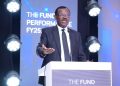
Speaking at the Digital Africa Summit held at the Sheraton Hotel in Kampala, the State Minister for Information and Communications Technology (ICT), Hon. Godfrey Baluku Kabbyanga, emphasized that digital transformation remains a central pillar of Uganda’s economic agenda.
“The government is focused on creating a conducive environment for innovation and digital business,” Minister Kabbyanga said, noting that the state will continue working closely with regulators and service providers such as MTN Uganda and Airtel Uganda to expand the country’s digital infrastructure.
Regulators and Industry Leaders Champion Inclusive Growth
Uganda Communications Commission (UCC) Executive Director, Hon. Nyombi Thembo, highlighted Uganda’s remarkable progress in digital innovation, with over 40 million people currently subscribed to various mobile networks.
He explained that UCC’s regulatory approach has evolved to support innovation:
“We’ve shifted from traditional prescriptive regulation to a facilitative model that encourages growth and inclusivity,” he said.
MTN Uganda CEO, Sylvia Mulinge, underscored the importance of continued collaboration and dialogue on the continent’s digital future.
“Our shared vision for a digital Uganda and Africa depends on ongoing engagement. While we’ve made strides in lowering connectivity costs, sustainability requires us to tackle deeper structural challenges,” Mulinge said.
GSMA Report: Digital Reforms Could Add UGX 14.6 Trillion to GDP
A new GSMA report, launched during the summit, projects that with the right digital policy reforms, Uganda could connect 4 million more citizens to the internet, create 1.79 million new jobs, and generate UGX 14.6 trillion in additional economic value by 2030.
The report, titled “Driving Digital Transformation of the Economy in Uganda – Opportunities, Policy Reforms and the Role of Mobile,” outlines how collaborative policy action can accelerate inclusive digital growth in line with the National Development Plan IV (NDP IV) and the Digital Uganda Vision 2040 (DUV).
Digital Transformation as a Driver of Prosperity
Uganda’s mobile sector continues to play a transformative role, connecting people to education, healthcare, financial services, and entrepreneurial opportunities. The ICT industry currently contributes 9% to national GDP, employs over 2.3 million Ugandans, and is growing at 14.8% annually.
According to GSMA, Uganda has achieved 96% 4G population coverage and has 11.46 million unique mobile internet users, representing 22% of the total population and 48% of adults. Despite this progress, three in four Ugandans within 4G coverage still do not use mobile broadband, mainly due to high smartphone costs, unreliable energy, and limited digital skills.
Five Key Policy Priorities for a Digital Future
To unlock the next phase of Uganda’s digital transformation, GSMA recommends five priority policy reforms:
Create a stable investment environment – Extend telecom license coverage obligations from 5 to 20 years, and recognize telecom infrastructure as Critical National Infrastructure.
Enhance digital affordability – Remove the 12% excise duty on data, align mobile money taxes with other electronic transactions, and exempt 4G/5G equipment from VAT.
Improve smartphone affordability and digital skills – Eliminate taxes on entry-level smartphones and accelerate the implementation of the Digital Skills Framework.
Strengthen energy and infrastructure coordination – Develop a joint ICT-Energy Master Plan to ensure reliable and renewable power for digital infrastructure.
Modernize digital regulation – Update frameworks on AI, cloud services, data localization, and cross-border data transfer to align with global best practices.
Delivering Shared Prosperity
If implemented, GSMA estimates these reforms could:
Expand 4G coverage from 96% to 99% with just USD 10 million in investment, Connect 4 million more Ugandans, reaching 19 million total users (32% of the population), Create 1.79 million jobs and add UGX 14.6 trillion in economic value, Generate UGX 2.1 trillion in new tax revenue and UGX 3.1 trillion in additional fiscal gains through increased digital activity.
Angela Wamola, GSMA’s Head of Africa, emphasized that Uganda’s digital transformation must remain people-centred:
“Digital transformation is about people—empowering every citizen, entrepreneur, and community to thrive in a connected economy. By making access more affordable and policies more predictable, Uganda can ensure that digital progress benefits everyone.”
About GSMA
The GSMA is a global organization that unites the mobile ecosystem to foster innovation and positive business environments. Representing mobile operators and related industries worldwide, GSMA advances policy, drives technological innovation, and organizes major industry events such as MWC and M360. Its mission is to unlock the power of connectivity so that people, industries, and societies can thrive.