




KAMPALA, Uganda — The Government of Uganda will convene the 4th Annual National Labour Convention and Expo at the Kampala Serena Hotel from April 15–16, 2026, bringing together policymakers, employers, labour unions, development partners, and civil society to address the country’s evolving labour market challenges.
Organised by the Ministry of Gender, Labour and Social Development, the convention forms part of the national Labour Week activities commemorating International Workers’ Day. The event has become one of Uganda’s most influential platforms for shaping labour policy and strengthening dialogue on decent work and workforce productivity.l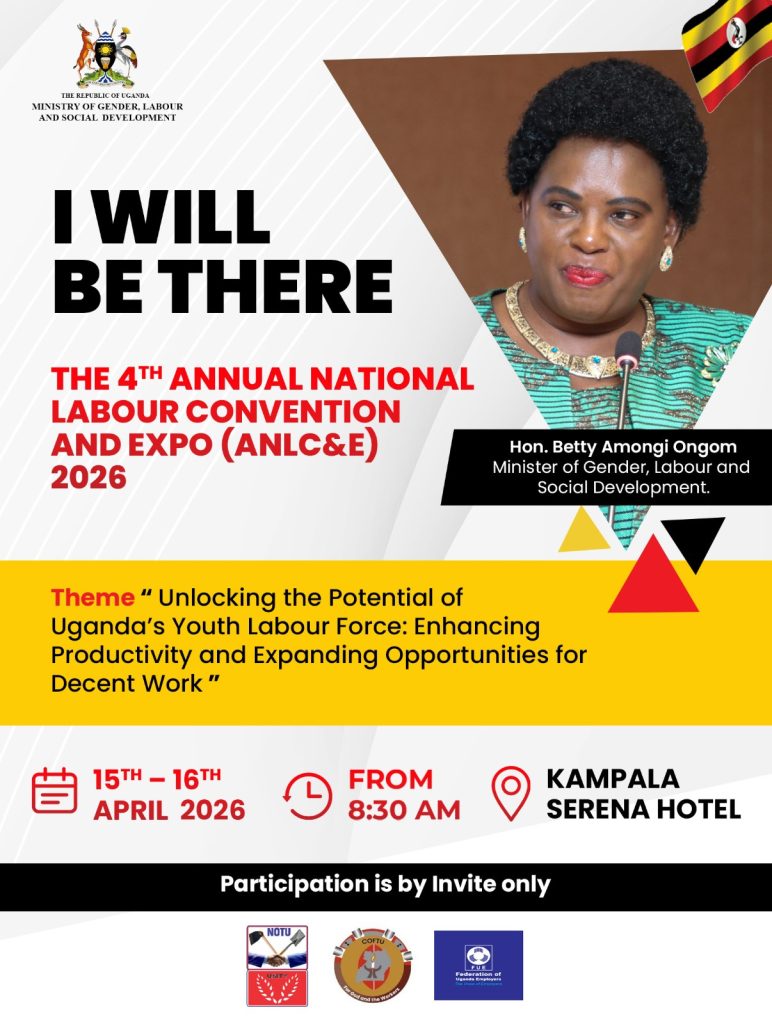 The 2026 convention comes at a time when Uganda faces mounting labour market pressures driven by rapid population growth and a youthful demographic structure. According to the Uganda Bureau of Statistics 2024 National Population and Housing Census, Uganda’s population has reached 45.9 million, growing at an average annual rate of 2.9% since 2014.
The census indicates that 57.4% of Ugandans are of working age (15 years and above), while more than 75% of the population is below the age of 30, making Uganda one of the youngest countries in the world.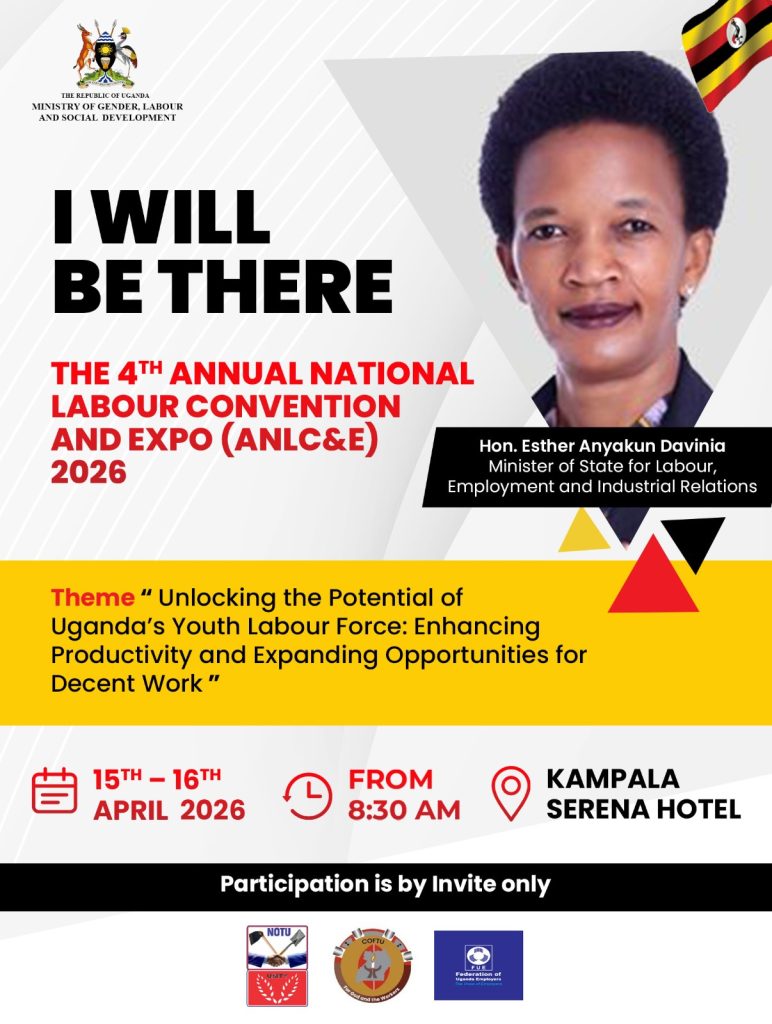 Despite this demographic advantage, employment opportunities remain constrained. Current estimates place the employment-to-population ratio between 38% and 43%, while youth unemployment is about 13.3%. More than 80% of Uganda’s labour force works in the informal sector, where jobs are often insecure and offer limited skills development or labour protections. Experts say these trends highlight the urgency of policies that can convert Uganda’s demographic growth into economic opportunity.

This year’s convention will run under the theme, “Unlocking the Potential of Uganda’s Youth Labour Force: Advancing Productivity and Expanding Opportunities for Decent Work.” The forum will focus on expanding skills development and work-based learning, increasing technology adoption in enterprises, strengthening labour market institutions, promoting the formalisation of informal sector employment, and improving access to decent and productive work for young people.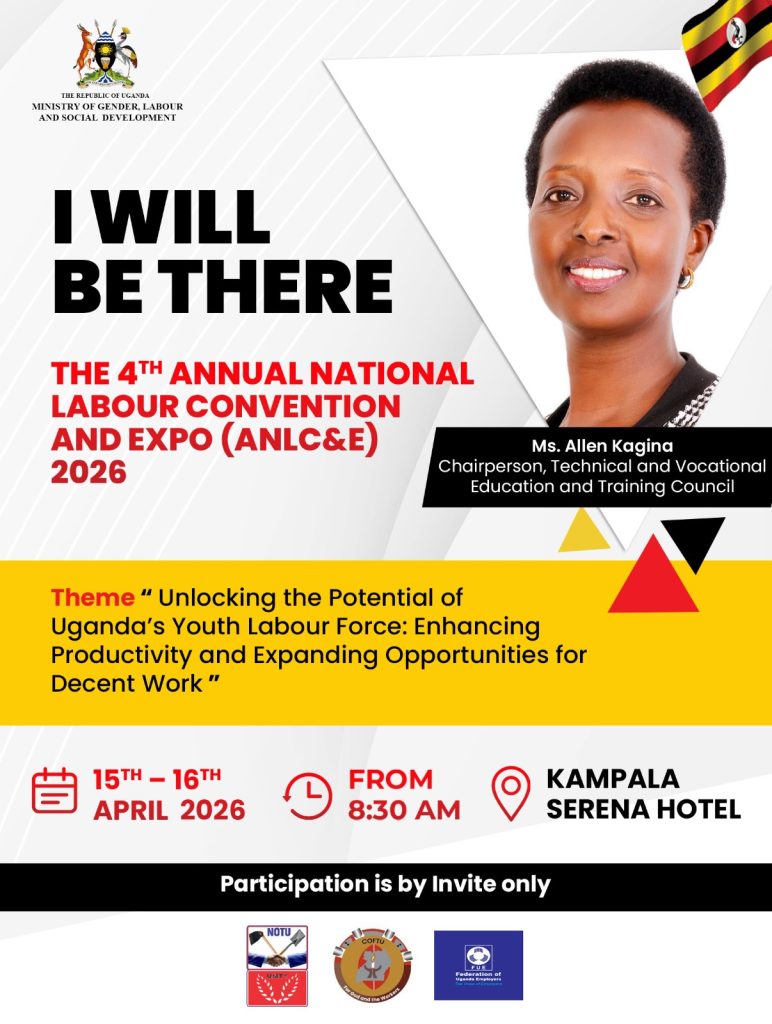 Evidence from the International Labour Organization suggests that productivity gains linked to skills training, technological adoption, and enterprise upgrading are strongly associated with higher wages, improved job quality, and sustainable job creation.
Since its launch in 2023, the Annual National Labour Convention and Expo has played a significant role in shaping dialogue around employment creation and labour protections. The first three conventions helped strengthen national conversations on decent work, informed policy reforms, and expanded partnerships between government agencies, employers, workers’ organisations, and development partners.
Officials say the 2026 convention aims to consolidate these achievements by generating actionable commitments and showcasing scalable solutions that improve labour productivity and employment outcomes.
The convention is aligned with Uganda’s long-term development frameworks, including Uganda Vision 2040 and the National Development Plan IV. It also supports the government’s Tenfold Growth Strategy, which aims to accelerate economic transformation and expand employment opportunities.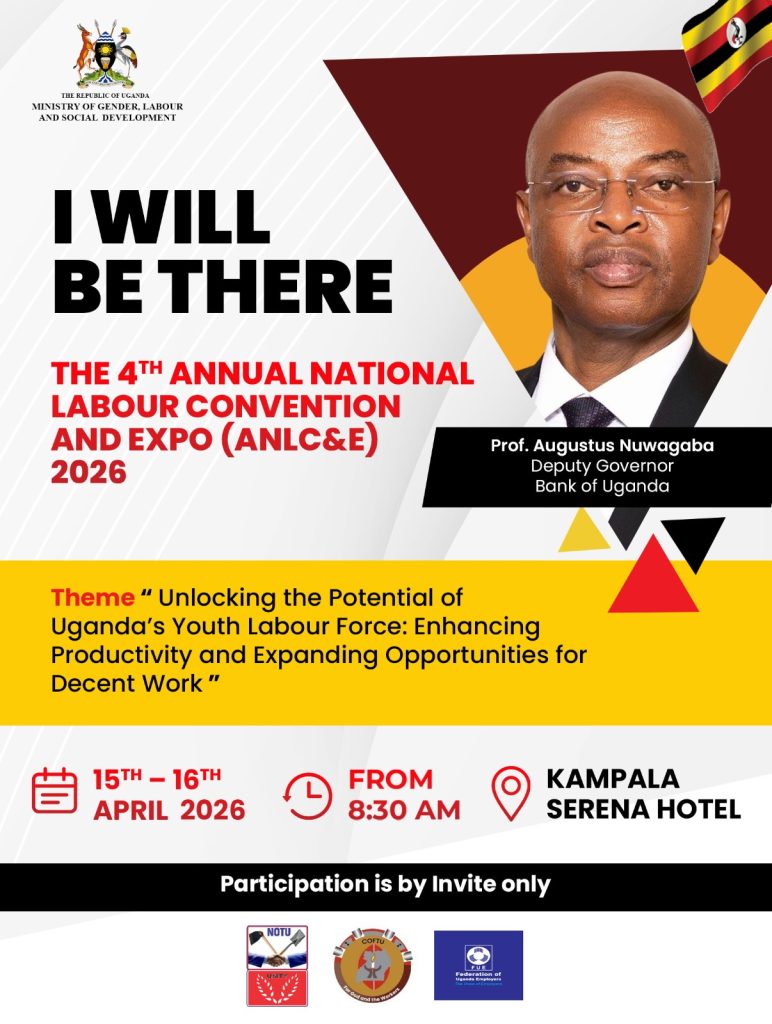 By bringing together stakeholders from government, industry, academia, and civil society, organisers say the convention will help strengthen partnerships needed to transform Uganda’s youthful workforce into a driver of inclusive economic growth.
Beyond policy dialogue, the expo component of the convention will showcase innovative labour-market solutions, including youth entrepreneurship initiatives, skills training programmes, and digital employment platforms.
Officials say the gathering is expected to produce practical commitments and coordinated interventions aimed at improving labour productivity, expanding decent work opportunities, and enhancing economic security for millions of Ugandans.