






KAMPALA, Uganda — Uganda’s Parliament has ordered the head of the state-owned Uganda Railways Corporation (URC) to record a statement with parliamentary investigators over the disappearance of 394 railway wagons worth an estimated US$59 million, in a case that lawmakers say could have criminal and regional diplomatic implications.
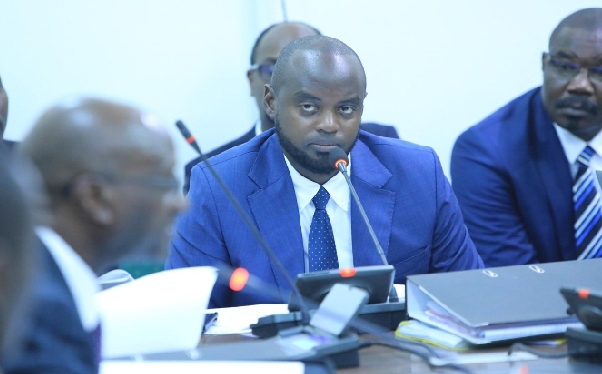
The directive was issued by Parliament’s Committee on Physical Infrastructure after members rejected explanations from URC Managing Director Benon Kajuna over the whereabouts of the missing wagons, which include assets belonging to both Uganda and neighbouring Kenya.
Committee chairperson Mwine Mpaka instructed Kajuna to provide a statement to the Criminal Investigations Directorate (CID) attached to Parliament and warned that the committee would escalate its inquiry if satisfactory evidence on the missing assets was not produced within a week.
“We have assumptions that some wagons are in Kenya and others may have been sold in Uganda, but these remain assumptions because no one has produced evidence,” Mpaka told the committee.
The investigation follows findings in the Auditor General’s December 2025 report, which identified major weaknesses in the management and tracking of railway assets.
According to Auditor General Edward Akol, a physical verification exercise conducted in November 2024 found that only 18 of 131 missing Uganda Railways wagons had been located, leaving 113 unaccounted for. The audit also found that all 281 wagons belonging to Kenya Railways Corporation that had been entrusted to Uganda’s railway system remained missing.
Although 412 wagons were initially reported missing, the recovery of 18 reduced the number of unaccounted-for wagons to 394, representing an estimated loss of UGX220.8 billion (about US$59.1 million).
Lawmakers said the disappearance of Kenyan railway assets could strain relations between the two East African neighbours and undermine regional transport cooperation.
Budyebo County MP Ssebbugga Kimeze said the loss of railway property belonging to Kenya risked damaging Uganda’s reputation.
“Property belonging to a neighbouring country disappears while under our custody. This can easily become a diplomatic problem,” he said.
Other legislators questioned how hundreds of railway wagons could disappear without adequate records documenting their movements or locations.
Kole North MP Samuel Opio said URC had failed to provide serial numbers, movement records or other documentation that could help establish what had happened to the missing assets.
“We do not know whether they were stolen, sold or taken to another country. What we know is that they are no longer under Uganda Railways Corporation’s control,” Opio said.
Kajuna defended the corporation, saying efforts to trace the wagons were ongoing through joint verification committees involving officials from Uganda and Kenya.
He said the two governments had exchanged documentation and were continuing bilateral discussions aimed at resolving the matter.
However, lawmakers said correspondence presented to the committee did not provide evidence that the wagons had been recovered or confirm their whereabouts.
The case raises fresh concerns about accountability in Uganda’s management of public assets and could attract scrutiny under the country’s public finance and anti-corruption laws if investigators establish evidence of negligence, abuse of office or financial loss.
The controversy comes as Uganda seeks to expand and modernise its railway network as part of wider East African regional transport integration, with the government promoting rail freight to lower transport costs and support future infrastructure projects, including the planned Standard Gauge Railway.


Coffee farmers killed after Shs20,000 payment dispute,casual worker arrested
A disagreement over a 20,000-shilling payment for picking coffee has ended in the death of a prominent farmer in Kiboga...