


Ugandan officials have criticized the manner in which the Africa Centres for Disease Control and Prevention (Africa CDC) has communicated Ebola figures, arguing that combining Uganda’s cases with those from the Democratic Republic of Congo creates a misleading picture of the outbreak in the country.
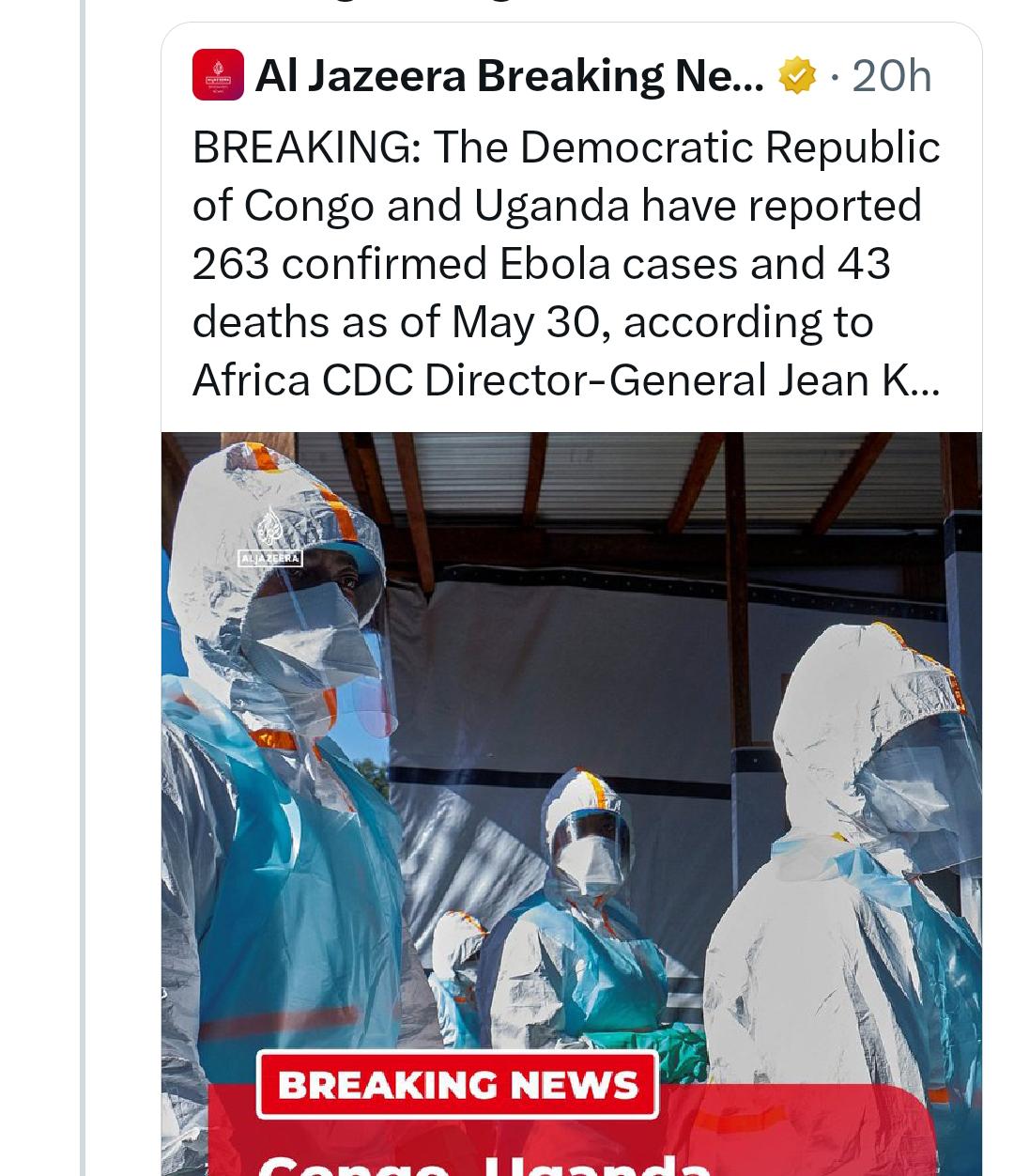
The criticism follows reports citing Africa CDC data that stated Uganda and the Democratic Republic of Congo had together recorded 263 confirmed Ebola cases and 43 deaths as of May 30.
The issue was first raised publicly by Alan Kasujja, the Managing Director of the Uganda Media Centre, who accused Africa CDC of unfairly framing Uganda’s outbreak.
“We are tired of this malicious framing of what’s going on with Ebola,” Kasujja wrote on X, responding to a report that combined figures from the two countries.
Kasujja argued that Uganda’s government has worked closely with Africa CDC throughout the response and deserved reporting that accurately reflected the country’s situation.
Foreign Affairs Minister-designate Adonia Ayebare also criticized the reporting, saying it failed to distinguish between two sovereign states facing different public health situations.
“Uganda is a sovereign country; don’t bundle us with other countries,” Ayebare wrote on X. He noted that Uganda had reported only a limited number of Ebola cases, all of whom were receiving treatment, while contacts had been identified and traced by health authorities.
The comments reflect growing concern among Ugandan officials and communicators that combining national statistics could exaggerate the scale of Uganda’s outbreak and create unnecessary alarm among travelers, investors and the international community.
Health authorities have repeatedly maintained that Uganda’s Ebola response remains under control, with surveillance, testing, contact tracing and treatment efforts continuing in affected areas.
Officials argue that while regional disease surveillance is important, public reporting should clearly separate country-specific data to avoid confusion and ensure accuracy.
The debate comes as Uganda intensifies measures to contain the outbreak while reassuring citizens and international partners that the country’s response systems remain fully operational.
Uganda has extensive experience managing Ebola outbreaks and has often been cited as one of Africa’s strongest responders to public health emergencies. Authorities say accurate reporting is essential not only for public awareness but also for maintaining confidence in the country’s ability to contain the disease.