


Uganda has taken a significant step forward in forensic science with the introduction of rapid DNA testing technology designed to strengthen criminal investigations and disaster victim identification.
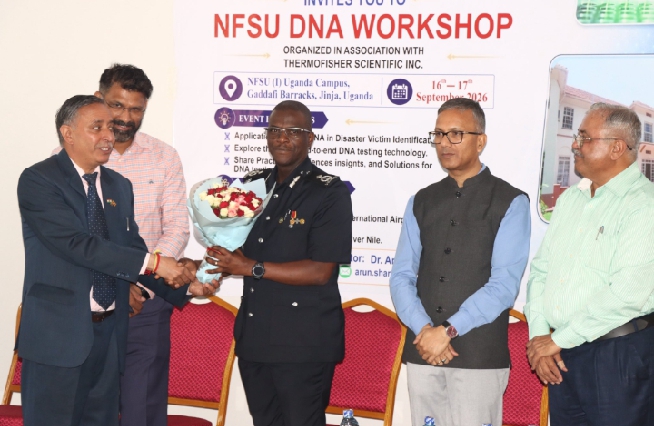
The technology was unveiled during pioneer graduation activities at the National Forensic Sciences University (India), Uganda Campus, in partnership with Thermo Fisher Scientific HID.
The university hosted a two-day Rapid DNA Workshop from September 16–17, described as the first of its kind in Africa. The technology enables DNA results to be generated in real time, potentially accelerating the identification of suspects and victims and supporting time-sensitive investigations.
The development comes as Uganda seeks to expand the use of scientific evidence in criminal justice, particularly in cases where investigators cannot rely on credible eyewitness testimony.
Air Commodore K.R. Thaakar, Director of the National Forensic Sciences University, said advances in forensic science are critical to establishing the truth through scientific evidence.
“DNA has become a global standard. Whether it is paternity disputes, sexual assault cases, or murder investigations, in every situation we are looking for the truth,” Thaakar said.
Assistant Commissioner of Police Andrew Mubiru, Director of Forensic Science in the Uganda Police Force, said DNA evidence can provide investigators with crucial leads when eyewitness accounts are unavailable.
“In many instances, an offence can be committed without credible eyewitnesses. In that case, you have to rely on scientific techniques. DNA analysis is key in linking suspects to crime scenes, especially in cases of rape, defilement, and murder,” Mubiru said.
He said the application of advanced forensic techniques could strengthen criminal prosecutions and support the administration of justice in courts.
The training also brought together participants beyond Uganda, including police officers and members of the Uganda Peoples’ Defence Forces (UPDF), as well as participants from other East African countries.
In addition to the Rapid DNA workshop, the university organised a Cyber Security and Digital Forensics competition dubbed “Capture the Flag,” showcasing students’ ability to detect and respond to modern digital threats.
Experts at the workshop also delivered presentations on statistical probability, DNA mixture interpretation and the application of advanced forensic software.
The initiative marks another step toward expanding forensic expertise and technology in Uganda and the wider East African region, with scientific evidence playing an increasingly important role in criminal investigations and the justice system.

Youth urged to join corruption fight as government pushes economic empowerment
The Senior Presidential Advisor on Mobilisation in the Office of the President, Moses Byaruhanga, has urged young people to actively...