



KAMPALA, Uganda — Uganda’s escalating standoff over the deployment and facilitation of medical interns has taken a political turn, with the opposition Forum for Democratic Change (FDC) warning that patients could ultimately bear the cost if the government fails to reach an agreement with the Federation of Uganda Medical Interns.
The FDC has urged the Ministry of Health to withdraw its 14 August deadline ordering medical interns to report to their designated hospitals or risk forfeiting their internship, arguing that forcing unpaid and unsupported interns into public hospitals could put both health workers and patients at risk.
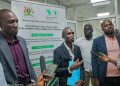
Speaking at the party’s weekly media briefing on Monday, 10 August, FDC Vice Chairperson Robert Centenary Franco said the government should not compel medical interns to report for duty without first addressing their demands for facilitation and allowances.
“Sending interns forcefully to run wards without pay, without support, and without guarantee that they will be facilitated is not deploying them to save lives,” Franco said. “It is putting both patients and medical interns at risk.”
The dispute comes at a critical point for Uganda’s health system, where medical interns occupy an important position between university training and full professional registration. Internship is a mandatory period of supervised clinical practice for medical graduates before they can be fully registered to practise independently.
Over the years, interns have become an integral part of the public health system, working alongside qualified doctors in wards, theatres, emergency departments and maternity units. Their role has become particularly significant in a country where the number of health workers remains far below the population’s needs.
Franco said the shortage of doctors makes medical interns an essential part of the workforce in government hospitals.
He cited Uganda’s doctor-to-patient ratio as standing at about one doctor for every 24,000 patients, describing the gap as a major weakness in the country’s health system.
“ If you walk into any government hospital today, you will find that it is the medical interns who are on the wards, in the theatres and in maternity units at 2am,” he said.
The government’s position, however, is rooted in a broader attempt to reform health-professional education and internship. Authorities have argued that internship should increasingly be treated as part of professional training rather than conventional employment, as the number of graduates entering the health system grows and the government faces increasing financial pressure.
The proposed reforms have generated resistance from medical interns and professional bodies, particularly over the question of who should pay for internship and whether government-sponsored and privately sponsored graduates should receive equal facilitation.
The government has maintained that it is reviewing the system as part of wider reforms under the National Education and Training for Health Policy 2025, which seeks to improve the planning, training and deployment of Uganda’s health workforce.
But the policy debate has become increasingly contentious because internship is not merely an academic exercise. Graduates are expected to spend a year working under supervision in clinical settings, often performing duties that are critical to the functioning of public hospitals.
That has made the question of allowances particularly sensitive.
The FDC argues that withdrawing or failing to guarantee facilitation without addressing the financial realities facing interns could deepen an already serious crisis in public healthcare.
Franco accused the government of failing to prioritise ordinary Ugandans’ access to healthcare, arguing that many lawmakers do not rely on public hospitals because they have access to private healthcare and medical insurance.
“After 40 years, the government has failed to pass a national functional health insurance scheme for the general public and has deliberately failed to provide quality health services to Ugandans,” he said.
The party also questioned the government’s spending priorities.
According to Franco, the Ministry of Health estimates the annual cost of facilitating medical interns at about Shs35.7 billion, while Uganda spends substantially more sending selected patients abroad for specialised treatment.
He said the government should instead find the resources needed to support interns working in the country’s hospitals.
The FDC has called for the immediate withdrawal of the 14 August ultimatum and for the government to provide a written commitment guaranteeing equal facilitation and allowances for both government-sponsored and privately sponsored medical interns.
The party is also demanding a Shs35.7 billion supplementary budget specifically for medical interns’ facilitation.
The confrontation places the government under growing pressure as the deadline approaches.
For the Ministry of Health, the challenge is to implement reforms aimed at making health-worker training financially and administratively sustainable while ensuring that hospitals do not lose the clinical workforce on which they currently depend.
For medical interns, the dispute is about more than allowances. It concerns whether they can complete a mandatory stage of professional training without being pushed into financial hardship and whether they will be treated as trainees, workers or both.
And for patients, particularly those dependent on government hospitals, the consequences could be immediate.
If interns refuse to report, hospitals already struggling with shortages of doctors and other health professionals could face additional pressure. If interns report without adequate support, the FDC argues, fatigue, financial insecurity and poor working conditions could create risks for both patients and the young doctors treating them.
The political dispute therefore goes beyond the question of whether interns should receive an allowance.
It raises a much larger question about Uganda’s healthcare system: how can the country train and retain the doctors it needs while ensuring that the cost of producing that workforce does not fall on young graduates, or ultimately on patients?


Police crack down on unauthorised Wi-Fi resellers in Kampala
Police have begun an operation targeting unauthorised Wi-Fi resellers in parts of Kampala as authorities step up enforcement against public...