





Uganda’s state-owned electricity distributor, Uganda Electricity Distribution Company Limited (UEDCL), has come under intense parliamentary scrutiny over persistent load shedding and worsening power outages, barely a year after taking over the country’s electricity distribution network from Umeme.
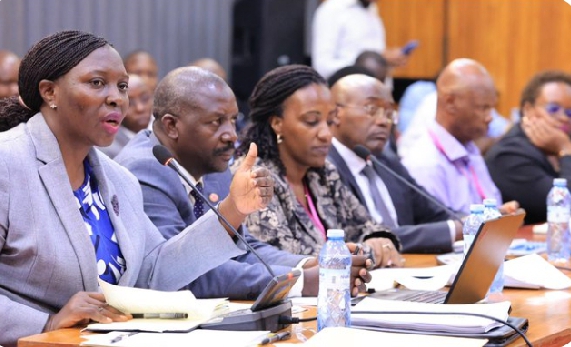
Appearing before Parliament’s Public Accounts Committee (PAC) on Monday, officials from the Ministry of Energy and UEDCL faced tough questions from lawmakers, who accused the utility of failing to deliver on the government’s promise of cheaper, more reliable electricity following the end of Umeme’s 20-year concession.
The hearing quickly centred on a question affecting millions of Ugandans: why has electricity become less reliable after the government assumed full control of power distribution?
PAC Chairperson Patrick Oshabe Nsamba told officials that consumers were experiencing more frequent outages than they did under Umeme, despite the government inheriting the company’s infrastructure, equipment and most of its workforce.
“You inherited the infrastructure, the vehicles, the tools and nearly all the staff. So where is the problem? Ugandans are concerned because their power is not coming,” he said.
His remarks echoed growing public frustration over recurring blackouts and delayed fault restoration since UEDCL assumed responsibility for nationwide electricity distribution on April 1, 2025.
UEDCL admits service has deteriorated
In one of its clearest public acknowledgements yet, UEDCL admitted that service reliability has declined since the transition.
Acting Managing Director Eng. Joselynne Rwabwogo Rwakakooko told MPs that the frequency of power outages had almost doubled, while average response times to faults had increased from around 12 hours to nearly 20 hours.
She attributed the deterioration to years of underinvestment in the distribution network rather than the transfer from Umeme itself.
According to UEDCL, rapidly growing electricity demand has outpaced investment in substations, transformers and other critical infrastructure, leaving parts of the network overstretched and prone to frequent failures.
The company said it has replaced or upgraded more than 800 transformers this year and is installing another 300 under an emergency programme, alongside increased maintenance of power lines.
The Ministry of Energy acknowledged the challenges but insisted the transition remains on course.
Permanent Secretary Eng. Irene Bateebe told MPs that ageing infrastructure, overloaded equipment, vandalism and procurement delays were behind the increase in outages.
She said government had injected about Shs477 billion (US$129 million) into UEDCL over the past two financial years to rehabilitate and expand the electricity network, with procurement of transformers and substations already underway.
Bateebe also rejected suggestions that Umeme left UEDCL with an incomplete network, saying all operational assets, software and about 96% of the former utility’s workforce were transferred to the state-owned company.
She argued that Cabinet’s 2022 decision not to renew Umeme’s concession reduced long-term investment by the private operator during its final years, leaving UEDCL to inherit an ageing network requiring substantial upgrades.
Despite the government’s assurances, MPs said households and businesses continue to bear the cost of unreliable electricity.
Benjamin Cadet, MP for Bunyaruguru County, said some businesses were experiencing outages lasting up to two days without timely technical support, while customer care services remained difficult to access.
He questioned why industrial consumers continued facing contractual penalties for under-consuming electricity when prolonged outages prevented them from operating.
Other legislators also raised concerns about whether the integration of former Umeme and UEDCL staff had affected operational efficiency following the transition.
UEDCL acknowledged that merging two organisational cultures had presented challenges but maintained that efforts were underway to build a unified workforce capable of improving service delivery.
A test for state-run electricity
The parliamentary scrutiny comes at a critical moment for Uganda’s electricity sector, where the transition from private to state-run distribution was presented as a landmark reform aimed at improving reliability, expanding access and supporting industrialisation.
Instead, recurring power cuts have placed UEDCL under growing public and political pressure.
For Parliament, the issue is no longer simply about technical faults or procurement delays. It is about whether Uganda’s state-owned electricity distributor can deliver the reliable power supply promised when government took over from Umeme.


Minister Nameere backs First Son after public row
Uganda’s State Minister for Local Government, Justine Nameere, has publicly endorsed Gen Muhoozi Kainerugaba for president, days after the two...