


As Uganda moves to finalise a costed national strategy for sickle cell disease, families in high-burden communities are waiting to see whether a policy shift will translate into earlier diagnosis, reliable medicines and fewer children growing up with preventable pain and complications.
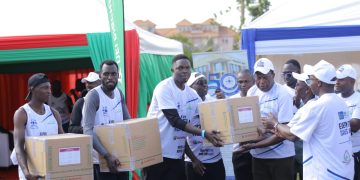
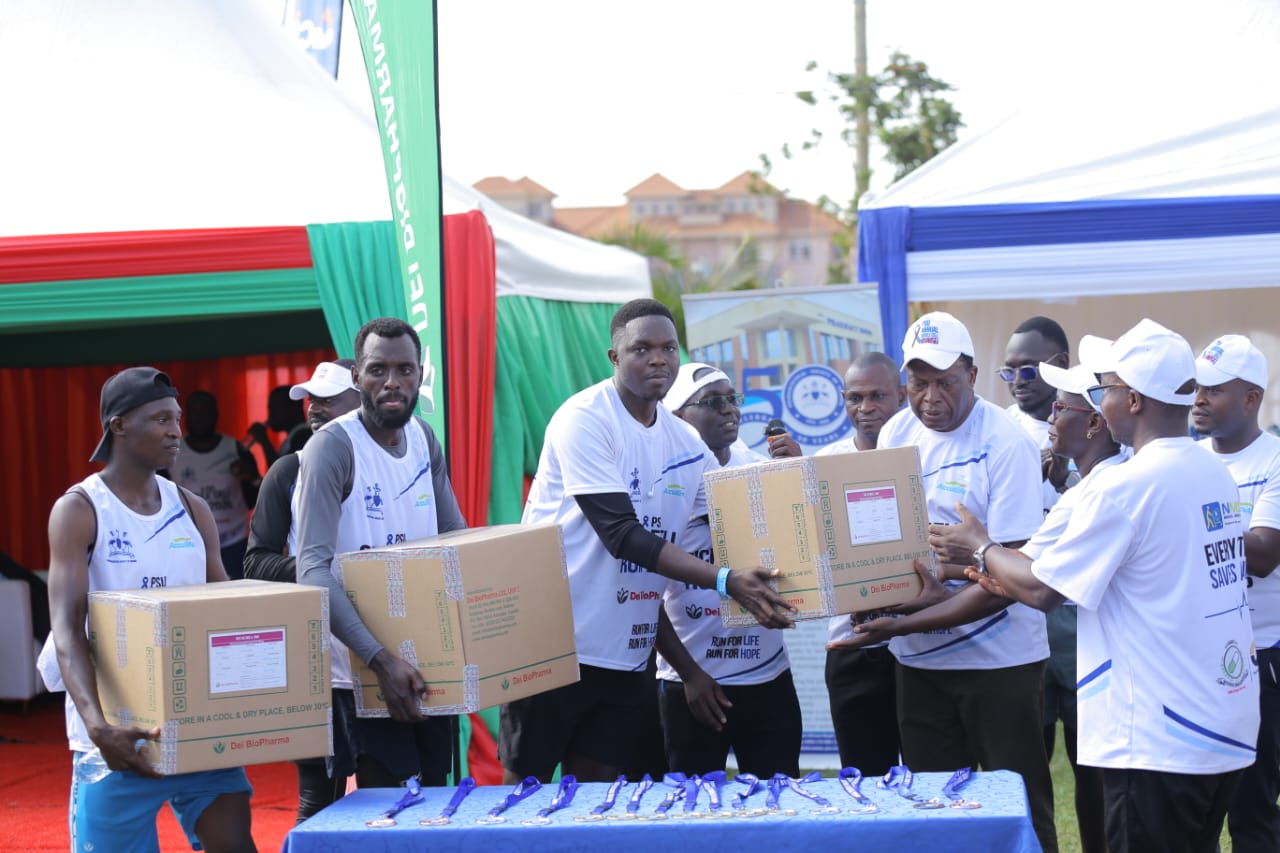
On a recent run through Busoga, the message was about more than sport.
It was about a disease that has quietly shaped the lives of thousands of families in eastern Uganda, often becoming visible only after a child arrives at a health facility in severe pain.
The organisers were using the event to raise awareness, mobilise funds and build partnerships for people living with sickle cell disease, including vulnerable children.
At the centre of the campaign is a question Uganda’s health authorities are now being forced to confront more directly: what will it take to turn growing awareness of sickle cell disease into sustained access to care?
The question comes as the Ministry of Health moves to finalise a costed National Strategic Plan for sickle cell disease.
The proposed strategy is expected to strengthen newborn screening, improve access to treatment and patient follow-up, and provide a more coordinated national response.
The Ministry says hydroxyurea, a medicine used to reduce complications and painful episodes in people with sickle cell disease, is already on Uganda’s Essential Medicines List.
But the scale of the challenge is formidable.
Uganda estimates that between 20,000 and 25,000 babies are born with sickle cell disease every year. Ministry officials say more than 500,000 infants have been screened over recent years, but acknowledge that this still leaves a substantial gap given the number of children born with the condition.
Professor Charles Olaro, the Director General of Health Services, said many children with sickle cell disease are not diagnosed at birth and instead first come to the attention of health workers during painful crises, sometimes after complications have already developed.
That makes the new strategy more than another government planning document.
Its significance will ultimately be measured in what happens between the birth of a child and the first visit to a health facility.
The burden is particularly pronounced in parts of eastern Uganda.
Osman Ahmed Noor, the Second Deputy Prime Minister of Busoga Kingdom, has pointed to Mayuge and Kamuli as some of the areas where sickle cell remains a major concern. He cited a regional prevalence estimate of more than 19 per cent, compared with a national estimate of about 0.8 per cent.
Historical Ministry of Health data have also identified Busoga and other parts of eastern Uganda among areas with substantially higher sickle-cell trait prevalence than the national average.
The distinction matters.
Sickle cell trait is not the same as sickle cell disease. A person with the trait generally does not have the disease, but two people who carry the trait can have a child with sickle cell disease.
That makes testing and genetic counselling important tools in reducing the number of families who discover their children’s status only after illness begins.
Yet awareness alone cannot manage a chronic disease.
People living with sickle cell disease may require regular monitoring and medicines to reduce complications.
Hydroxyurea is among the medicines used in management, and Uganda’s decision to include it on the Essential Medicines List signals an attempt to make treatment part of routine health services rather than leaving families dependent on specialised or irregular sources of care.
The challenge is whether availability on paper becomes availability at the health facility where a patient lives.
The price of finding children too late
For a child born with sickle cell disease, early diagnosis can change the course of care.
Uganda launched a nationwide mandatory newborn screening programme in February 2026, arguing that identifying affected children early can allow treatment and follow-up before severe complications develop.
The Ministry has described early diagnosis as critical, but the screening gap remains significant.
This creates an uncomfortable contradiction.
Uganda now has a national screening programme and has accumulated experience screening hundreds of thousands of infants. It has placed hydroxyurea on its essential medicines list. It is also preparing a costed national strategy.
Yet health officials continue to describe children arriving at hospitals for the first time during painful crises.
For families, that difference can be measured in hospital visits, school days missed, medical bills and, in the worst cases, lives lost.
The Ministry has previously estimated that the disease accounts for a substantial share of childhood deaths, while officials and health advocates have repeatedly warned that many deaths occur before children reach their fifth birthday.
The figures also expose a broader problem in Uganda’s health system: a child cannot benefit from early diagnosis if screening does not reach the child, and a diagnosis has limited value if treatment cannot be obtained consistently.
A national strategy faces a local test
That is where Busoga’s experience becomes relevant to the national debate.
The region has cultural institutions, health workers, private companies and civil society groups attempting to fill parts of the gap through awareness campaigns, fundraising and support for testing.
Dei BioPharma, which supported the Busoga initiative, said it chose the region because of the reported burden of sickle cell disease there.
Such partnerships can generate visibility and resources. But they also raise a bigger question: how much of the response to a major inherited disease should depend on campaigns, donations and individual partnerships, and how much should be guaranteed through the public health system?
That question is likely to become harder to avoid as the government finalises its new strategy.
In August, the Ministry brought together parliamentarians, officials, health workers, development partners, civil society organisations, caregivers and people living with sickle cell disease to discuss the country’s response. Officials called for greater investment and coordinated action, while acknowledging continuing gaps in prevention, diagnosis, treatment and care.
The emphasis on a costed strategy is significant.
A strategy can set out ambitious targets. A costed strategy has to confront how much those targets will require and where the money will come from.
That is particularly important for sickle cell disease because effective management does not end with a single screening test.
Children diagnosed with the condition need continued access to health services, medicines and follow-up.
Uganda has already taken steps to strengthen domestic supply. In April, the government launched locally manufactured sickle-cell test kits, part of an effort to reduce dependence on imported diagnostic supplies and improve access.
But diagnostics, medicines and follow-up must work together.
A child who is screened but cannot obtain treatment remains vulnerable. A medicine that is listed nationally but unavailable locally does little for a family travelling long distances to find it. And awareness campaigns cannot substitute for a functioning system of continuous care.
Sickle cell disease has often competed for attention with infectious diseases that dominate Uganda’s public health conversation.
But it is an inherited condition that follows families from childhood into adulthood, placing pressure on households and health facilities over many years.
The new national strategy therefore arrives at a pivotal moment.
Government has acknowledged the burden. Screening is expanding. Treatment options exist. Hydroxyurea has been placed on the essential medicines list. And officials are working on a costed national framework.
The unresolved issue is implementation.
If Uganda can identify children early but cannot consistently connect them to treatment, the screening programme will have exposed a problem without fully solving it.
If medicines are available only intermittently, families will continue to bear the consequences.
And if high-burden communities such as those in Busoga remain dependent on fundraising to strengthen basic sickle-cell services, the new strategy will face questions about whether national policy has genuinely reached the people it was designed to protect.
For the families living with the disease, the measure of success will not be the launch of another document.
It will be whether a child born with sickle cell disease can be diagnosed before the first devastating crisis, receive the medicines they need, remain in care and grow up with fewer interruptions to school and family life.