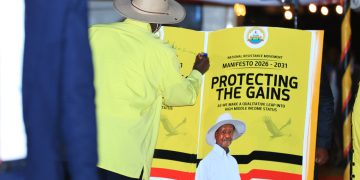



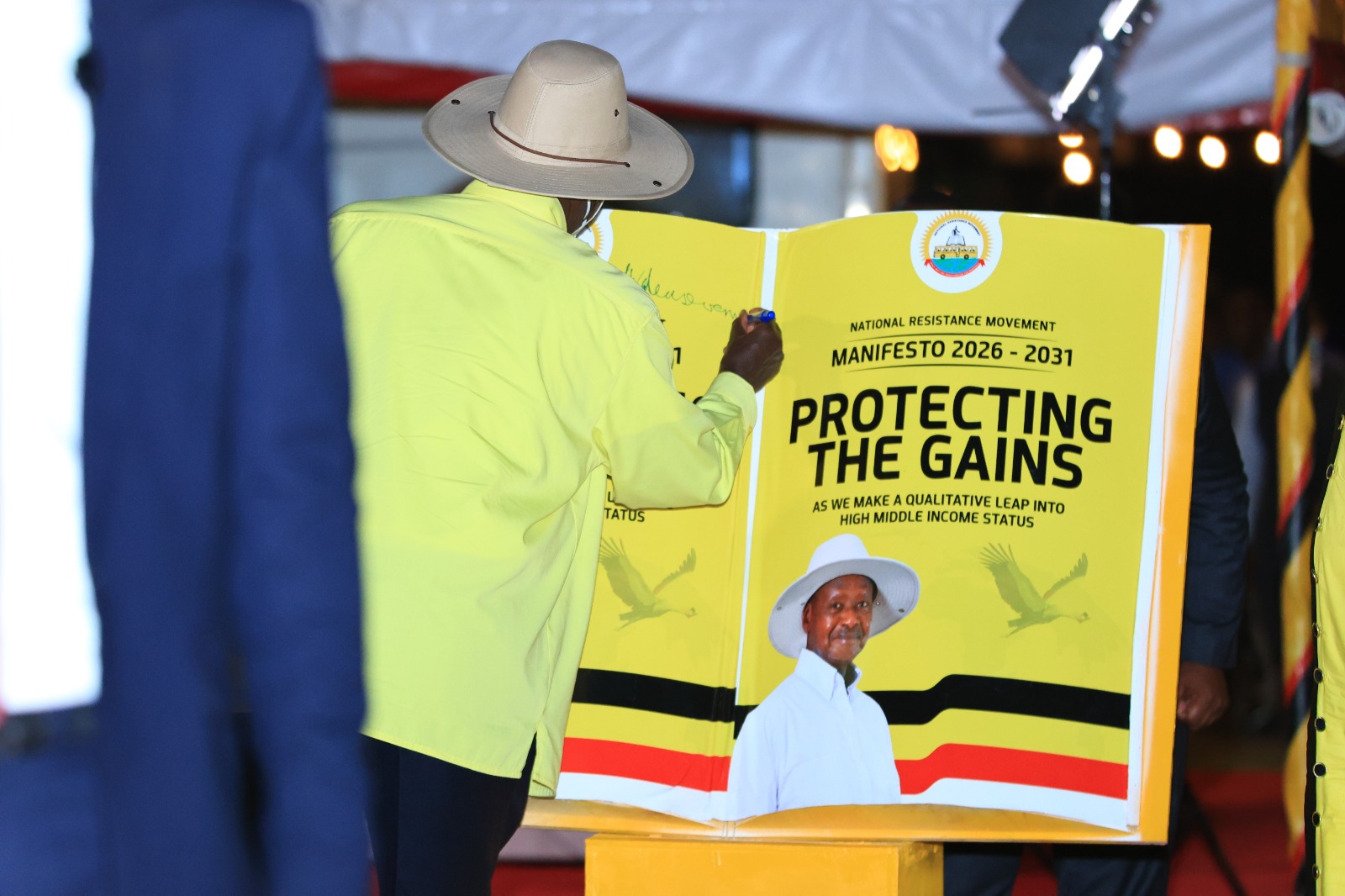
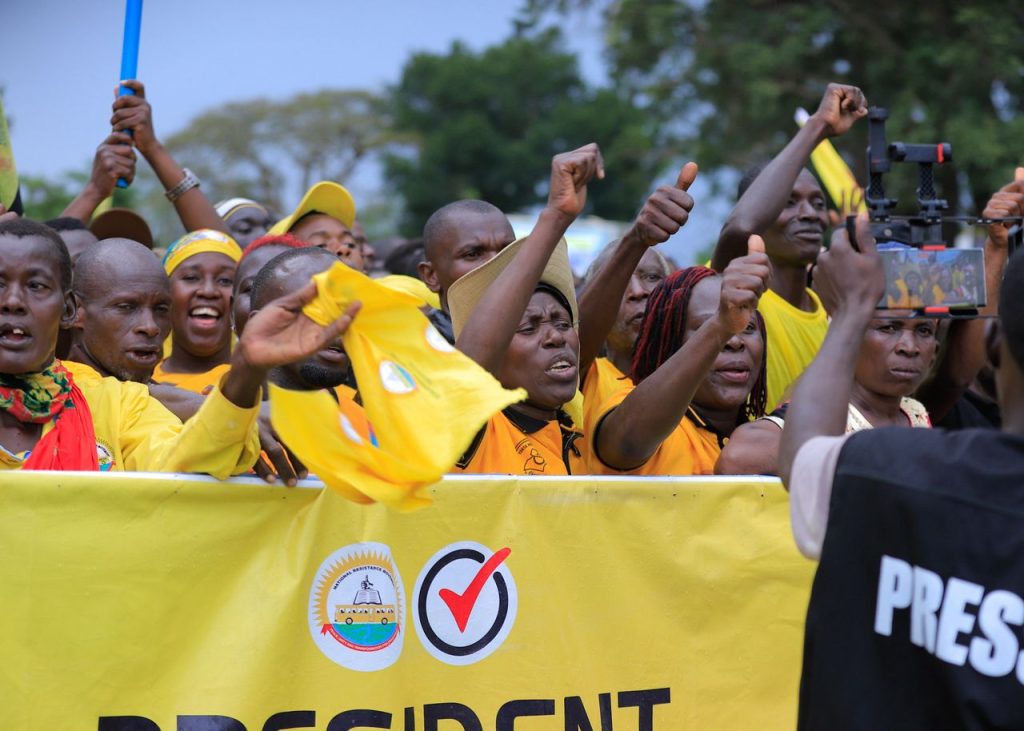
Amidst thunderous applause and yellow flags fluttering across the capital, President Yoweri Kaguta Museveni, Chairman of the National Resistance Movement (NRM), officially launched the party’s 2026–2031 Manifesto, pledging to safeguard Uganda’s gains and steer the country to high middle–income status.
“This manifesto is not just a document. It is the story of the Movement and the transformation of Uganda over six decades. It is our next roadmap,” Museveni declared at the official launch in Kampala, attended by ministers, MPs, senior party leaders, and jubilant supporters.
With the theme “Protecting the Gains and Ensuring a Qualitative Leap into High Middle–Income Status”, the manifesto lays out seven key pillars built around Museveni’s ABCDE approach — a framework aimed at simplifying priorities for leaders and citizens alike.
The 7 Pillars of the Manifesto include:
-
Peace and Security – Calling peace the greatest gift of the NRM, Museveni emphasized a strong, disciplined army and zero tolerance for crime.
-
Infrastructure Development – Roads, railways, electricity, schools, hospitals, and air transport remain central to Uganda’s transformation plan.
-
Wealth Creation – Museveni spotlighted success stories like Joseph Ijala, a former taxi conductor now earning over shs1 billion annually from farming.
-
Jobs – Stressing that jobs stem from wealth, he noted:
“Public service employs 480,000, but factories now employ over 1.2 million. Agriculture can employ even more.”
-
Service Delivery – He promised expanded and improved public services to meet the demands of a growing population.
-
Markets – He highlighted regional integration as key to economic growth: “The people who help me most are those who buy my milk, beef, and bananas.”
-
Unity and Political Stability – Museveni warned against tribal politics, calling it “the language of Africa’s enemies.”
Museveni explained the connection between the pillars: “Peace leads to development, development leads to wealth, wealth creates jobs, jobs require services, and all these need markets. It’s one chain.”
He reaffirmed his commitment to inclusive growth, social transformation, and economic self-sufficiency, stressing that Uganda now has the foundation to “achieve the leap.”
He noted: “Our strength lies in unity, not division.”
Al-Hajji Moses Kigongo, NRM First National Vice Chairperson, called for discipline and teamwork during campaigns: “Our grassroots structures are our strength. Use them well and campaign with discipline.”
Rt. Hon. Annet Anita Among, Second National Vice Chairperson (Female) and Speaker of Parliament, hailed the manifesto as proof of the NRM’s ideological clarity:
“Let us go to every village, every parish, every region and preach the gospel of protecting our gains.”
Among also spotlighted rapid advances in agro-industrialization, financial inclusion through youth and gender funds, and increased access to healthcare and education.
NRM’s Track Record: From Recovery to Resilience
NRM Secretary General Richard Todwong reaffirmed the party’s long-term vision rooted in patriotism, pan-Africanism, socio-economic transformation, and democracy.
“Each manifesto builds on the last. This is not political poetry, it is a contract with the people.”
Under NRM leadership, Todwong highlighted the following milestones:
-
Economy: Projected to hit $66.1 billion by FY2025/26
-
Poverty: Reduced from 21.4% (2016) to 16.1% (2025)
-
Subsistence Households: Down from 68.9% to 33.1%
-
Factories: Increased from 37,559 (2020) to ~50,000
-
Tourism Earnings: Rebounded to $1.32 billion
-
Life Expectancy: Up from 45 years (1986) to 68 years (2024)
-
Infant Mortality: Dropped from 122 per 1,000 births (1986) to 28 (2024)
-
UPE Enrollment: Grown from 2.5 million (1996) to 9.1 million learners
Todwong closed with a call to action: “We must now lift the remaining 33% of Ugandans in subsistence into the money economy. That’s our next mission—value addition, land use reform, and wealth creation for all.”
With the launch of its latest manifesto, the NRM has drawn the political battle lines for the 2026 general elections. As opposition parties prepare to release their own blueprints, the ruling party has made its case clear: continuity, consolidation, and a bold leap forward.
“We have the foundation,” President Museveni said. “Now is the time to leap.”