



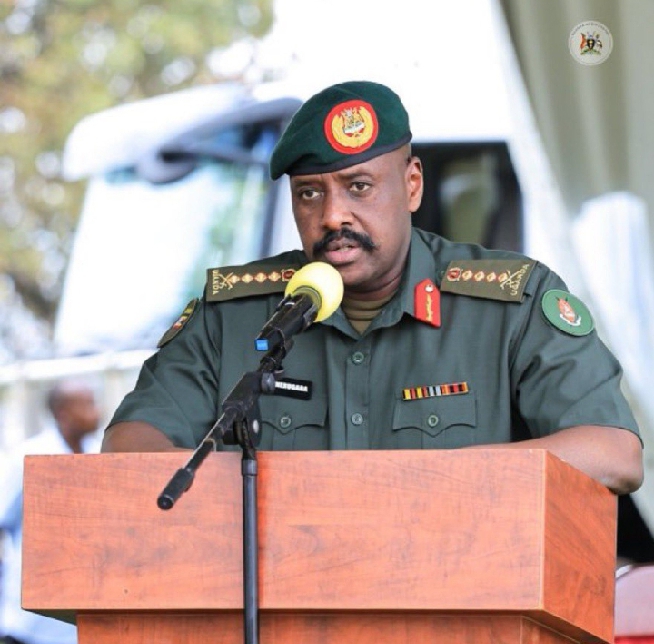
Gen. Muhoozi Kainerugaba has thrust himself deeper into Uganda’s succession debate, declaring that he will seek the country’s highest office in 2031 while, in the same political moment, announcing President Yoweri Museveni’s decision to forgive former Speaker of Parliament Anita Annet Among.
In a post attributed to his X account, Muhoozi reportedly wrote: “I will stand for the highest office in the land in 2031. And we will win by the grace of Almighty God.”
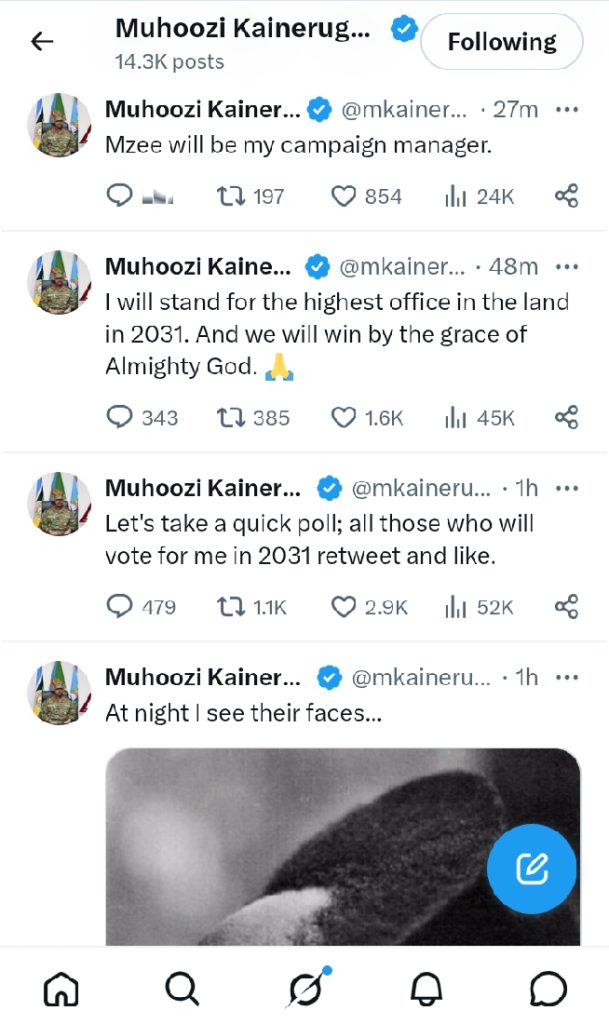
The X post could not be independently verified at publication, and should therefore be treated as an attributed social-media statement rather than a formally announced presidential candidature.
But the message, if authentic, would be among Muhoozi’s most explicit statements yet on his presidential ambitions.
The reported declaration comes as Muhoozi occupies one of the most powerful positions in the country as Chief of Defence Forces and increasingly dominates Uganda’s political conversation through his Patriotic League Uganda (PLU) movement.
It also arrives against the backdrop of an extraordinary reversal in his relationship with Anita Among.
Earlier this year, Muhoozi and his Patriotic League of Uganda withdrew their endorsement of Among for Speaker of the 12th Parliament.
In May, security agencies searched properties linked to Among as investigations into alleged corruption and illicit wealth intensified.
Muhoozi subsequently defended the operation, saying it had been conducted under Museveni’s direction and warning that the anti-corruption campaign would not spare powerful figures.
Among was subsequently placed under house arrest and withdrew from the speakership contest.
Jacob Oboth Oboth eventually became Speaker of the 12th Parliament.
Now the political script has changed dramatically.
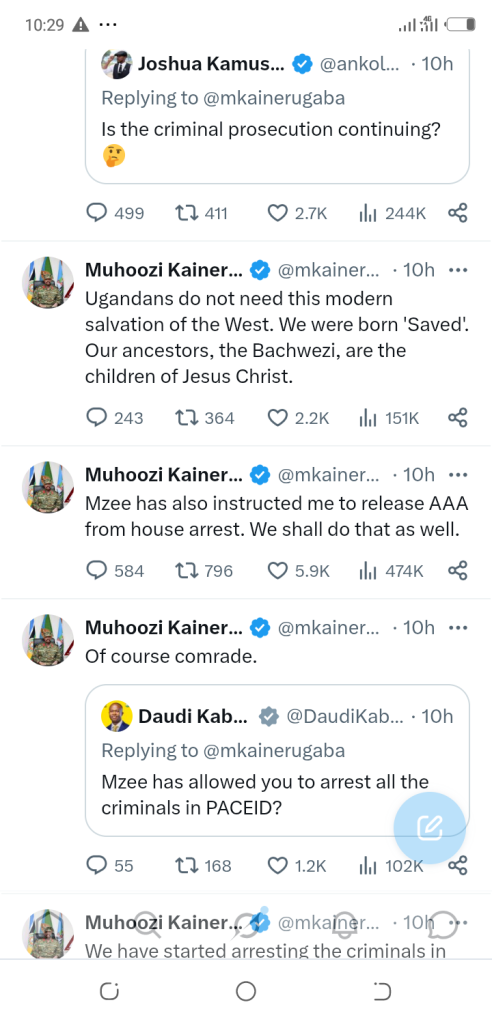
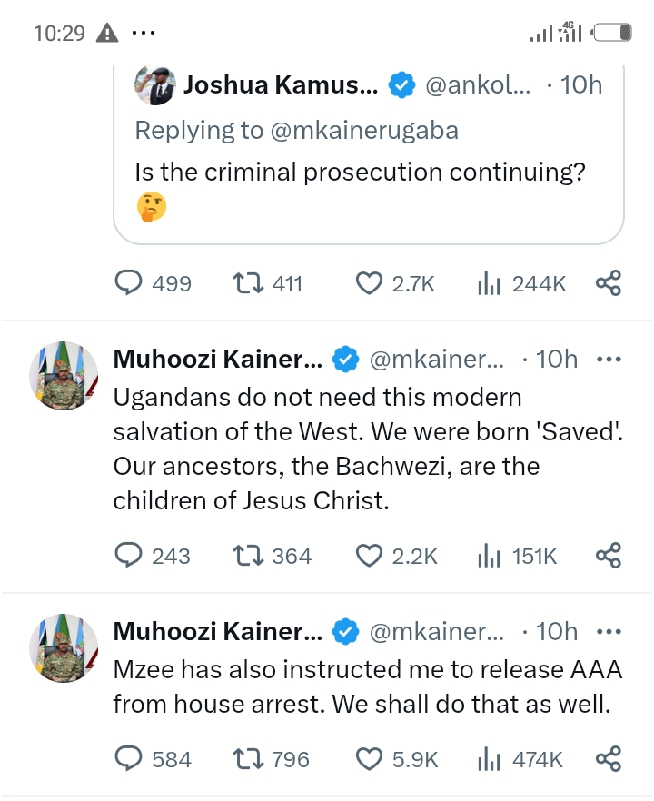
According to Muhoozi’s statements on Tuesday, Museveni has ordered Among’s release from house arrest and decided that she will not be prosecuted.
Asked whether criminal proceedings would continue, Muhoozi reportedly responded: “No. We shall not prosecute AAA. She made mistakes but Mzee has decided to forgive her.”
The development is significant because it places Muhoozi at the centre of both sides of the story: first as a prominent voice in the political and anti-corruption pressure against Among, and now as the person publicly communicating her reprieve.