


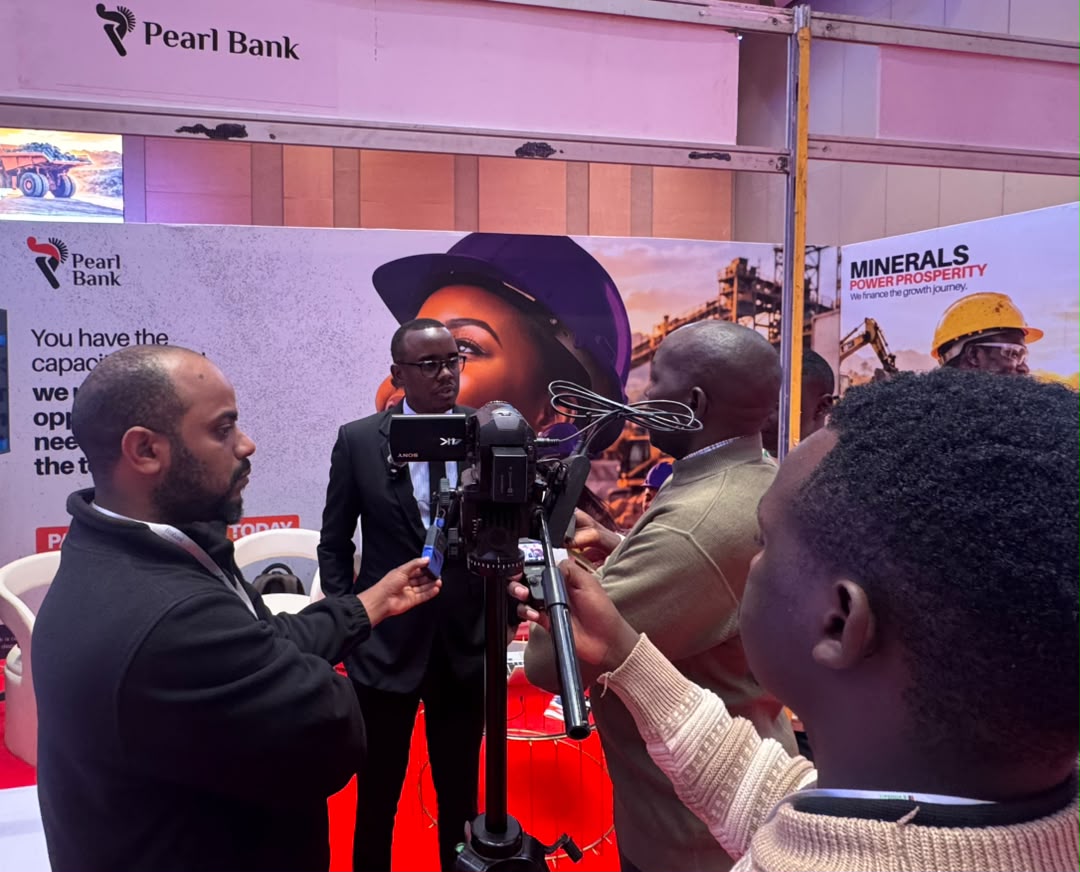
Pearl Bank Chief Treasury and Markets Officer, Yunus Mugula says that Uganda’s mineral sector needs more investment and suitable financing to unlock its potential, create growth and help the country achieve its target of a US$500 billion GDP by 2040.
He made the call during the 15th Annual Mineral Wealth Conference, held under the theme, “Beneath the Surface: Unlocking Africa’s Next Mining Powerhouse.” The conference raised an important question: What must happen above the surface for Uganda to fully realise the value of its mineral wealth?
Mineral development is one of the key pillars of the government’s Tenfold Growth Strategy, alongside agro-industrialisation, tourism, and science, technology and innovation.
He said that beyond the resources beneath the ground, another important resource requires equal attention—the estimated 500,000 Ugandan artisanal and small-scale miners who extract minerals, create livelihoods and contribute to the wider economy.
“The challenge is how we support them in formalising into licensed and bankable enterprises connected to formal markets. That transition is very critical to unlocking immense value in the sector and contributing to socio-economic transformation,” Mugula said.
Speaking about the bank’s role in financing the mineral sector, Mugula said Pearl Bank, through its Wendi mobile wallet, already provides financial services to artisanal and small-scale mining cooperatives and their members.
The bank also provides trade finance solutions, including invoice discounting, contract financing, export and import finance, guarantees and letters of credit.
The Minister of State for Energy and Mineral Development, Hon. Sidronius Okaasai Opolot, said the government would continue to prioritise the growth of the mineral sector and encouraged key players to invest across the different stages of the value chain, from mining to value addition, so that Uganda can expand exports to regional and international markets.
At the earliest stage, an operator may be prospecting, undertaking geological assessments and securing licences. Conventional commercial bank debt may not be appropriate at this stage because cash flows are uncertain and resources may not yet have been proven. Seed capital, grants, risk capital and government-supported programmes can therefore play an important role.
Once a commercially viable resource has been established, the financing requirements change. A miner may need to prepare the site, acquire excavators, crushers and processing equipment, recruit workers, and meet environmental and regulatory requirements. Equipment finance, leasing, asset-backed lending and development finance become increasingly relevant at this stage.
As production begins, businesses need working capital to pay workers, purchase inputs, transport minerals and bridge the period between production and payment by customers. Trade finance, production loans and other short-term facilities can support businesses during this stage.
When an enterprise develops established buyers, export contracts and reliable production records, further financing opportunities emerge. Purchase-order financing, invoice discounting, supply-chain finance, letters of credit and off-take-backed structures can allow lenders to finance transactions and their cash flows rather than relying exclusively on traditional collateral.
“Uganda’s 500,000 artisanal and small-scale miners should therefore not be viewed as being on the margins of the mineral economy. They can become an important foundation of it.
“For Pearl Bank, whose purpose is to foster prosperity for Ugandans, the opportunity is to work with government, miners and the wider ecosystem to help promising enterprises become increasingly formal, safe, productive and bankable,” Mugula concluded.