


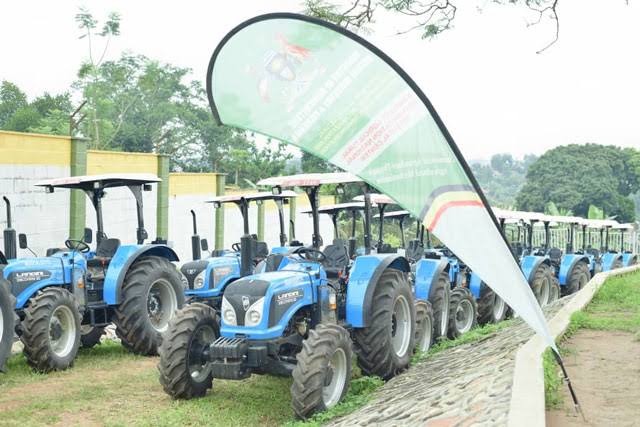
A whistleblower has petitioned the presidency over systemic corruption and procurement failures within Uganda’s Ministry of Agriculture, Animal Industry and Fisheries, warning that a multi-year delay in tractor deliveries is paralyzing the nation’s push for mechanization.
The petition, addressed to the Office of the President and seen by Al Jazeera, alleges that a central pillar of President Yoweri Museveni’s agricultural reform has been compromised by irregular procurement processes. Despite more than three years of government promises to replace the hand hoe with modern machinery, the whistleblower claims the program has ground to a halt as internal evaluation committees reportedly manipulate supplier reports.
The mechanization scheme was designed to modernize Uganda’s primary economic sector by distributing four-wheel and two-wheel tractors to cooperatives and smallholder farmers. Museveni has frequently championed the initiative as a prerequisite for food security and agro-industrialization, arguing that household incomes cannot rise without labor-saving technology.
However, the whistleblower alleges that the reality on the ground contradicts the political rhetoric. According to the petition, thousands of farmers and youth groups who applied for equipment years ago remain empty-handed. The document further suggests that the ministry’s disregard for equity in its bidding processes has triggered a crisis of confidence among international donors.
The allegations point to a deeper structural rot within the ministry’s procurement evaluation committees. The whistleblower claims these officials have favored specific suppliers, leading to the repeated rejection of procurement reports by development partners.
As a result, some donors have reportedly frozen funding or withdrawn support entirely, citing a failure to meet basic standards of transparency and competitiveness. The petition warns that these partners are now taking a hard line, demanding proof of fairness before any further capital is released for the purchase of machinery.
In previous statements, the ministry has defended its record, attributing delays to the complexities of quality assurance and funding constraints. Officials maintain that rigorous verification is necessary to ensure value for taxpayer money. Yet, the whistleblower’s account suggests that these administrative bottlenecks are being used as a cover for more deliberate sabotage.
The human cost of the impasse is most visible in regions like Northern Uganda, where districts such as Gulu and Lira were earmarked for priority support. Without the promised two-wheel tractors for irrigation and land preparation, smallholder farmers remain tethered to manual labor, leaving them vulnerable to climate shocks and stagnant productivity.
Farmer leaders have warned that the continued absence of equipment is eroding public trust in the state’s ability to deliver on its promises. For the rural population, the delay is not merely an administrative oversight but a direct threat to their livelihoods.
The whistleblower is now calling for a direct intervention from the presidency to overhaul the ministry’s procurement wing and restore donor relations. Without a significant cleanup of the internal processes, the petition warns, the vision of a mechanized Ugandan agriculture risks becoming another hollow policy failure.