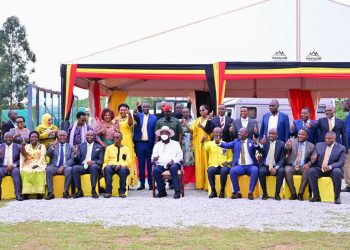



Standing before a cross-section of policymakers, scientists, development partners, and community leaders, Uganda’s Prime Minister, Robinah Nabbanja, delivered a message that was both urgent and ambitious: “the country’s future prosperity will depend on how well it manages its water and environmental resources today”.
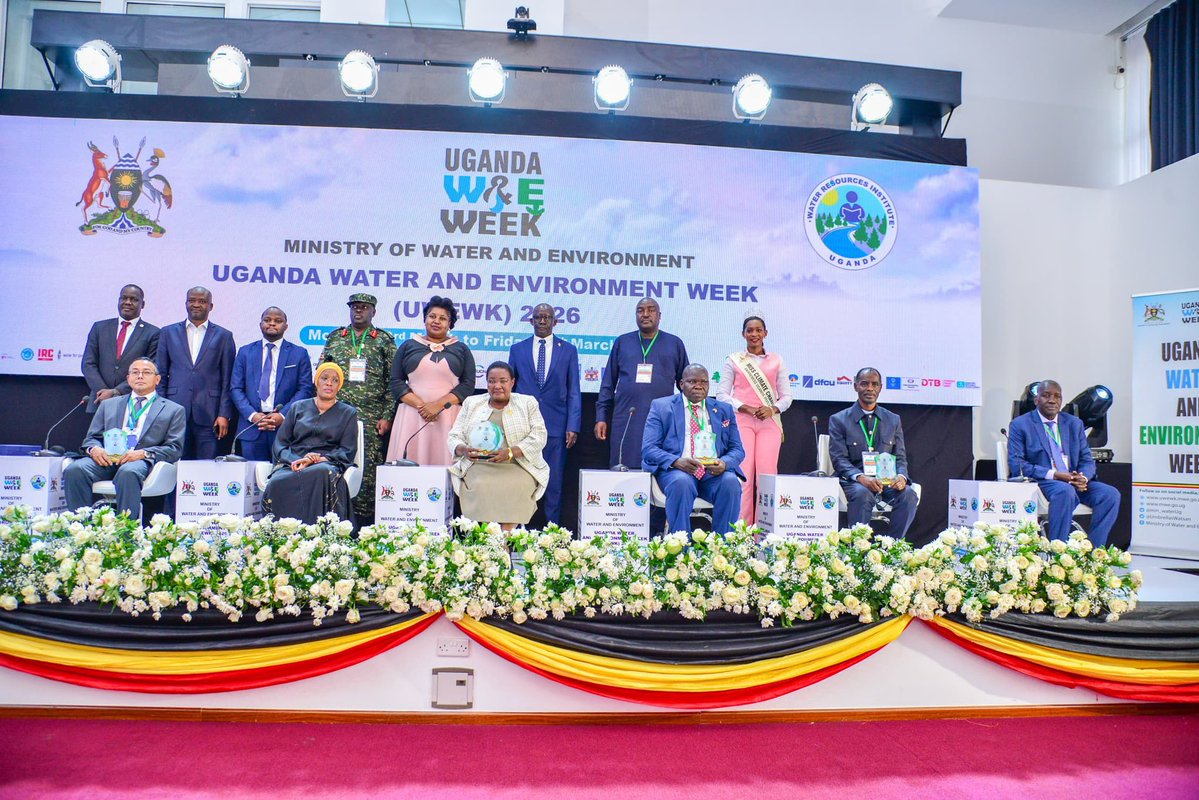
Officiating at the Ninth Uganda Water and Environment Week 2026, at the Ministry of Water and Environment, Nabbanja reaffirmed government’s commitment to sustainable water and environmental management as a cornerstone for socio-economic transformation. Her message set the tone for a week-long national conversation: ‘Uganda’s development ambitions cannot be separated from the health of its ecosystems’.
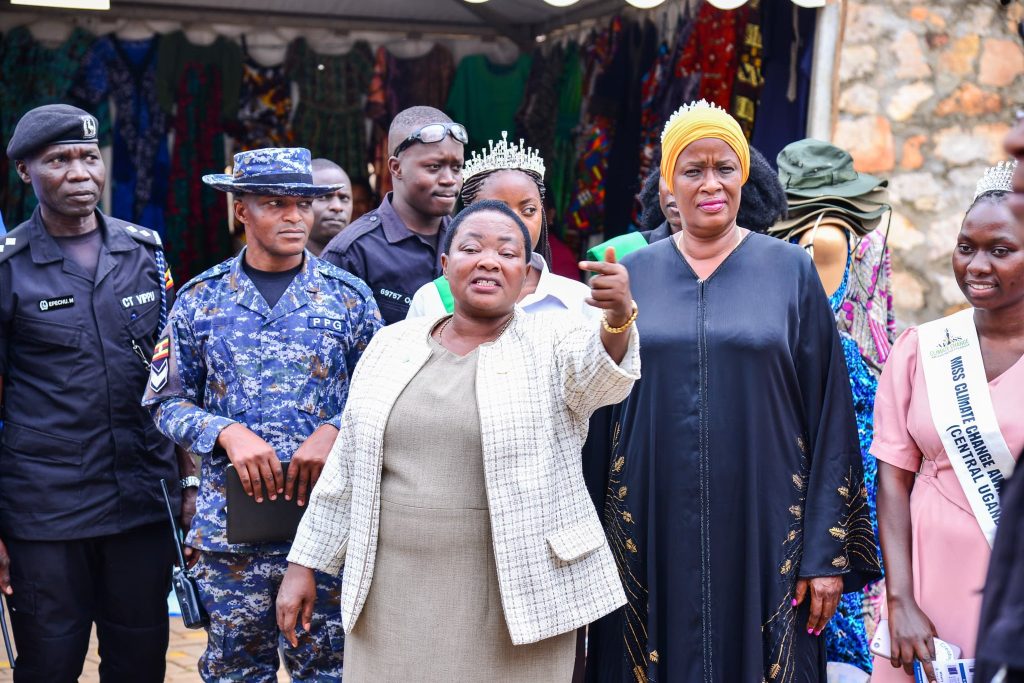
The meeting which kicked off on March 23, 2026 will be ending on March 26.
Nabbanja described the annual gathering, convened by the Ministry of Water and Environment since 2018, as more than a routine event.
It has become a vital national platform where policy meets practice, and where competing interests converge to shape inclusive solutions. She commended the Ministry and its partners for sustaining dialogue that continues to inform responsive policies in a sector increasingly under pressure.
Anchored on the theme “Water and Environment for an Inclusive and Prosperous Uganda,” the 2026 edition comes at a critical moment.
Uganda is pursuing an ambitious tenfold economic growth strategy, aiming to expand its economy from US$61.3 billion in 2025 to US$500 billion by 2040.
According to Nabbanja, the vision, aligned with Uganda Vision 2040, rests heavily on sectors like agro-industrialisation, tourism, mineral development, and innovation, all of which depend on reliable water systems and a healthy environment.
She emphasized that water is not merely a resource, but an enabler of transformation.
From irrigation schemes that stabilize agricultural production to ecosystems that sustain tourism, environmental stewardship is central to Uganda’s economic trajectory.
Nabbanja highlighted deliberate efforts by government to involve women and youth in decision-making, noting that women remain at the frontline of managing household water and food systems, while youth bring innovation and energy to the sector.
Loc
al communities, she added, contribute invaluable indigenous knowledge that strengthens resilience.
Their meaningful participation, she said, is essential to ensuring sustainability and long-term impact.
Her remarks also outlined concrete commitments under the 2026-2031 National Resistance Movement Manifesto.
These include accelerating irrigation infrastructure such as valley tanks and dams, expanding piped water systems toward universal access, rehabilitating aging infrastructure, and protecting fragile water catchments.
At the same time, government is scaling up restoration of degraded ecosystems, wetlands, forests, and riverbanks, while promoting tree planting and agroforestry.
Urbanization, she noted, is creating new environmental pressures.
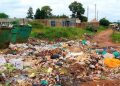
Solid waste management has become a growing challenge, particularly in rapidly expanding towns and cities.
In response, government is intensifying efforts to tackle pollution while promoting climate-resilient agriculture and investing in early warning systems.
She also pointed to high-risk areas like the Mount Elgon region, where climate-induced disasters have forced relocation efforts to protect vulnerable communities.
Such interventions, she said, underscore the reality that climate change is no longer a distant threat but a present danger.
Equally critical is the transition toward sustainable energy alternatives.
Nabbanja stressed the need to reduce dependence on charcoal and firewood, which continue to drive deforestation.
Achieving this shift, she said, will require stronger coordination, equitable service delivery, and accountability at all levels.
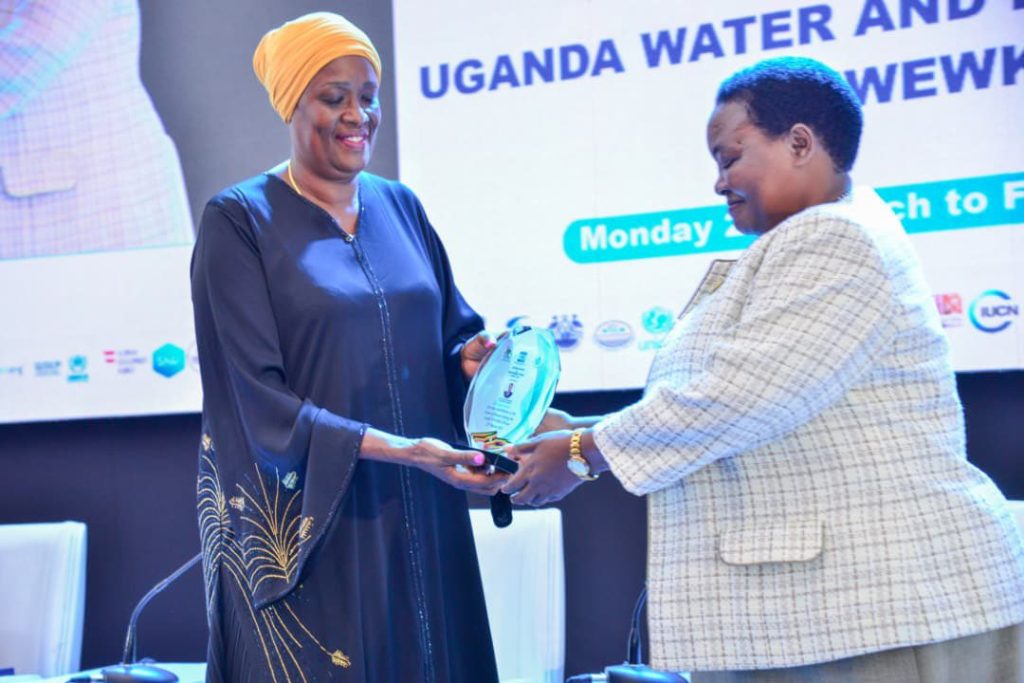
In a key highlight of the ceremony, she launched the Ministry’s Service Delivery Standards and the Annual Programme Performance Report for 2025/2026-tools expected to strengthen planning, improve accountability, and enhance outcomes across the sector.
The Permanent Secretary of the Ministry of Water and Environment, Alfred Okot Okidi, described the event as a “national laboratory” where ideas are tested, refined, and scaled.
Over the past nine years, he noted, that the Uganda Water and Environment Week has evolved into a premier platform for dialogue and knowledge exchange, growing from fewer than ten partners in 2018 to over one hundred today.
This expansion he said reflects increasing confidence and shared ownership across the sector.
Okidi placed Uganda’s efforts within a broader continental and global context.
He highlighted that 2026 has been designated by the African Union as the Year of Water and Sanitation, guided by frameworks such as the Africa Water Vision 2063.
These frameworks, he explained, will shape Africa’s unified voice at the upcoming global water conference later in the year.
Against this backdrop, Uganda’s national dialogue takes on added significance.
The discussions, he said, are structured around critical themes including the role of water in economic transformation, investment in science and innovation, climate resilience, and inclusive service delivery.
He urged stakeholders to move beyond dialogue toward action, emphasizing that the success of the platform will ultimately be measured by tangible improvements in people’s lives.
Delivering the keynote address, on behalf of the United Nations system, Robin Nandy reframed the climate conversation in stark terms, noting that climate change, is fundamentally a water crisis.
Drawing from Uganda’s lived realities, he cited prolonged droughts in the cattle corridor, landslides in eastern regions, and floods in West Nile that continue to destroy infrastructure and contaminate water sources.
But beyond physical damage, he emphasized the social consequences; rising school dropout rates among girls, increased disease outbreaks, and heightened vulnerability among children.
Nandy commended government efforts, particularly the development of the National Adaptation Plan, which integrates water, sanitation, and hygiene into climate action.
The plan aligns with the Paris Agreement and Uganda’s national development priorities, positioning climate-resilient water systems at the center of development.
He stressed that investing in vulnerable populations yields the highest returns and called for sustained commitment to behavior change, noting that infrastructure alone cannot deliver lasting impact.
The State Minister for Water, Aisha Ssekindi, paid tribute to grassroots mobilizers who traverse the country raising awareness on water and environmental issues, bridging the gap between national policy and local realities.
She described the Uganda Water and Environment Week as a space where science, policy, and community action converge, emphasizing that the country must shift from managing resources to optimizing them for wealth creation.
Water, she noted, is central to both energy security and food sovereignty.
Expanding irrigation reduces dependence on erratic rainfall, while protecting watersheds sustains hydropower generation.
Through integrated approaches, the sector can support Uganda’s broader economic pillars while improving livelihoods.
In his remarks, the Minister of Water and Environment, Sam Cheptoris, struck a candid tone in his address, acknowledging both progress and persistent challenges.
He reaffirmed the sector’s role in driving Uganda toward middle-income status, highlighting its contributions to agriculture, industry, and public health.
But he also raised concerns about environmental degradation, particularly wetland encroachment and water pollution driven by industrial and agricultural activities.
Climate change, rapid urbanization, and population growth are compounding these pressures, he said, while limited financing and weak enforcement continue to constrain progress.
In a rare moment of institutional introspection, Cheptoris acknowledged shortcomings in enforcement and called for stronger accountability.
He urged stakeholders to take climate change seriously, emphasizing that it requires immediate and collective action.
Beyond the high-level speeches, the week’s discussions reinforced a central idea: water and environment must be repositioned from a support sector to a core economic strategy.
Experts in different side sessions, highlighted governance gaps, limited investment, and slow adoption of technology as key barriers and opportunities abound, from green jobs and eco-tourism to innovations in water management and renewable energy.
There was strong consensus on the need for inclusive participation, particularly engaging Uganda’s youthful population in designing and implementing solutions.
Participants also emphasized the importance of strengthening institutions and leveraging partnerships across government, private sector, and communities.
As Uganda navigates the dual challenge of economic growth and environmental sustainability, the message was clear.
The path to prosperity will not be built on exploitation of natural resources, but on their careful stewardship.
In the words echoed throughout the discussions, Uganda’s future depends not only on how much it grows, but on how sustainably it does so.