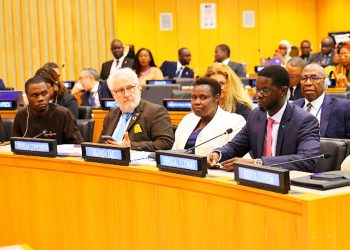






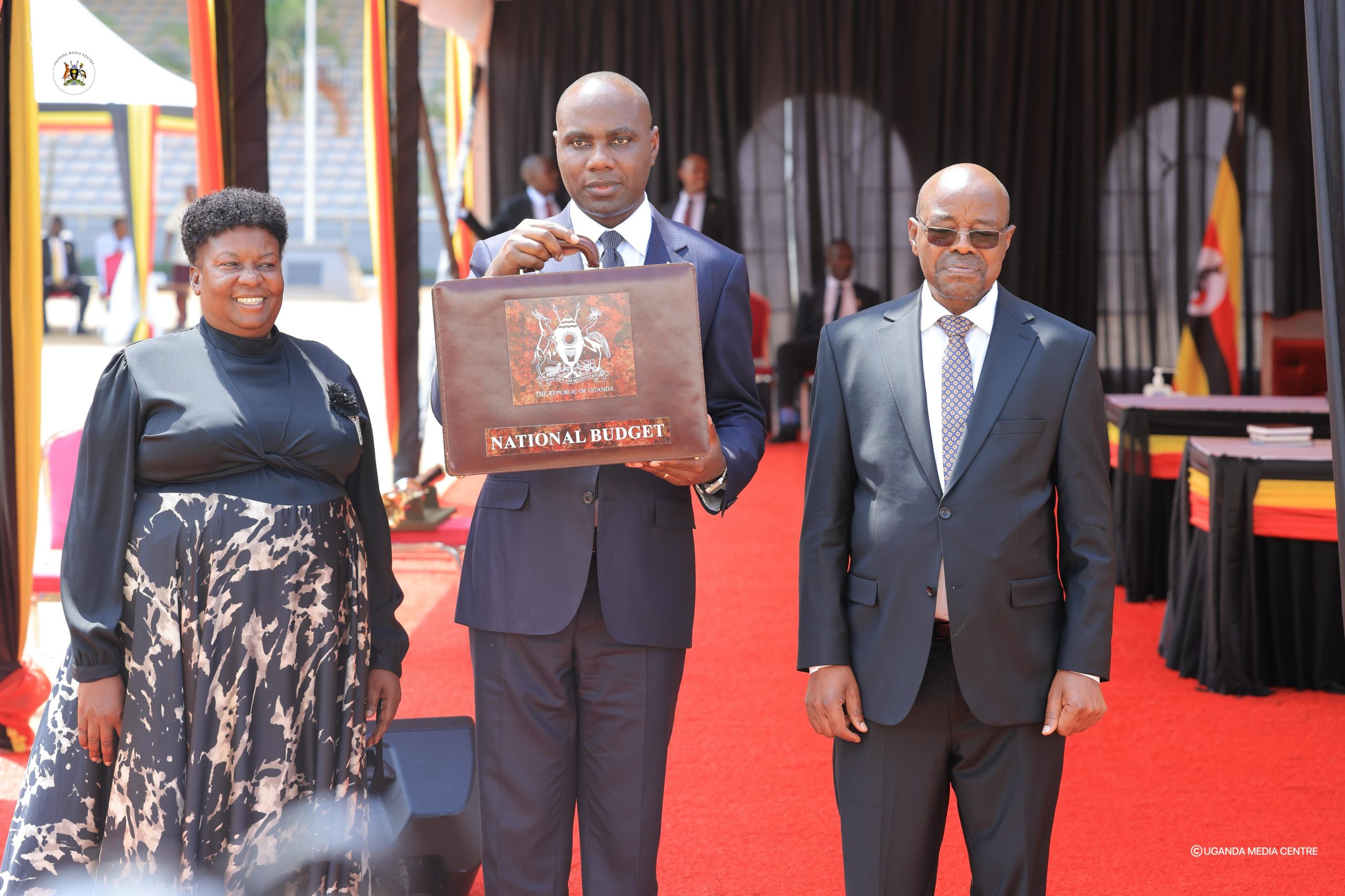
Uganda’s unveiling of its largest-ever national budget marks a significant moment not only for the country’s domestic development trajectory but also for broader global conversations about growth in emerging markets.
At a time when many developing economies are grappling with constrained fiscal space, climate pressures, demographic shifts and fragile global demand, Uganda is presenting a markedly different narrative: one of accelerated transformation anchored in natural resources, structural economic reform and long-term investment in human capital.
With a total allocation of Shs84.39 trillion (approximately $22.8 billion) for the 2026/27 financial year, the government is signalling an ambition to reposition the country as a high-growth frontier economy integrated more deeply into regional and global value chains.
The scale of the budget reflects a renewed confidence in Uganda’s medium-term outlook, reinforced by expectations that first commercial oil production will begin within the fiscal year. Policymakers are projecting economic growth of 10.2 percent, a sharp increase from 6.4 percent in the current year, placing Uganda among the fastest-expanding economies globally if these forecasts are realised.
Beyond the headline figures, the underlying strategy is framed around what officials describe as the “full monetisation” of the economy, an approach that seeks to formalise economic activity, expand productive sectors, and translate macroeconomic expansion into tangible improvements in household incomes and employment opportunities.

This ambition is closely tied to Uganda’s long-term aspiration of building a $500 billion economy, a transformation that would require sustained industrialisation, export diversification and productivity gains across key sectors.
Central to this vision is the anticipated emergence of Uganda’s oil industry as a major economic driver, according to the Minister of Finance, Henry Musasizi.
With infrastructure development advancing, including the East African Crude Oil Pipeline and the drilling of nearly two hundred wells, the petroleum sector is entering its final development phase.
The expectation is that oil revenues will significantly expand export earnings, strengthen fiscal capacity and catalyse investment in related industries such as logistics, engineering services and energy-intensive manufacturing. However, government planners are also increasingly aware that oil alone cannot deliver sustained prosperity.
As a result, the FY Budget 2026/2027 places equal emphasis on diversification, particularly through agriculture, manufacturing and services, in order to mitigate the risks associated with commodity dependence and global price volatility.

Uganda’s external sector already demonstrates the potential of this diversification strategy.
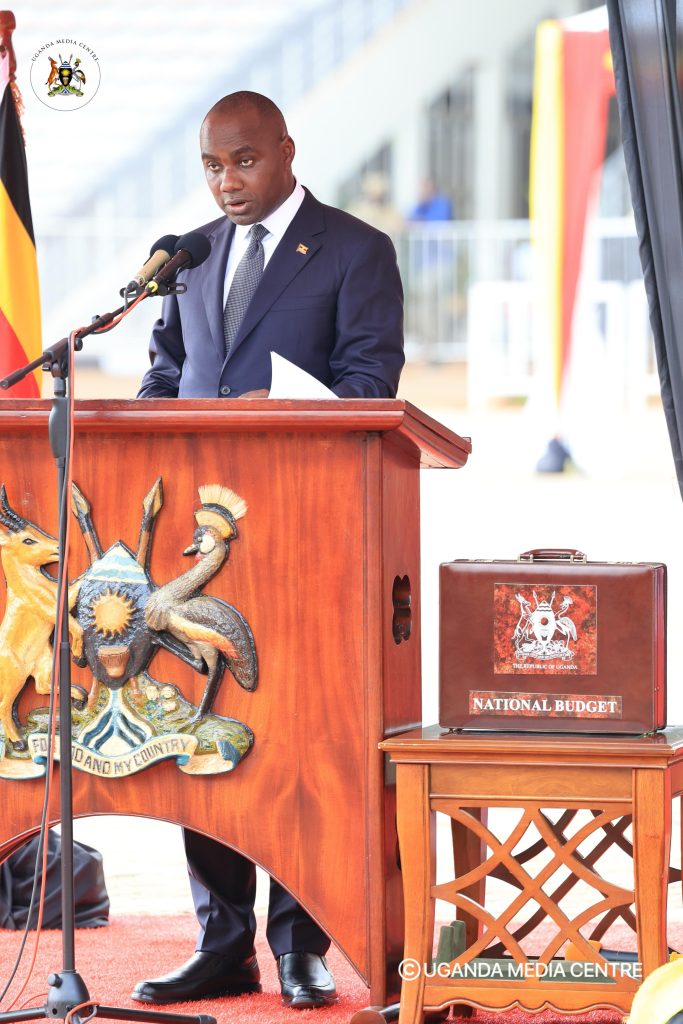
Musasizi while presenting the budget at Kololo Independence Grounds, revealed that export earnings have reached record levels, surpassing $18 billion in the year ending March 2026, more than three times higher than five years earlier.
While traditional exports such as coffee continue to play a central role in foreign exchange generation, there is growing contribution from gold, cocoa, fish products, steel and sugar.
This shift reflects both improved global demand conditions and domestic efforts to move beyond primary commodity dependence.
In a global context where supply chain resilience and resource security are increasingly important, Uganda’s expanding export basket positions it as a potentially significant supplier within regional and international markets, particularly if value addition continues to expand.

A defining feature of the 2026/27 budget is its strong emphasis on human capital development, particularly through education and skills formation.
Education was been allocated Shs6.66 trillion, reflecting recognition that long-term economic transformation depends not only on physical infrastructure and natural resources but also on the quality of the workforce.
The government’s focus is on improving access, strengthening teacher welfare and enhancing the relevance of learning outcomes to labour market needs.
This is particularly significant in a country with a young and rapidly growing population, where the education system is expected to serve as a critical pipeline for future productivity and innovation.
In a global economy increasingly driven by knowledge-intensive industries, Uganda’s investment in education is also a strategic effort to position its labour force for participation in digital services, advanced manufacturing and cross-border trade.
Closely linked to education is the broader agenda of human capital development, which extends into health and social protection systems.
The health sector has received Shs5.23 trillion, directed towards improving healthcare delivery, expanding access to essential medicines and strengthening emergency response capacity.
This investment is essential not only for improving life expectancy and wellbeing but also for enhancing economic productivity, as healthier populations are better able to participate in education and work.
The linkage between health outcomes and economic performance is increasingly recognised in global development economics, and Uganda’s approach reflects an integrated understanding of these dynamics.
By prioritising both education and health, the government is attempting to build a more resilient labour force capable of sustaining long-term growth.
Agriculture remains at the core of Uganda’s economic structure, employing the majority of the population and serving as a key driver of both domestic livelihoods and export earnings.
The allocation of Shs2.26 trillion to agro-industrialisation reflects a strategic shift from subsistence and raw commodity production towards value-added agricultural processing.

Investments in irrigation, mechanisation, research and extension services are designed to improve productivity while enabling farmers to integrate into more sophisticated supply chains.
This transformation is particularly important in the context of global food systems, where demand for processed and traceable agricultural products is increasing.
Uganda’s ambition is not only to expand production but also to enhance competitiveness in international markets by improving quality standards and developing agro-processing capacity domestically.
The broader wealth creation agenda complements these sectoral investments by targeting household-level income generation.
Another significant funding has been directed towards programmes designed to support farmers, youth entrepreneurs and small businesses, with the aim of expanding economic participation and reducing poverty.

These initiatives are intended to bridge the gap between macroeconomic growth and microeconomic welfare, ensuring that expansion in GDP translates into improved living standards.
In many emerging economies, this connection between growth and inclusion remains a central policy challenge, and Uganda’s approach reflects an attempt to address it through targeted intervention rather than relying solely on market forces.
Technology and innovation are increasingly embedded within this development framework, reflecting the global shift towards digital economies. Investment in information and communications technology, innovation systems and emerging industries such as electric mobility and pharmaceuticals signals an attempt to position Uganda within future-oriented sectors.
The rapid expansion of digital infrastructure, including a national fibre backbone exceeding 62,000 kilometres and the scale of mobile money transactions, highlights the extent to which financial and communication systems are already undergoing structural transformation.
In a global economy where digital connectivity underpins trade, services and financial inclusion, these developments are critical for enhancing competitiveness and integration.
At the fiscal level, the government is balancing its expansionary development agenda with efforts to strengthen revenue mobilisation and maintain sustainability.
Domestic resource mobilisation is becoming increasingly important as Uganda seeks to reduce reliance on external borrowing while financing large-scale infrastructure and social investments. This reflects a broader trend across developing economies, where fiscal consolidation and development financing must be carefully managed to avoid debt vulnerabilities while sustaining growth momentum.
The challenge for policymakers lies in ensuring that increased public spending translates into productive investment rather than consumption-driven expansion.
For global investors and development partners, Uganda’s 2026/27 budget presents a narrative of structural transition, demographic advantage and resource-driven opportunity.
The combination of oil production, agricultural modernisation, expanding infrastructure and a youthful population creates conditions for potentially rapid economic expansion.
However, the long-term success of this transformation will depend on execution capacity, institutional strength and the ability to translate investment into inclusive employment and productivity gains.
As Uganda moves towards first oil production and deeper industrialisation, its development strategy reflects a broader shift seen across parts of the Global South, where countries are increasingly attempting to move from primary commodity dependence towards integrated, multi-sectoral economies. In this context, Uganda’s budget is not merely a fiscal document but a statement of intent about its place in the global economic system.
The emphasis on education, agriculture and human capital development suggests an understanding that long-term competitiveness will depend less on resource endowments alone and more on the capacity of people, institutions and industries to adapt, innovate and participate in an increasingly complex global economy.