


KAMPALA — Uganda’s efforts to prevent new HIV infections are getting a boost from lenacapavir, a long-acting injection that can protect an HIV-negative person from getting HIV for about six months.
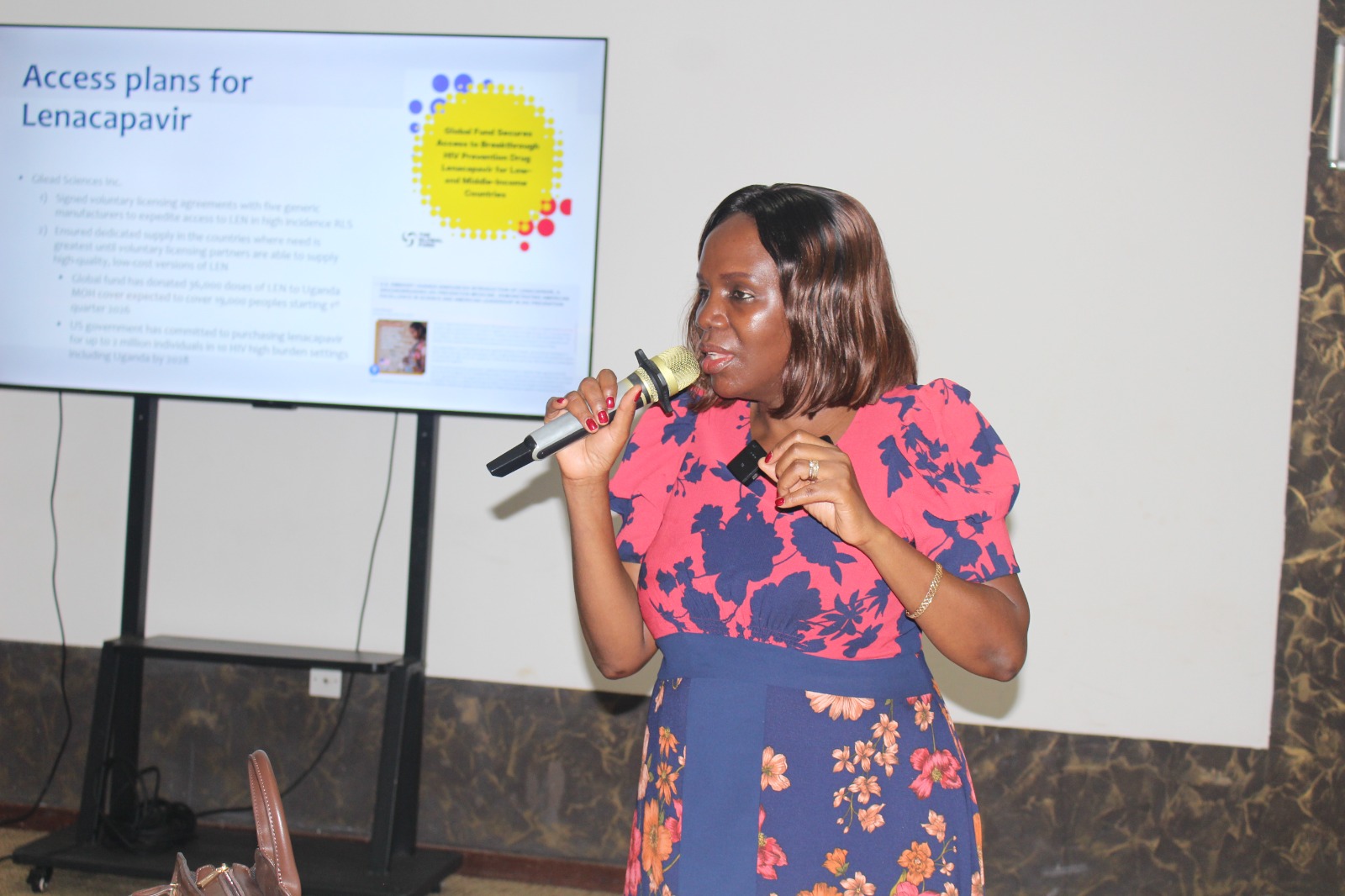
According to Dr Flavia Matovu, Director of Research at MU-JHU, the medicine was first developed as a treatment for people living with HIV whose bodies had stopped responding to other HIV medicines. “Lenacapavir was first tested as an ARV for people who were heavily treatment experienced,” Matovu said.
She explained that studies showed that lenacapavir could help people whose HIV had become resistant to several other medicines to reduce the amount of virus in their bodies.
Because the medicine was found to be very powerful, researchers and its manufacturer, Gilead Sciences, later started studying whether it could also be used to prevent HIV in people who are not infected.
Matovu said Uganda has now started using lenacapavir as part of its HIV prevention programme, with the Ministry of Health introducing it in phases.
The first phase covers 103 health facilities, with plans to increase the number to about 300 facilities across the country.
Matovu said the medicine is already attracting high demand, with an estimated 4,000 to 6,000 people having started using it, although official figures are kept by the Ministry of Health.
Uganda initially received 19,200 doses in March 2026 as part of a planned supply of 36,000 doses, with more doses arriving later.
Demand is higher than supply
Matovu said demand for lenacapavir has been higher than the available supply.
She said the medicine is attracting people from different sections of society, including people who may not normally consider themselves to be at high risk of HIV.
“Someone whom you think is not at risk is actually at risk,” she said, adding that ministers, Members of Parliament, professors, bankers and business people have also asked for the medicine.
Because of the demand, Matovu said lenacapavir is being made available to anyone who believes they may be at risk of HIV.
“If you feel you’re at risk, you can get LEN,” she said.
She added that men currently make up about 70 percent of people using lenacapavir, partly because they are receiving more information about HIV prevention through the media and social media.
Matovu said more effort is needed to ensure that women also benefit from the new HIV prevention option.
Two tablets are needed when starting the injection
Matovu cautioned that the injection does not immediately provide full protection when it is first given.
A person starting lenacapavir receives the injection and two tablets on the first day, followed by two more tablets the next day.
“This is so that by 48 hours you have enough drug levels to protect you,” she explained.
She said without the tablets, it could take about 28 days for the injection to reach protective levels.
“There’s no shortcut about not taking the tablets,” Matovu cautioned.
The injection remains at protective levels for about six months, after which another injection is needed to continue protection.
Lenacapavir is currently free
Matovu said lenacapavir is currently being provided free of charge through the Ministry of Health’s HIV prevention programme, with support from the Global Fund and Gilead Sciences.
“Currently it is free,” she said.
She added that generic manufacturers are expected to increase access to the medicine in the future.
According to Matovu, Gilead Sciences has agreements with six generic manufacturers, who are expected to make the medicine available at a maximum price of about US$40 per person per year once generic supply becomes available.
Users should tell health workers about other medicines
Matovu urged people using lenacapavir to tell health workers about any other medicines they are taking because some drugs can interact with lenacapavir.
For example, she said some medicines used to treat tuberculosis can reduce the amount of lenacapavir in the body. In some cases, health workers may therefore need to deal with the TB treatment first before starting lenacapavir.
She also said some cholesterol medicines may require changes in dosage.
People taking sildenafil, commonly known as Viagra, may also have higher levels of the medicine in their bodies when it is used together with lenacapavir, which can increase the risk of side effects.
Matovu also stressed that people living with HIV should not use lenacapavir as HIV prevention. The prevention injection is intended for people who are HIV-negative, while people living with HIV should receive the appropriate HIV treatment.
She further advised people living with hepatitis B to seek proper treatment because some medicines used to treat hepatitis B, such as tenofovir, also work against HIV.
Scientists studying a yearly injection
Scientists are now studying whether lenacapavir could eventually protect people against HIV for a full year instead of six months.
Matovu said the PURPOSE 365 study is examining how long the medicine remains at protective levels in the body.
The researchers are following people who have received the drug for 12 months to see whether its levels remain high enough to provide protection beyond six months.
Matovu said the findings could eventually lead to a once-a-year HIV prevention injection if the drug remains at protective levels for the full year.
“Within the next one or two years, we should be able to have this lenacapavir for a whole year licensed for protection. It should be very wonderful,” she said.
The longer-acting option could help people who find it difficult to take HIV prevention tablets every day, while wider availability of lenacapavir could give more Ugandans another option for protecting themselves against HIV.