






Enterprise Uganda has urged young people in leadership positions to use their influence to mobilise communities to seek professional business training as a way of tackling poverty and promoting economic empowerment.
David Baziwane, Business Development Specialist for Partnerships and Ecosystem Development at Enterprise Uganda, said youth leaders have an important role to play in helping young people acquire the skills needed to start and manage successful businesses.
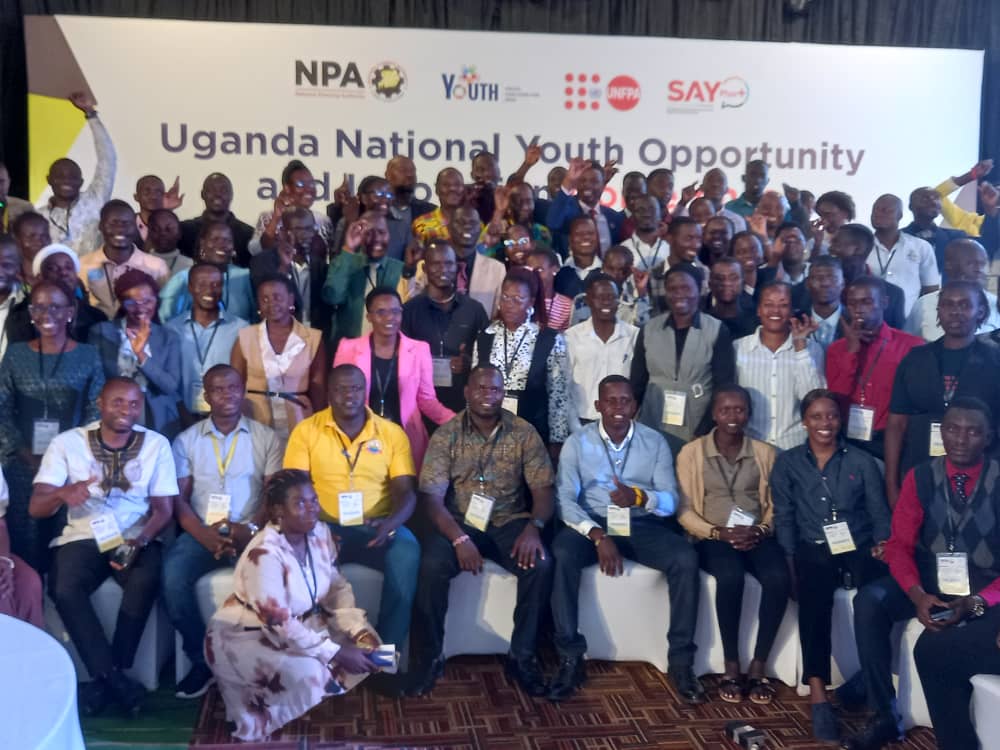
Baziwane made the remarks during the closing ceremony of the two-day Uganda National Youth Opportunity and Innovation Conference held at Golf Course Hotel in Kampala.
The conference was organised by the National Planning Authority (NPA) in collaboration with the Ministry of Local Government, with support from the United Nations Population Fund (UNFPA).
It brought together more than 200 participants, including government ministries, departments and agencies, district youth leaders, development partners, academic and research institutions, the private sector, civil society organisations and the media.
Held under the theme “Strengthening Institutional Partnerships and Building Accountability for Action,” the conference provided a platform for stakeholders to discuss opportunities for young people in education, innovation, research, entrepreneurship, employment, access to finance and leadership.
Baziwane said Enterprise Uganda will soon celebrate 25 years of providing business development and entrepreneurship training to individuals and enterprises across the country.
He said the institution has supported more than 230,000 individuals and enterprises since its establishment under an Act of Parliament, with the Ministry of Finance, Planning and Economic Development serving as its supervising ministry.
Enterprise Uganda technical officers equipped the youth leaders with practical knowledge on business planning and management, including how to identify and minimise risks while running businesses.
Baziwane said Enterprise Uganda, under the leadership of Director General Charles Ocici, has a mandate to provide professional start-up and business management training to Ugandans, including students and institutions of higher learning, government agencies and private sector companies.
He said the training is intended to equip participants with knowledge and skills to start, manage and grow businesses, contributing to Uganda’s economic development.
The conference also featured panel discussions and group sessions focusing on youth empowerment, entrepreneurship, innovation and development.
During the closing ceremony, participants adopted joint resolutions calling on government and development partners to take action to address challenges facing young people.
Among the key facilitators who delivered closing remarks were Dr John Ssekamatte Ssebuliba, President of the Population Scientists Association (PSA); Judith Mutabaazi, Manager of Population Programmes at the National Planning Authority; and Florence Mpabulungi Tagoola, Programme Specialist for Data and Population Dynamics at UNFPA.
Donald Waruhanga, President of the National Youth Coalition for SDGs, together with National Secretary for Publicity Wanyama Reagan, thanked government, development partners, civil society organisations and the media for supporting the conference.
They said the training had equipped young leaders with technical and operational skills that would enable them to mobilise communities to participate in national development programmes.
Youth leaders’ resolutions
In their declaration, the youth leaders acknowledged that many young people continue to face barriers in accessing information, opportunities, skills, financing, innovation support and meaningful participation.
They noted that information on available opportunities is often fragmented and disconnected from the communities that need it most.
The youth leaders committed to serving as District Youth Opportunity Champions and Agents of Development, taking the lead in identifying, mapping and documenting scholarships, grants, innovation challenges, internships, employment, financing and training opportunities available to young people in their districts.
They also committed to identifying and profiling young innovators and local innovations, including community-led solutions, technologies and enterprises, and connecting them to the National Youth Opportunity and Innovation Hub, opportunity providers and potential partners.
The leaders further pledged to document entrepreneurship challenges facing young business owners and aspiring entrepreneurs, particularly barriers related to finance, markets, skills and mentorship, and share them with relevant institutions for action.
They agreed to serve as district-level points of contact for the National Youth Opportunity and Innovation Hub by coordinating engagement between young people, local institutions and the Hub.
The youth leaders also committed to regularly reporting opportunities, innovators, innovations, entrepreneurship challenges, emerging youth priorities and community feedback to the Hub to ensure a continuous two-way flow of information between communities and national institutions.
Other commitments included promoting innovation, research, entrepreneurship, skills development and responsible youth leadership, while ensuring that the voices and priorities of young people reach decision-makers and opportunity providers.
The leaders also pledged to promote inclusion by ensuring that young people in underserved and rural communities, persons with disabilities and youth in refugee-hosting districts are not left behind.
They committed themselves to championing the implementation of the National Youth Action Agenda within their districts and reporting progress to the national level.
Call for stronger youth coordination
The youth leaders called for stronger coordination to make opportunities more visible, accessible and actionable for young people.
They also called for increased investment in youth-led ideas, innovation, research, enterprises and leadership, as well as meaningful youth participation in programmes, policies and decisions affecting young people.
They urged stakeholders to recognise, support and resource the network of District Youth Opportunity Champions as frontline agents connecting communities to national development initiatives.
The leaders said the district champions should play an active role in identifying opportunities, innovators, innovations and entrepreneurship challenges while coordinating engagement between districts and the National Youth Opportunity and Innovation Hub.
Each District Youth Opportunity Champion is expected to produce minimum, verifiable outputs and submit reports to the National Youth Opportunity and Innovation Hub for assessment at the next sitting.