


MAKERERE, Uganda (UGNEWSLINE) – As Uganda celebrates 64 years of independence, education leaders and European Union officials have called for greater investment in education, research and innovation to support national development and empower young people.
The call was made on Thursday during the EU-Uganda Research and Study Fair 2026 at Makerere University, where officials highlighted the importance of building a skilled population capable of generating solutions to Uganda’s development challenges.
Prof. Sarah Saali, Makerere University Deputy Vice Chancellor, said Uganda’s independence journey should be accompanied by efforts to strengthen local research, develop technology and ensure universities respond to the country’s needs while maintaining international standards.
She said Uganda’s future depended on producing graduates who could not only secure employment but also create jobs, generate knowledge, develop technologies and contribute to national transformation.
Saali recalled the debate among African intellectuals around independence on the role of universities in newly independent countries, noting that Makerere had long sought to balance global academic standards with the need to address local challenges.
She said universities must produce research that goes beyond academic publications to influence policies, improve practices, create products and services, strengthen communities and contribute to economic development.
“As Uganda continues its development journey, we need universities and other institutions of learning to produce graduates who are not only employable, but who can also create employment, generate new knowledge, develop technologies, solve problems and contribute to national transformation,” Saali said.
She added that Uganda’s aspirations under Vision 2040, the National Development Plans and the country’s science, technology and innovation priorities require a highly skilled population and a strong research system.
Saali said the partnership between Uganda and the European Union has contributed to education, research, skills development, innovation and human capital development over the past five decades.
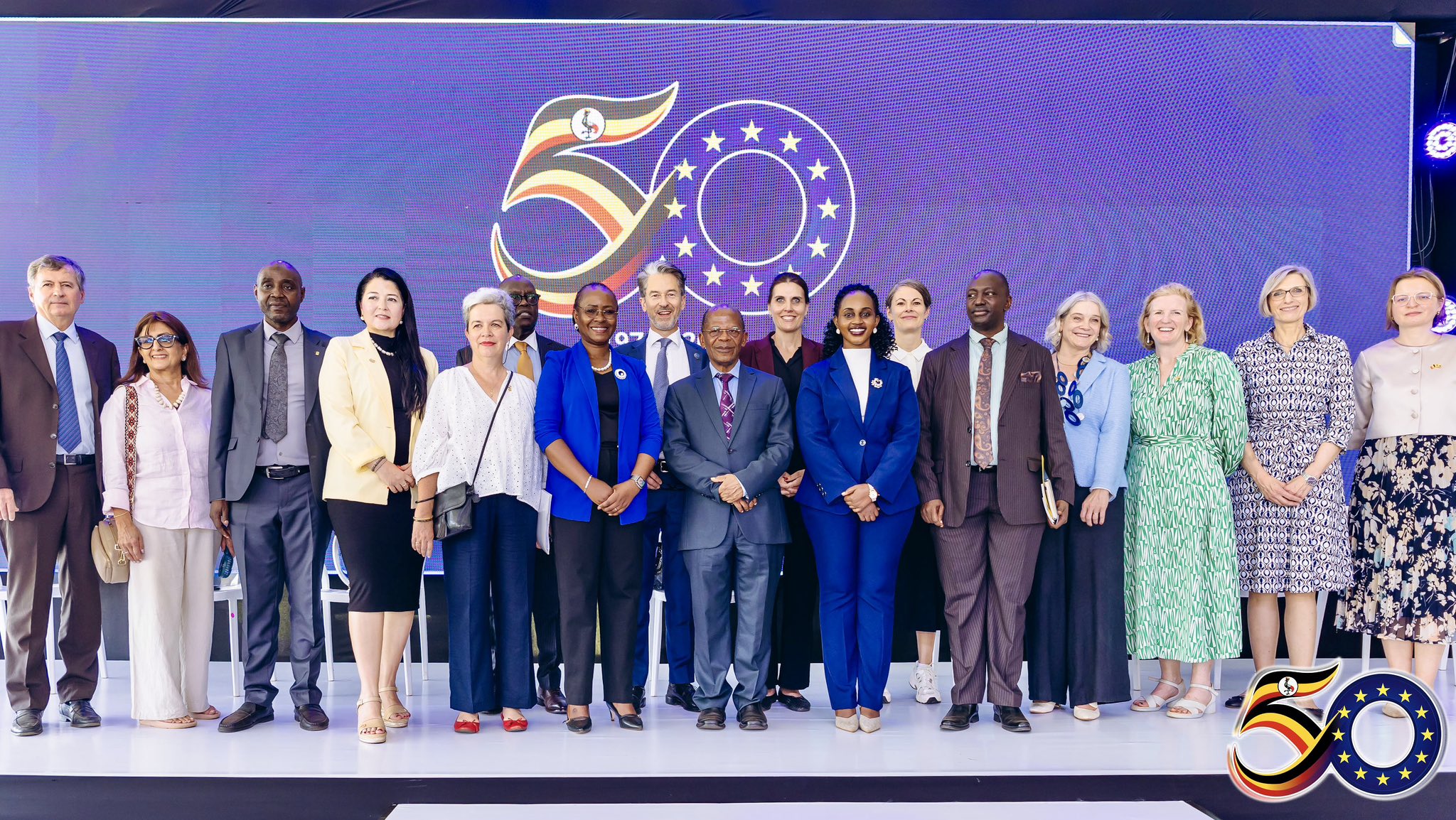
The fair coincides with the 50th anniversary of cooperation between Uganda and the European Union, providing an opportunity to reflect on past achievements and explore new areas of collaboration.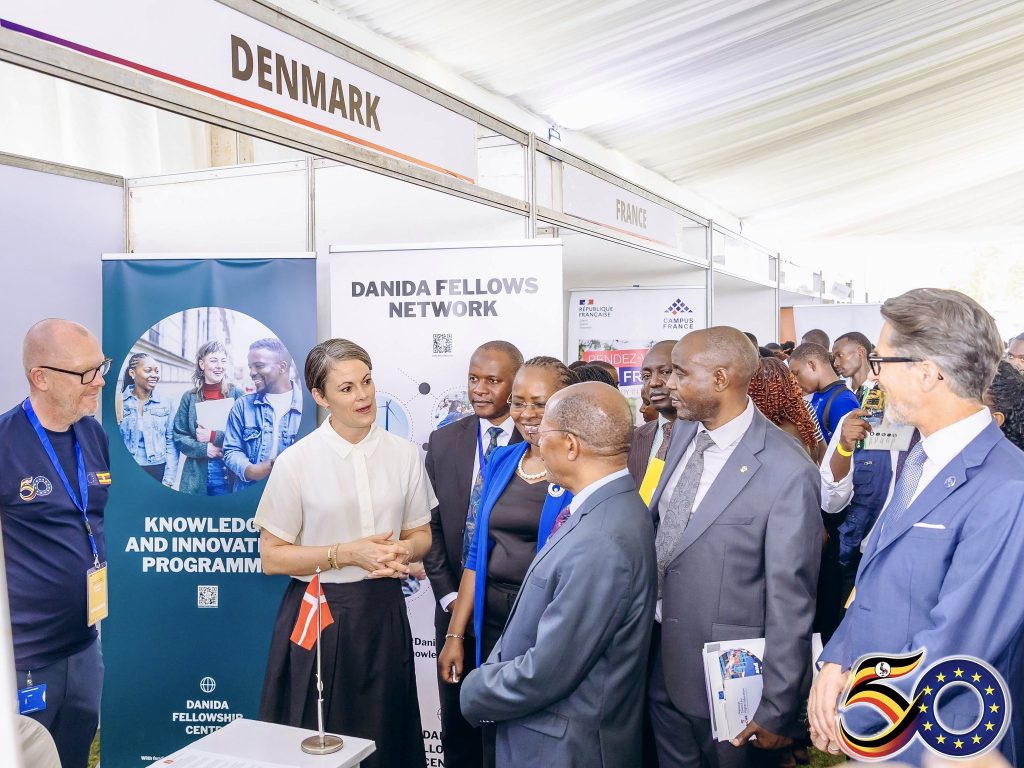 John Chrysostom Muyingo, the Acting Minister of Education and Sports, who was the guest of honour, said education, research and youth engagement remained important foundations for Uganda’s development.
He encouraged students and young professionals to use the fair to explore scholarships, academic exchanges, research partnerships and other opportunities that could help them acquire skills to contribute to their communities and country.
Muyingo said Uganda needed scientists, teachers, engineers, health professionals, social researchers and innovators to address emerging challenges and support economic growth.
Jan Sadek, the European Union Ambassador to Uganda, said education and research are becoming increasingly important in helping countries respond to challenges such as climate change, public health, food security, digital transformation, employment and governance.
He described Uganda’s youthful population as a major asset but said young people needed access to opportunities to turn their talent and creativity into meaningful contributions to society.
“Uganda is a very young country. And this is a tremendous asset; it means energy, talent, creativity and potential on a very large scale,” Sadek said.
He added that the EU and its member states continued to invest in higher education, skills development, research cooperation and youth empowerment in Uganda and across the region.
Sadek revealed that nearly 1,500 Ugandan students and staff had been selected for mobility opportunities in Europe over the previous five years, while more than 700 European students and staff had been selected for opportunities in Uganda.
He also said 61 Ugandans have also received Erasmus Mundus joint master’s scholarships.
According to Sadek, such exchanges benefit not only the individuals who participate but also the universities and communities they return to by introducing new knowledge, research methods, professional networks and perspectives.
He said international cooperation is necessary because no country could independently address all the challenges facing the world.
The ambassador urged students to approach the fair with curiosity, explore available opportunities and consider how the knowledge and skills they acquire could benefit Uganda.
The event brought together government officials, diplomats, university leaders, researchers, academics, teachers, students and young professionals to explore study opportunities, research funding and partnerships between Ugandan and European institutions.
The discussions highlighted the role of education, innovation and research in translating the country’s independence aspirations into practical development outcomes.