


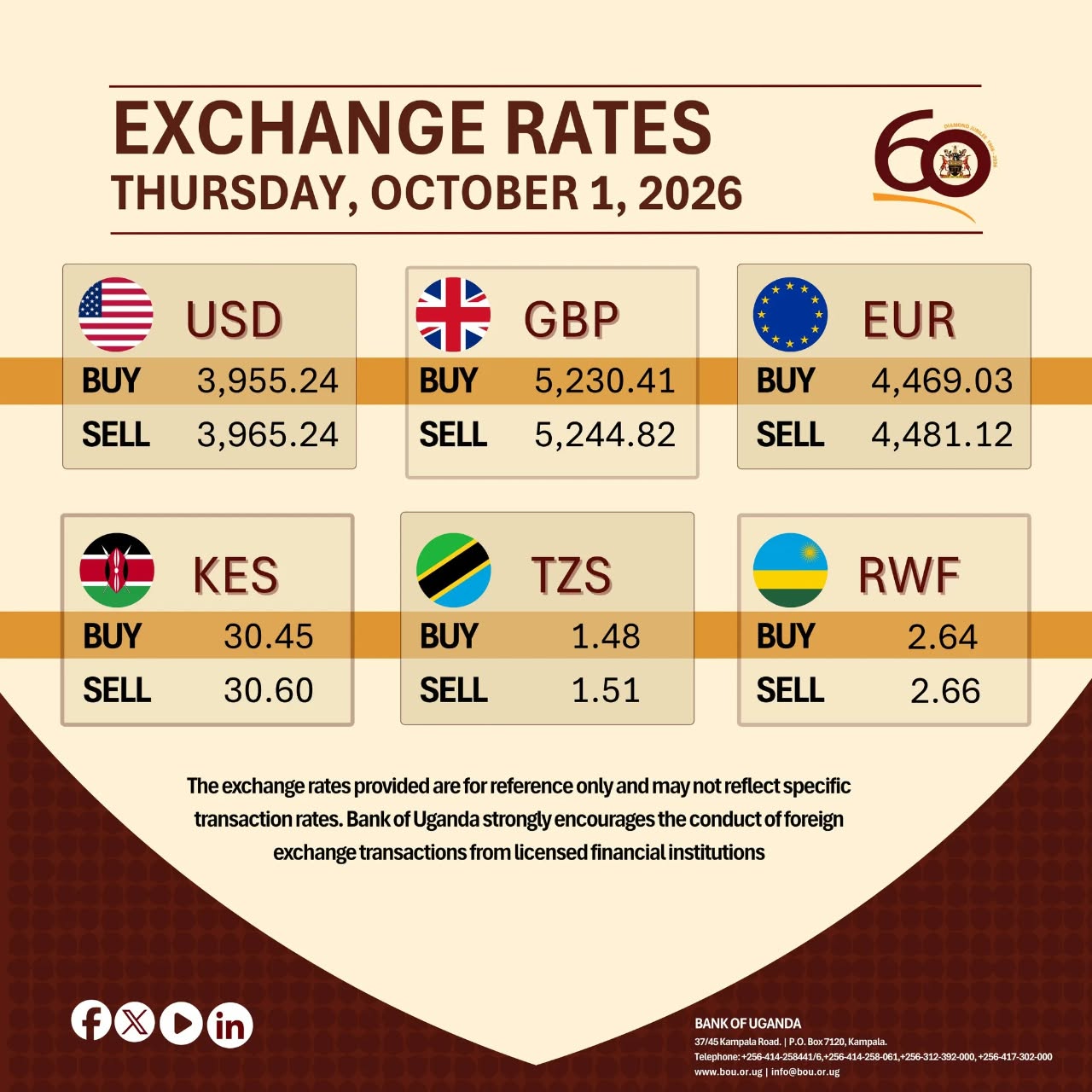
BUSINESS NEWS (UGNEWSLINE) -Absa Bank Uganda Weekly Markets Update Thursday 8th October 2026- The Uganda shilling experienced a volatile week hitting all-time lows and closing the week’s session at 4080 / 4090. The local unit opened the week trading at 3985 / 3995 levels before succumbing more demand pressure from offshore investors and large corporate importers, particularly those in the energy, manufacturing and telecommunications sectors with broader depreciation trend further exacerbated by high international oil prices, offshore portfolio adjustments and uncertainty surrounding the Middle East conflict.
The shilling closed the week losing 11.44% year to date. In the near term, the currency is expected to trade within the 3900 – 4150 range against the US dollar, with the balance of risks remaining tilted toward further weakness should offshore and corporate demand intensify.
Money market conditions experienced a shift in liquidity as the overnight funding rates remained elevated averaging within 10.00 -11.75%. The higher reserve requirement reduced liquidity available to commercial banks and prompted a significant adjustment in short-term interbank liquidity and funding costs. At the Treasury bond auction, the reopened 3-year, 10-year and 2-year maturities cleared at 14.00%, 16.85% and 16.925% respectively in an auction where a total of Ugx 1.039 trillion was accepted in Face Value compared to offered size of Ugx 990 billion. The new auction levels sparked by trading activity in the secondary market as various investors sought entry at selected points of the curve. Looking ahead, liquidity conditions are expected to remain relatively tight as banks adjust to the higher reserve requirement, potentially sustaining elevated interbank funding rates and a firmer yield bias across the government securities market.
The Kenya shilling held steady to the dollar at a higher trading range of 129.85/95 even as Central Bank intervened by selling dollars to stem the slide on the KES. Demand from sectors of the economy was seen exerting pressure on the Kenya shilling. With ongoing geopolitical risks, we expect the currency pair to hold at higher levels. As expected, the Monetary Policy Committee held Central Bank Rate at 8.75% citing that the current policy stance is appropriate to ensure inflationary expectations anchored and the exchange rate stable.
Crude oil prices surged above $92.60 per barrel on Thursday, reaching their highest level in nearly a month, amid growing concerns that the recent recovery in shipping activity through the Strait of Hormuz could prove short-lived. Market sentiment was further rattled after a tanker north of Qatar was struck by multiple projectiles on Wednesday, resulting in casualties. Maritime security reports also indicated that attacks on tankers transiting the Strait reached their highest weekly level since the onset of the conflict.
Adding to geopolitical tensions, reports suggested that the White House had directed the Pentagon to prepare military strike options against Iran that could potentially be executed before the midterm elections. These developments intensified concerns over potential disruptions to global oil supplies, providing additional support to crude prices.
The U.S. dollar index was broadly unchanged at 102.2 on Thursday, trading near its highest levels since April 2025, as investors continued to expect the Federal Reserve to maintain a restrictive monetary policy stance for an extended period. The latest rise in oil prices heightened inflation concerns, further strengthening expectations that U.S. interest rates may remain elevated. Minutes from the Fed’s September policy meeting indicated that most policymakers still foresee one additional rate hike before the end of the year, although there remains uncertainty over when such a move might occur. Adding to this outlook, Fed Governor Christopher Waller stated that further policy tightening may be required to bring inflation back to target, while noting that the central bank has flexibility regarding the pace of any future rate increases.
In Europe, rising sovereign bond yields continued to pressure the euro, providing further support to the U.S. dollar.