


KAMPALA, Uganda (UGNEWSLINE) — A dispute over miraculous healing has taken a disturbing turn in Uganda after prominent pastor Robert Kayanja publicly condemned media personality Frank Gashumba, warning that his attacks on Christianity and religious leaders would have consequences.
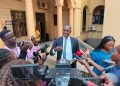
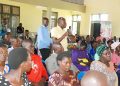
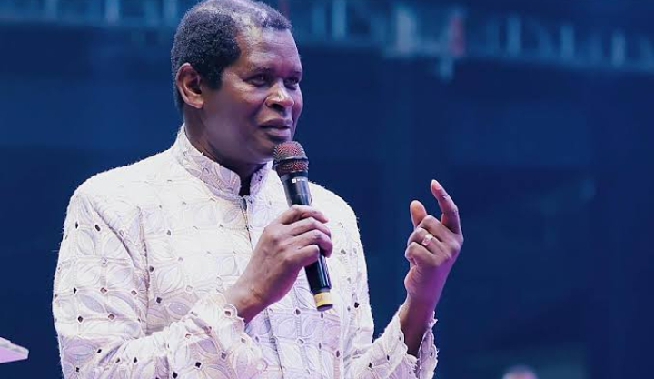
In a fiery address to worshippers at Miracle Centre Cathedral in Rubaga, Kampala, Kayanja accused Gashumba of repeatedly attacking influential figures and institutions, declaring that he would no longer tolerate what he described as insults directed at God’s people.
“This man, Frank Gashumba, attacks everything,” Kayanja said, accusing the outspoken commentator of having previously criticised the Buganda Kingdom’s Katikkiro, President Yoweri Museveni and the Catholic Church.
“We will not take this nonsense anymore,” he warned.
The seemingly furious pastor, invoked biblical imagery of divine punishment and made a stark declaration about Gashumba’s fate, that pushed the increasingly bitter confrontation into more serious territory.
“If there is a God in heaven, he will answer by fire; for the God that answered by fire in the days of Elijah is still the same God,” Kayanja told the congregation.
He then delivered a warning that has become the most contentious part of the dispute.
“Because you have ridiculed the blood of Jesus and you attacked God’s people, your own blood will kill you,” Kayanja added.
However, the remarks have intensified scrutiny of the confrontation, raising questions about the language religious leaders use when responding to public criticism and whether a disagreement over faith and church practices should escalate into warnings about an individual’s fate.
Kayanja’s outburst follows days of mounting tension triggered by Gashumba’s challenge to religious leaders who claim supernatural healing powers.
The businessman and social media commentator initially offered Shs200 million before increasing the reward to Shs500 million for any pastor, prophet or apostle willing to demonstrate the ability to heal a critically ill patient under publicly verifiable conditions.
Gashumba has questioned why preachers who claim to heal serious illnesses do not demonstrate those abilities in hospitals, where patients are fighting for their lives.
His challenge has struck a nerve in Uganda’s religious community, where large congregations gather for prayer, healing services and testimonies of miraculous recovery.
Kayanja, one of the country’s best-known Pentecostal preachers, has firmly rejected suggestions that miracles associated with his ministry are fabricated.
“Our miracles are not fake. They are God-made,” he said in an earlier response, insisting that the spiritual experiences associated with his church should not be dismissed because of allegations against other religious leaders.
The pastor’s latest intervention, however, goes beyond defending his ministry. By portraying Gashumba’s criticism as an attack on God and Christianity, Kayanja has recast the dispute as a confrontation over religious respect and the boundaries of public criticism.
Gashumba has maintained that his objections are directed at what he describes as fake prophets and preachers who exploit vulnerable believers, rather than at God or Christianity itself.
He has argued that religious leaders who publicly claim the ability to cure serious illnesses should be prepared to demonstrate those claims outside church services.
The dispute has also drawn in members of both families, extending the controversy from the pulpit to social media.
Gashumba’s daughter, and media personality Sheila Gashumba, has defended her father’s right to question alleged fake miracles and church financial practices, while Kayanja’s son, Robert Kayanja Jr, has defended his family’s ministry and challenged what he sees as unfair attacks on Pentecostal Christians.
The confrontation has exposed a broader tension in Uganda, where churches play an influential role in public life and provide spiritual guidance and, in some cases, social support to vulnerable communities.
For critics of some religious ministries, claims of miraculous healing and appeals for financial contributions deserve greater scrutiny, particularly when desperate people may be searching for relief from serious illness.
For many believers, however, miracles are matters of faith that cannot simply be reduced to a financial wager or demonstrated on demand.
Kayanja’s warning has now added another dimension to that debate: the question of whether religious leaders can defend their beliefs forcefully without language that may be interpreted as threatening an outspoken critic.
Gashumba has faced strong criticism from several pastors since announcing his challenge, while Kayanja’s latest remarks have become one of the sharpest escalations in the dispute so far.
Neither the existence of religious belief nor the right to question public claims is likely to settle the disagreement quickly. But as the exchange grows increasingly personal, the original question behind the Shs500 million challenge risks being overshadowed by a far more combustible battle over faith, authority and freedom of expression.
For now, Kayanja has made his position unmistakable: he believes Gashumba has crossed a line. Whether the confrontation will prompt a measured response or deepen the public feud remains to be seen.