


BOAO, Hainan– Across Asia’s vast and fast-growing economies, a quiet but profound transformation is underway. Long associated with surging energy demand fueled by coal and oil, the region is now repositioning itself as a central force in the global fight against climate change.
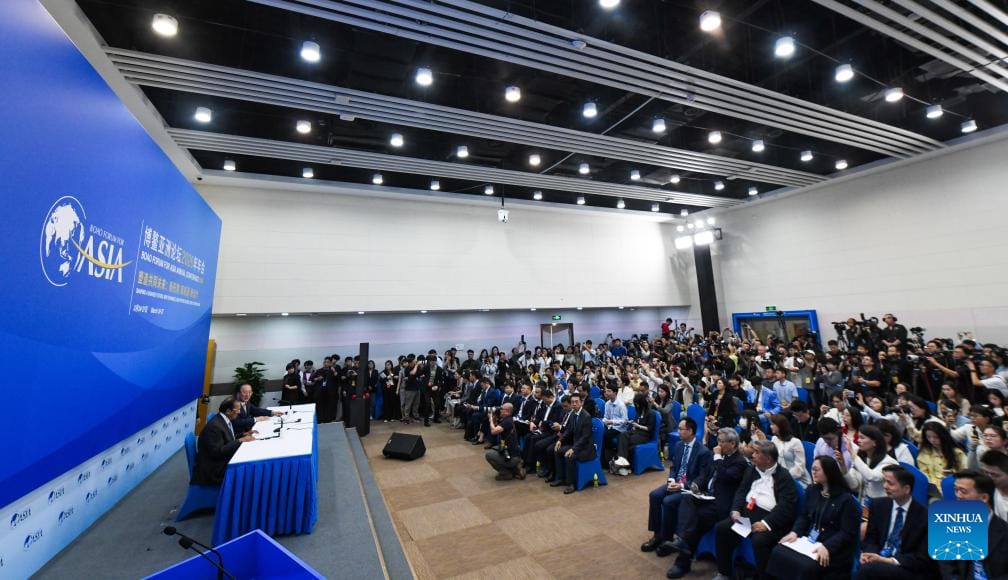
A new report released at the Boao Forum for Asia paints a picture of a region not only adapting to the low-carbon transition, but increasingly shaping it.
Titled “Sustainable Development: Asia and the World Annual Report 2026 — Sustainable Development in Asia amid Global Transformation,” the study argues that Asia’s blend of technological innovation and green ambition could spark a new era of economic expansion—one some observers are already calling a modern “Asian Miracle.”
The stakes are enormous. Asia accounts for roughly half of global economic output and consumes more than half of the world’s energy. That scale means its choices will heavily influence whether international climate targets are met, or missed.
From China to India, and from Japan to South Korea, governments are accelerating investments in renewable energy, particularly solar and wind. Meanwhile, regional blocs such as Association of Southeast Asian Nations and energy-rich Gulf states are diversifying into cleaner technologies, including hydrogen power, advanced battery storage, and carbon capture systems.
Asia’s installed power capacity has climbed past 5.3 terawatts, with nearly half now coming from renewable sources. In global terms, the region holds about 58 percent of all renewable energy capacity, an unmistakable sign of its growing dominance in the sector.
Experts say the transition is not just broadening, but deepening. According to the Global Energy Interconnection Development and Cooperation Organization, Asia is steadily emerging as a frontrunner in the global energy transition.
Much of that momentum is being driven by China, where clean energy capacity has surged to the point that wind and solar installations now exceed thermal power for the first time, a symbolic turning point in the country’s energy evolution.
Reports indicate that in 2025, Asia accounted for the majority of global spending in several key green technologies, including solar and wind, while also leading in battery development and hydrogen energy.
This concentration of capital is helping accelerate innovation and reduce costs worldwide, making clean energy more accessible beyond the region, yet the path forward is far from smooth.
Many Asian economies remain heavily reliant on fossil fuels, and gaps in electricity grid infrastructure threaten to slow the integration of renewable power.
Financing also remains uneven, particularly in developing countries where access to green capital is limited.
The report warns that without stronger coordination and sustained investment, these structural challenges could stall progress at a critical moment for the planet.
To maintain momentum, it calls for a sweeping overhaul of energy systems, centered on clean electricity, expanded electrification, and smarter, more interconnected grids.
It also emphasizes the importance of tailoring national strategies while deepening regional cooperation, a balance that could determine how effectively Asia leads in the decades ahead.
As delegates gather this week in Boao under the forum’s 2026 theme, “Shaping a Shared Future: New Dynamics, New Opportunities, New Cooperation,” one message is clear: Asia’s energy transition is no longer just a regional story. It is rapidly becoming one of the defining forces in the global climate landscape.