


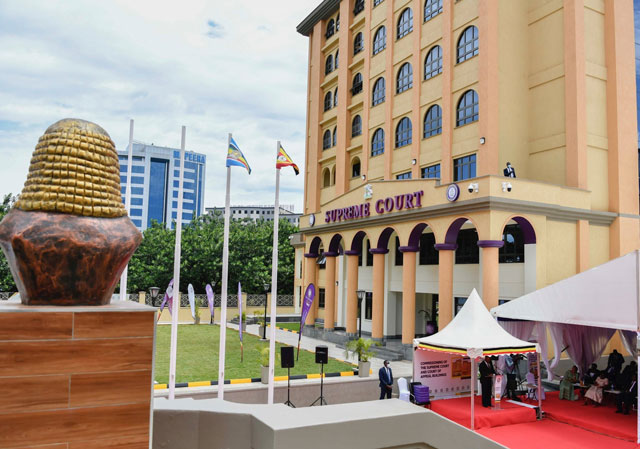
The High Court in Kampala set to decide a petition seeking to overturn the election of Nakawa Division West MP and Leader of the Opposition in Parliament, Joel Ssenyonyi on 20 October 26.
The date was announced by Judge Allan Paul Nshimye after lawyers representing the parties confirmed that they had filed their written arguments as directed by court.
The petition against Ssenyonyi’s victory was filed by lawyer and politician Ivan Bwowe saying it was marred by electoral malpractices.
Ssenyonyi secured 21,761 votes in an eight-candidate race, while Bwowe obtained 271 votes.
At the centre of Bwowe’s challenge is the name used to identify the constituency during the nomination process.
Bwowe argues that candidates were nominated under the name “Nakawa West”, yet the constituency is legally known as “Nakawa Division West.” He contends that the difference was not merely a matter of wording but affected the legality of the nominations.
His case is that he was the only candidate whose nomination correctly identified the constituency and that, consequently, he should have been declared the duly elected MP without an election being held.
The Electoral Commission, the Kampala District Returning Officer and Ssenyonyi have rejected the petition and asked the court to dismiss it.
Before polling took place, Bwowe had gone to court over the Electoral Commission’s handling of nominations in the constituency, raising the same concern about the use of the name “Nakawa West”.
That case was dismissed by Justice Collins Acellam on January 8, just days before the parliamentary election.
Ssenyonyi’s lawyer, Nalukoola Luyimbazi, and Electoral Commission lawyer John Musiime have argued that the earlier ruling settled the dispute over the constituency’s description. They say Bwowe cannot use a post-election petition to reopen the same question.
The respondents have also challenged the substance of Bwowe’s case, arguing that he has not shown that the alleged breach of electoral requirements affected the outcome of the election to an extent that would justify cancelling it.
They have further questioned portions of Bwowe’s affidavit, saying it contains legal conclusions that should be left to the court rather than statements of fact from a witness.
The respondents are also opposing the inclusion of the Returning Officer as a party, arguing that Bwowe has not alleged that the officer acted improperly, dishonestly or outside the powers of the office.
Bwowe, however, wants the court to examine both Ssenyonyi’s nomination and the resulting election. His petition seeks declarations and orders based on his argument that the election was conducted on an invalid nomination foundation.
The October 20 judgment will therefore determine whether the court can entertain Bwowe’s challenge and, if so, whether the issues he has raised provide sufficient legal grounds to interfere with the election results