




TOKYO – At least 13 people have died after a powerful earthquake struck south-western Japan, with emergency teams racing against time to rescue people believed to be trapped beneath collapsed buildings, according to reports.
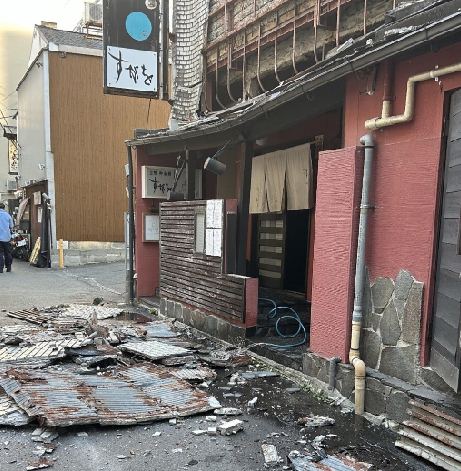
Information coming in shows that, the magnitude 6.8 earthquake struck Kumamoto Prefecture late Tuesday July 28, 2026), causing widespread damage to roads, buildings and transport infrastructure, while forcing thousands of residents to seek shelter.
Three of the victims died after part of the second floor of an Aeon Mall in Kashima collapsed, trapping shoppers and workers inside, local fire authorities said. Rescue teams had pulled eight people from the rubble by Wednesday, although the exact number of those still trapped remained unclear.
Prime Minister Sanae Takaichi expressed condolences to the bereaved families and praised emergency responders for their efforts.
“It’s a race against time,” the BBC quoted Takaichi as saying during an update on Wednesday.
Japan’s Meteorological Agency initially measured the quake at magnitude 7.1 before the United States Geological Survey revised it to 6.8, reflecting updated seismic analysis.
The earthquake struck at a shallow depth of about 10 kilometres, roughly 20 kilometres south of Kumamoto City.
The BBC reported that dramatic footage from Kashima showed smoke billowing from the damaged shopping mall as terrified shoppers fled into the parking area. Sections of the building’s exterior were ripped away, exposing steel beams.
Elsewhere across Kumamoto Prefecture, roads and bridges cracked, several buildings caught fire, rail services were suspended and thousands of households were left without electricity, according to reports.
Japan has mobilised firefighters, coast guard personnel, self-defence forces and other emergency responders to support rescue operations.
Chief Cabinet Secretary Minoru Kihara urged residents in the hardest-hit areas to follow evacuation instructions issued by local authorities and remain calm as aftershocks continue.
The BBC reported that Prime Minister Takaichi had ordered the deployment of about 3,600 soldiers to assist with rescue and recovery operations. More than 60 aftershocks, ranging between magnitudes 1 and 4, have been recorded since the main tremor.
The International Atomic Energy Agency said the earthquake caused no damage or safety concerns at the Sendai Nuclear Power Plant, located about 100 kilometres from the epicentre, and that the facility remains operational.
Japan is among the world’s most earthquake-prone countries, experiencing around 1,500 earthquakes annually. In 2016, a series of powerful earthquakes in Kumamoto claimed 278 lives, the BBC reported.