Farmers in Uganda’s drought-prone Karamoja region have been encouraged to shift from rain-dependent agriculture to irrigation-based farming as erratic weather patterns threaten food production and deepen hunger concerns.
Government officials say expanding access to reliable water sources is essential to helping communities produce food throughout the year, strengthen livelihoods and build resilience against climate change.
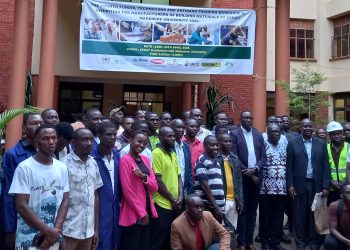
The call was made by Engineer Ronald Kato Kayizzi, Assistant Commissioner for Multipurpose and Bulk Water Development at Uganda’s Ministry of Water and Environment, during a Farmer’s Field Day held in Lokitumo village, Lotisan Sub-County, Moroto District.
The event highlighted the progress of the 30-member Lokitumo Young Farmers Group, which is working with Nexus Green through a government-supported irrigation initiative aimed at promoting climate-smart agriculture in Karamoja.
He said the field day allowed farmers to demonstrate skills gained during their first planting season while giving government officials and partners an opportunity to assess the performance of the irrigation scheme and provide guidance on its long-term management.
“Karamoja faces serious water challenges, and sustainable irrigation is critical if communities are to move beyond dependence on unpredictable rainfall,” officials said.
The government-backed project, valued at about UGX 450 million, includes water resource development, two irrigation systems and two elevated water reservoirs designed to support year-round agricultural production.
Kayizzi said the success of the initiative will depend on continued technical support, including access to resident technicians, agricultural extension services and agribusiness development to help farmers transition from subsistence farming to commercial production.
Agronomist Emma Kyakuwa, a GB-Consultant representative supporting the project, said modern irrigation techniques are already helping households diversify incomes and improve food security.
The consultancy has established solar-powered irrigation sites in Lokitumo and Nabuin in Katikikile Sub-County, providing communities with alternative sources of water for farming during prolonged dry periods.
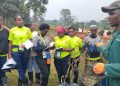
At the field demonstration, farmers displayed thriving vegetable gardens growing tomatoes, onions, cabbage and Sukuma wiki, crops that have provided both food and income opportunities for participating households.
Members of the Lokitumo Young Farmers Group called for additional support, including pesticides and expanded irrigation infrastructure, to increase production and extend the benefits to more residents.
Farmer Mercy Korobe said the project was helping communities cope with repeated droughts and reduce the impact of hunger, while group chairperson Lokong Simon praised the government’s efforts to equip young farmers with skills and resources.
Moroto District Vice Chairperson Stephanie Adupa urged more residents across Karamoja to embrace irrigation farming, describing it as a pathway toward sustainable livelihoods and a shift away from traditional dependence on seasonal rains.
The Ministry of Water and Environment handed over a solar-powered irrigation system to the Lokitumo farmers in January 2026 under a programme supported by United Kingdom Expert Finance.
Authorities say such climate-resilient agricultural investments are increasingly important as Karamoja faces recurring droughts, water shortages and food insecurity linked to changing weather patterns.

Luqman Petroleum expands Kampala network with eighth filling station
Luqman Petroleum has expanded its retail network in Kampala with the opening of its eighth filling station, as the regional...