


As Uganda enters the 2026 election campaign season, the Kampala Capital City Authority (KCCA) has issued stringent guidelines governing the display of political campaign materials across the city.
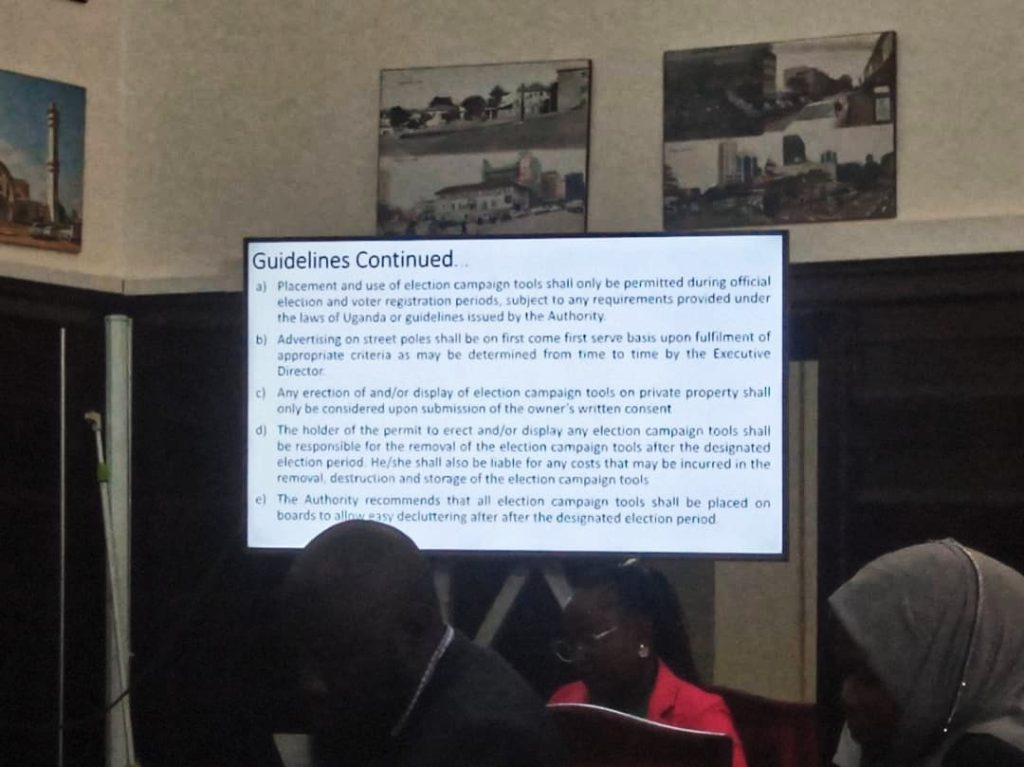
The new regulations are aimed at maintaining order, protecting public infrastructure, and preserving the city’s cleanliness and aesthetics during the politically active period.
According to the KCCA guidelines, all political aspirants must obtain prior approval before displaying any campaign tools, including posters, billboards, banners, or sound announcements, within Kampala’s jurisdiction.
Those who fail to comply will face penalties under several laws, including the KCCA Outdoor Advertising Ordinance (2025), the National Environment Act, the Physical Planning Act, the Uganda Communications Commission Advertising Standards, and others.
Unauthorized placement of posters, especially on public infrastructure such as electric poles, traffic signs, roundabouts, trees, hospitals, schools, and places of worship, is strictly prohibited.
Campaign materials placed in such locations will be removed at the owner’s expense, and offenders may face fines or legal action.
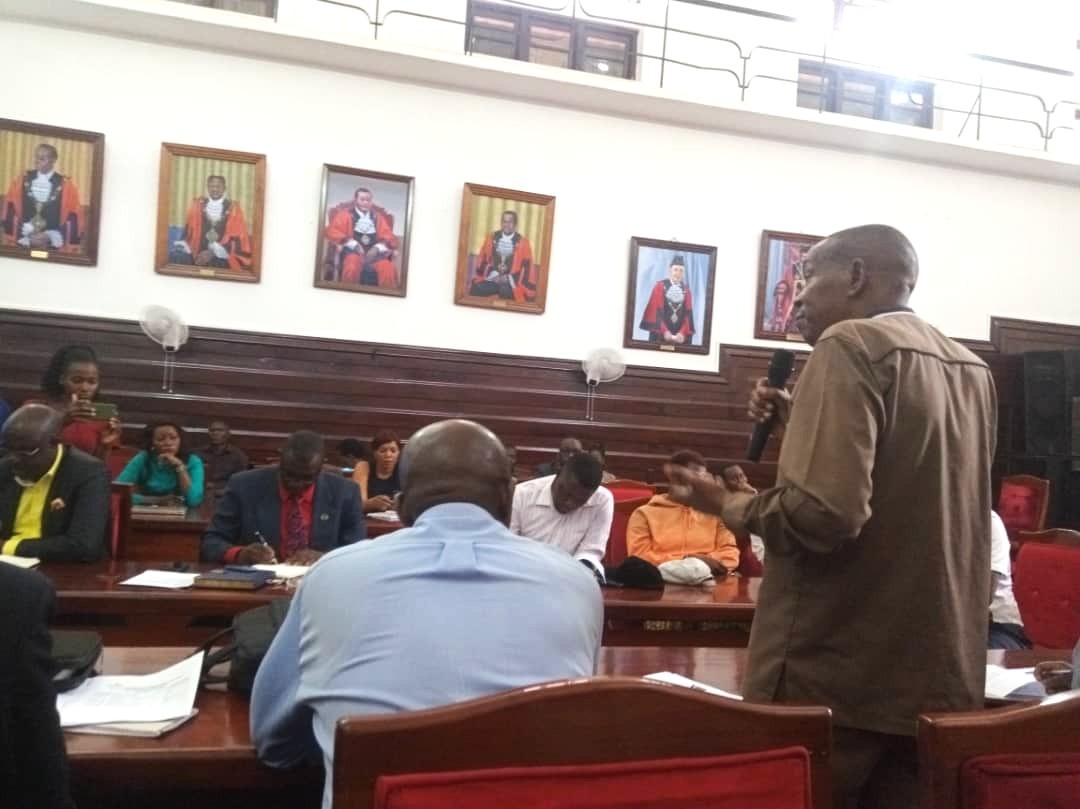
Deputy Executive Director Benon Kigenyi, while addressing secretary generals of 26 registered political parties at KCCA headquarters, emphasized that campaign materials on private property will only be allowed with written consent from the property owner.
Posters must be displayed only on lawfully approved billboards, framed to a size not exceeding 0.9m x 0.6m, and must not obstruct visibility or violate traffic regulations.
All sound/audio announcements must adhere to permitted hours (8:00 AM to 5:00 PM) and not exceed 80 decibels. Sound-based campaign activities also require an outdoor advertising permit and must follow routes approved by KCCA.
Illuminated signs will only be allowed on already approved billboards to prevent visual clutter, and all campaign tools must be installed on designated boards to facilitate clean removal after the election period.
KCCA warned that campaign tools erected without appropriate permits will be treated as illegal developments under the Physical Planning and Building Control Acts.
Additionally, posters placed without KCCA’s permission may be treated as litter under Section 97 of the National Environment Act.
Defacing or removing a rival candidate’s poster is also a punishable offense under Section 101 of the Parliamentary Elections Act, Cap. 177.
Offenders may face substantial penalties. For instance, violations under the National Environment Act could attract fines of up to 550 currency points upon conviction.
Under KCCA’s Maintenance of Law and Order Ordinance (2006), other offenses may carry fines of up to two currency points.
During the stakeholder meeting, concerns were raised about the fairness and timing of the guidelines.
Kigenyi urged all parties to ensure that their aspirants adhere to the regulations and maintain Kampala’s status as a clean, peaceful, and orderly capital.
He added that KCCA had issued warnings to those who have already placed unauthorized posters and expects immediate compliance.
KCCA concluded by reaffirming its commitment to enforcing these guidelines strictly and fairly, urging all political stakeholders to prioritize public safety, decency, and environmental conservation as they engage in their campaign activities.