



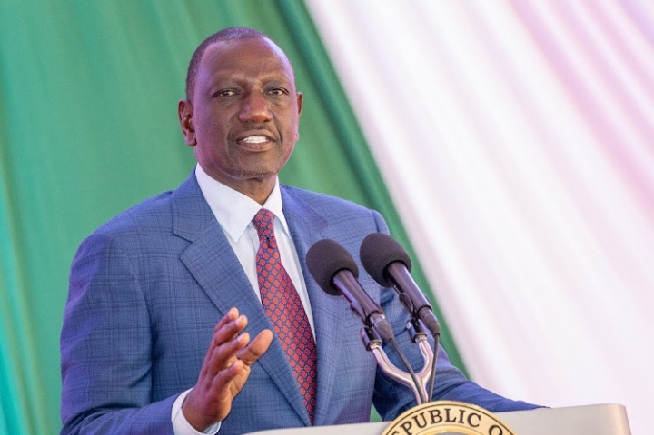
Kenya’s High Court has delivered one of the most consequential constitutional judgments of President William Ruto’s administration, declaring the country’s Cabinet unconstitutional and ordering the president to appoint a new team within 120 days after finding that it violates the constitutional gender quota.
The ruling marks a significant assertion of judicial oversight over executive appointments and is expected to reshape Kenya’s political landscape as President Ruto faces the challenge of rebuilding his Cabinet while balancing constitutional obligations with the realities of coalition politics.
A three-judge bench ruled that the current Cabinet fails to satisfy Article 27(8) of Kenya’s Constitution, which requires that no more than two-thirds of members of appointive public bodies be of the same gender.
The judges concluded that the Cabinet, as presently constituted, is legally invalid and directed the president to rectify the constitutional breach within four months.
The judgment followed a petition brought by several civil society organisations, including the Katiba Institute, the Centre for Rights Education and Awareness (CREAW), Transparency International Kenya, CRAWN Trust and the World March of Women-Kenya.
The petition challenged the legality of the Cabinet formed after President Ruto dismissed almost his entire executive team in the aftermath of the 2024 anti-Finance Bill protests.
Writing for the court, Justice Jairus Ngaah held that the Executive had repeatedly failed to meet the constitutional threshold for gender representation despite successive Cabinet appointments and reshuffles. The court found that the government’s actions fell short of the constitutional standards governing executive appointments, rendering the current Cabinet unlawful.
Beyond the question of gender representation, the judgment also addressed the increasingly contentious issue of political realignments within Kenya’s government.
Justice Ngaah criticised the appointment of politicians drawn from opposition parties into the Cabinet outside an established legal framework, ruling that such appointments undermine constitutional principles underpinning Kenya’s multi-party democratic system.
The ruling stems from one of the most turbulent periods of Ruto’s presidency. Following nationwide demonstrations against the Finance Bill in 2024, the president withdrew the controversial legislation and dissolved nearly his entire Cabinet in a move intended to restore public confidence and ease political tensions.
New Cabinet nominees were subsequently unveiled in several phases between July 2024 and April 2025 and were largely approved by Parliament.
However, petitioners maintained that the reconstituted Cabinet continued to fall short of constitutional requirements relating to gender balance, inclusivity and diversity, prompting the legal challenge that culminated in Wednesday’s decision.
The High Court’s judgment now places President Ruto under intense constitutional and political pressure.
Any Cabinet reshuffle undertaken over the next 120 days will need to satisfy the mandatory gender threshold while preserving political alliances that underpin his broad-based administration.
The decision is also likely to reinforce the judiciary’s role as a constitutional check on executive power, reaffirming that political considerations cannot override explicit constitutional requirements.
As Kenya prepares for another Cabinet reorganisation, the ruling is expected to influence future executive appointments and strengthen the enforcement of constitutional governance standards across the country’s public institutions.
With the 120-day deadline now in effect, attention will turn to how President Ruto navigates one of the most politically sensitive Cabinet reorganisations of his presidency while complying with a court order that carries significant legal, constitutional and political implications.