


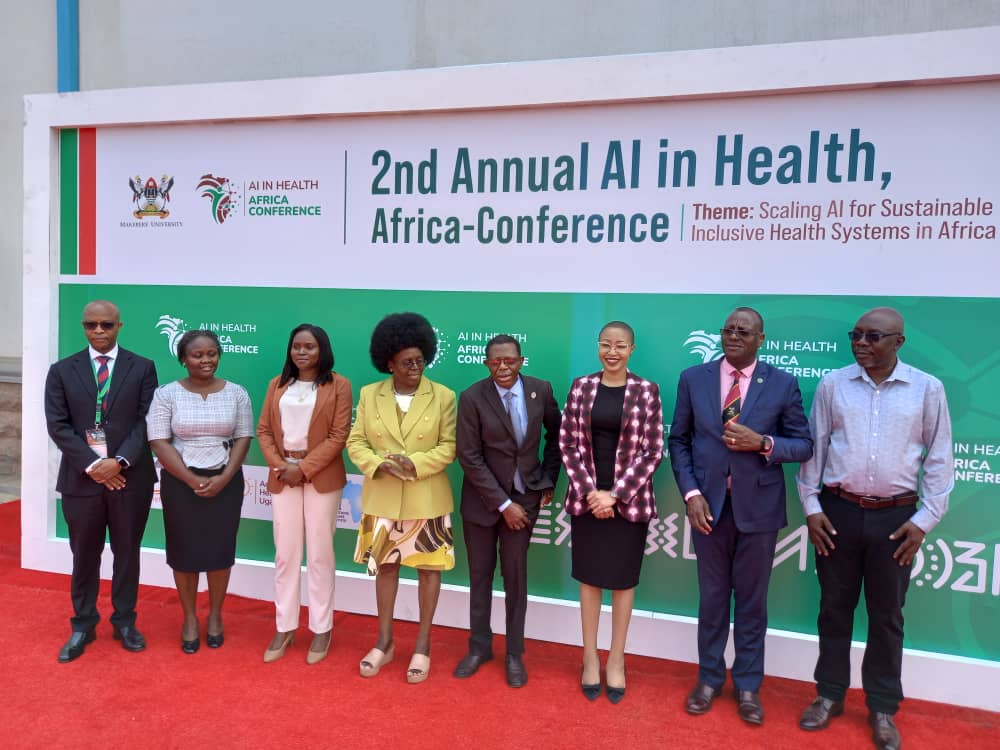
KAMPALA, Uganda : Makerere University hosted the Second Artificial Intelligence (AI) in Health Africa Conference 2025, a high-level gathering aimed at exploring AI-driven solutions tailored to Africa’s unique healthcare landscape.
The event builds on the success of the inaugural conference, which laid the groundwork for advancing AI in the region’s health sector.
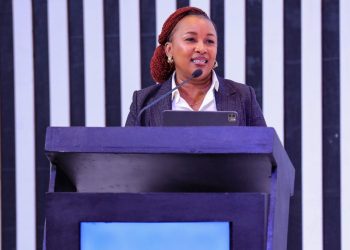
The two-day conference officially opened on November 6, 2025, at the Makerere University Main Conference Hall. The ceremony was presided over by Dr. Monica Musenero Masanza, Minister of Science, Technology, and Innovation in the Office of the President.
Held under the theme “Scaling AI for Sustainable and Inclusive Health Systems in Africa,” the conference brought together experts, policymakers, researchers, and healthcare innovators to discuss key issues such as South-to-South collaboration, knowledge exchange, and the localization of AI solutions within African health systems.
Among the major topics of discussion were the integration of AI with indigenous knowledge systems, addressing linguistic and cultural diversity, and ensuring that AI complements existing healthcare tools rather than creating fragmented systems. The conference also features discussions on the role of Generative AI in healthcare innovation and the development of sustainable business models.
Dr. Musenero emphasized the need for African researchers to develop homegrown AI solutions that address the continent’s specific healthcare challenges. She commended Makerere University’s leadership, particularly Prof. Tonny Oyana, Principal of the College of Computing and Information Sciences, and Dr. Rose Nakasi, the program’s Principal Investigator—for their pioneering efforts in shaping AI-driven healthcare innovation.
Representing the Vice Chancellor Prof. Barnabas Nawangwe, Prof. Buyinza Mukadasi, the Academic Registrar, welcomed the delegates and encouraged collaboration between Makerere University and other stakeholders. He called for collective efforts to ensure that Africa’s AI in Health agenda achieves its goals by developing practical solutions to existing policy and implementation gaps.
In her remarks, Dr. Nakasi expressed gratitude to development partners, including the Infectious Diseases Institute (IDI), AI for All Network, and the Makerere University Health Lab, among others, for their continued support.
Key thematic areas at the conference included; AI policy, governance and ethics in healthcare; localization and contextualization of AI solutions; capacity building for health practitioners; integration of AI in healthcare systems; generative AI applications; and sustainable business models.