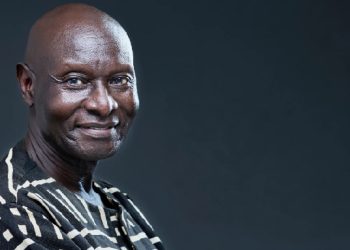



For decades, Dr. Clement M lived a life defined by precision, intellect, and trust. Inside the operating theatres of Kenyatta National Hospital, he handled the fragile complexity of the human brain, saving lives with steady hands and clinical certainty.
Patients placed their futures in his care. Colleagues respected his expertise.
His journey, marked by academic excellence from the University of Nairobi to advanced studies in Scotland, reflected a man fully committed to medicine.
Behind high walls
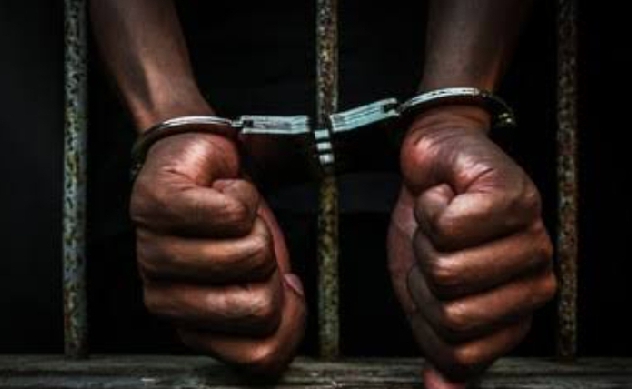
Today, that same man lives behind the high walls of Kamiti Maximum Security Prison.
His fall did not begin with violence, greed, or intent to harm. It began with something far more ordinary: a second-hand mobile phone.
Around 2005, Dr. Clement made what seemed like a routine purchase.
For Kshs 2,000, he bought a used phone from a mortuary attendant he knew at the hospital.
It was a modest device, intended for his daughter, then a student at Moi University, to help her stay connected.
There was nothing remarkable about the transaction. In Kenya’s bustling second-hand market, such exchanges happen every day, quiet, unrecorded, and unquestioned.
But this phone carried a hidden past.
Unknown to the Doctor, it had once belonged to a senior Central Bank official who had been violently robbed and murdered.
Among the items stolen during that crime was the very phone that would later pass through several hands before reaching the hospital mortuary attendant, and eventually, the doctor himself.
By the time investigators traced the device, it had already moved again.
Dr. Clement’s daughter had given it to her boyfriend. When police tracked the phone, the boyfriend was arrested. Under questioning, he pointed to her. She, in turn, led officers to her father.
Dr. Clement did not resist. He cooperated fully, offering a clear and consistent account: he had purchased the phone second-hand from someone he trusted, unaware of its origin or its connection to any crime.
But in the unfolding investigation, that explanation carried little weight.
Prosecutors built their case around the phone and the chain of possession linking it back to him.
There were no eyewitnesses placing him at the scene of the murder. No forensic evidence tying him to the act. No confession. Yet the circumstantial trail, anchored by the recovered device, proved decisive.
In 2009, the court found him guilty and sentenced him to 30 years in prison.
It was a verdict that stunned those who knew him, and one he believed would be overturned on appeal.
Instead, the opposite happened. His sentence was enhanced to death, a punishment later commuted to life imprisonment as part of broader clemency measures affecting death row inmates.
And just like that, a career built over decades was erased.
Inside him, Dr. Clement’s identity has been reshaped but not extinguished. Inmates seek him out not as a convict, but as a doctor. He treats minor ailments, dresses wounds, and offers medical advice in a place where formal healthcare is often stretched thin. Beyond medicine, he has trained as a paralegal, helping fellow prisoners navigate the complexities of the legal system, drafting appeals, petitions, and motions.
It is, in many ways, a continuation of the life he once led: service under pressure, helping others survive.
Yet the question that lingers over his story is as stark as it is unsettling, how did a single object, passed through multiple hands, become the thread that unraveled an entire life?
The mortuary attendant who sold him the phone was never charged. The full chain linking the stolen device to the original crime remains incomplete.
And the men responsible for the robbery and murder that set everything in motion were never fully connected to the case that ultimately convicted him.
For Dr. Clement, the consequences have been absolute.
More than 20 years later, he remains behind bars, maintaining his innocence and holding onto the belief that the truth, however delayed, will one day emerge.
His story now circulates beyond prison walls, shared in interviews, retold as caution, and debated as a troubling example of how circumstantial evidence can define a case.
In a country where second-hand phones remain a lifeline for millions, it also serves as a warning: that even the most ordinary transaction can carry unseen risks.
In the end, this is not just a story about a phone.
It is a story about how fragile a life’s work can be, how quickly trust, reputation, and freedom can collapse under the weight of a single, unseen connection.
And for one neurosurgeon, it is the story of how everything he built was lost, not in an operating theatre, but in the quiet exchange of Kshs 2,000.