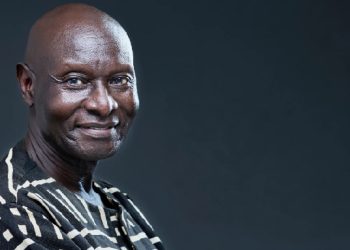




The Uganda National Examinations Board (UNEB) has today, November 7, 2025, officially started the Uganda Advanced Certificate of Education (UACE) examinations with the briefing of candidates across the country.
The UACE exams, which mark the final phase of the 2025 national examination calendar, follow the conclusion of the Uganda Certificate of Education (UCE) exams that ended, and the Primary Leaving Examination (PLE) held earlier this week on November 3 and 4.
According to UNEB, all this year’s examinations are being conducted under the theme “Embracing security and holistic assessment of learners in a dynamic environment.”
The Board says the theme underscores the need to safeguard the integrity of national examinations while promoting a more inclusive and comprehensive assessment of learners’ competencies.
The UNEB Executive Director, Dan Odongo emphasized that maintaining the security of examinations ensures that the results accurately reflect each learner’s true ability. “This is the only way for us to be sure that the learners who have gone through this process have grades and certificates that reflect their true ability,” he noted.
Odongo also thanked teachers for their role in ensuring the smooth conduct of the recently concluded PLE.
“On behalf of the Board, I wish to reiterate our profound gratitude to the Uganda National Teachers’ Union for calling off their industrial action. This enabled teachers to participate in the supervision of the PLE examination,” he said.
Over 166,000 candidates to sit for UACE
A total of 166,402 candidates were registered for this year’s (2025) UACE exams, an increase of 14.6 percent from last year’s 141,996 candidates.
The candidates will sit their exams from 2,844 centers across the country between November 10, and December 5, 2025.
Of the total candidates, 42,328 (25%) are beneficiaries of the government’s Universal Post-Level Education and Training (UPOLET) program, while 124,074 (75%) are privately sponsored.
A total 77,772 (44%) of the candidates are female and 93,630 (56%) are male.
Warning against malpractice
UNEB has once again warned all individuals against engaging in examination malpractice, saying anyone caught will face severe punishment under the UNEB Act, Cap 259.
Odongo revealed that several suspects have already been arrested for malpractice during the PLE and UCE exams, and security agencies remain on high alert as the UACE exams commence.
“The penalties under the Act range from five to ten years’ imprisonment or a fine of between 20 and 40 million shillings, or both,” he said.
He cautioned invigilators and scouts against negligence, noting that those who allow malpractice under their watch risk imprisonment for up to five years under Section 26 (1)(g) of the UNEB Act.
“During the conduct of PLE, we had about 55 suspects of malpractice who are due to be arraigned in court,” Odongo said, adding that the Board will continue to work with law enforcement to curb the vice.
UNEB also urged members of the public to report any suspected cases of malpractice through its toll-free lines: 0800-111-427 and 0800-211-077.
Odongo assured whistleblowers that they would be protected under the Board’s Whistleblowers Policy.
Odongo urged candidates to remain calm, disciplined, and confident throughout the examination period.
“You have what it takes to pass this examination. The questions are drawn from what you have studied over the years,” he said.
He warned students against falling prey to individuals claiming to have access to exam papers or offering illegal assistance, reminding them that such actions could lead to the cancellation of results or disqualification.
“Do not be misled by anyone claiming to have access to examination papers. Avoid acts of indiscipline or anything that may disrupt the examinations. Follow the instructions given to you,” he advised.
Odongo also encouraged parents, teachers, and religious leaders to continue praying for the candidates and those involved in administering the exams.
“May God bless our candidates and those involved in the conduct of the examinations, and may God bless our country,” he said.
The UACE examinations mark the end of Uganda’s post-secondary education cycle and determine entry into tertiary institutions.