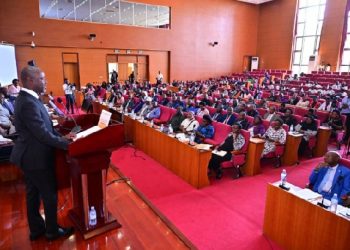



KAMPALA, Uganda (UGNEWSLINE) — Ugandan lawmakers are demanding urgent government action to ease the cost of living, warning that rising prices of essential goods are putting pressure on households and exposing the gap between economic growth figures and the financial realities facing ordinary citizens.
The debate in parliament has intensified calls for relief measures, including a review of fuel taxes and cuts to non-essential government spending, as legislators question whether existing economic policies are delivering sufficient protection for consumers.
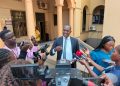
“We have a crisis. It is actually a national economic crisis. Let’s face it, and let government address it as such,” Gerald Karuhanga, the MP for Ntungamo Municipality, said during the debate.
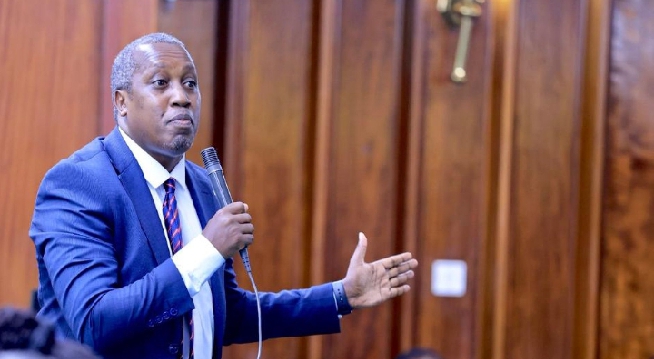
The dispute centres on how quickly the government should intervene to reduce the burden on consumers while maintaining fiscal stability and funding public services.
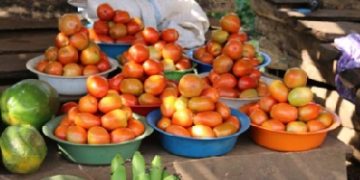
Lawmakers have argued that fuel prices have consequences far beyond transport, feeding into the cost of moving agricultural produce and other goods across the country.
Higher distribution costs can, in turn, put pressure on food prices and household budgets, particularly for families with limited disposable income.
Some MPs called for a review of taxes on petroleum products, while others want government to reduce expenditure that is not considered essential and direct more resources towards measures that could ease pressure on consumers.
The legislators have also urged greater investment in domestic production and manufacturing, arguing that reducing dependence on imported goods would strengthen Uganda’s resilience to external economic shocks and support job creation.
Finance Minister Henry Musasizi has defended the government’s broader economic approach, which includes controlling public expenditure, maintaining monetary stability and supporting investments intended to expand production and foreign-exchange earnings.
The government faces competing demands: households and businesses want immediate relief from rising costs, while policymakers must also protect public revenue, preserve foreign-exchange reserves and meet spending commitments.
The debate reflects a wider challenge for economies seeking to sustain growth while ensuring that its benefits reach people facing higher costs for food, transport and other necessities.
For Uganda, the central question is whether the government can translate its economic strategy into tangible relief for households without undermining broader financial stability.
The parliamentary pressure signals that the cost of living is becoming an increasingly prominent test of economic policy, with lawmakers seeking measures whose impact can be felt in markets, shops and at fuel stations rather than only in official economic indicators.