


KAMPALA (UGNEWSLINE) – Uganda is seeking to make parents and communities central to how young people learn about health, relationships and personal responsibility, as the government rolls out a new framework aimed at preparing millions of children for adulthood.
The policy, launched in Kampala on 28 October, seeks to strengthen health and life-skills education by bringing families, schools, religious institutions and communities into closer cooperation, amid concerns about teenage pregnancy, HIV, early marriages, substance abuse and violence against children.
The National Framework for Education on Health and Life Skills is designed to go beyond conventional classroom teaching, recognising that young people’s decisions are also shaped by their homes, peers and wider social environments.
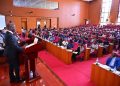
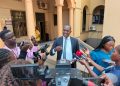
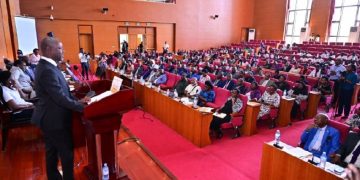
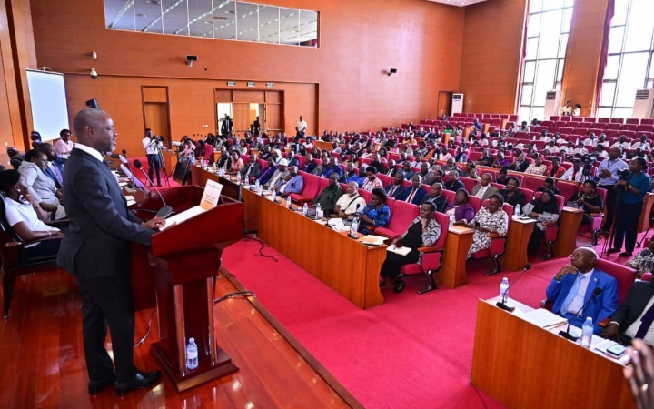
First Lady Janet Museveni, whose message was delivered by Deputy Speaker of Parliament Thomas Tayebwa at the launch, said preparing young people for life required more than academic instruction.
She called for a coordinated effort by parents, teachers, religious leaders and government institutions to equip children with the knowledge, values and practical skills needed to make responsible decisions.
The initiative reflects a broader challenge facing Uganda, where a rapidly growing and predominantly young population presents both an economic opportunity and a significant demand for education, healthcare and social services.
The framework covers five areas: human growth and development, relationships, life skills and personal safety, health and wellbeing, and responsible citizenship. Its content is organised according to age groups, from early childhood to young adulthood, with the aim of providing guidance appropriate to different stages of development.
The government also intends the approach to reach young people who are outside the formal education system, although its effectiveness will depend on how widely the programme is implemented and whether educators and families receive adequate support.
Tayebwa pledged parliamentary backing for the initiative and called for the education minister to present the framework to legislators for consideration, highlighting the importance of political support in translating the policy into practice.
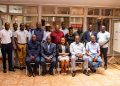
The framework brings together several government institutions and non-governmental partners, including agencies responsible for education, health, gender and HIV prevention, alongside religious organisations.
Its emphasis on family involvement is significant in a country where discussions about sexuality, reproductive health and relationships can be sensitive, often requiring schools to balance health information with cultural and religious expectations.
Supporters of life-skills education argue that young people need reliable, age-appropriate information to recognise risks, protect their health and navigate relationships. But the launch of a national policy does not in itself guarantee that such guidance will reach children consistently, particularly in communities with limited educational resources.
Uganda’s demographic profile makes the stakes considerable. With children and adolescents accounting for a substantial share of its population, the country’s ability to equip young people with practical skills will influence not only their individual wellbeing but also its longer-term development prospects.
The key test for the new framework will be whether its principles translate into effective teaching, meaningful parental involvement and accessible support for young people across the country.
For the government, the ambition is to ensure that preparing the next generation for adulthood becomes a shared responsibility rather than one left to schools alone.