

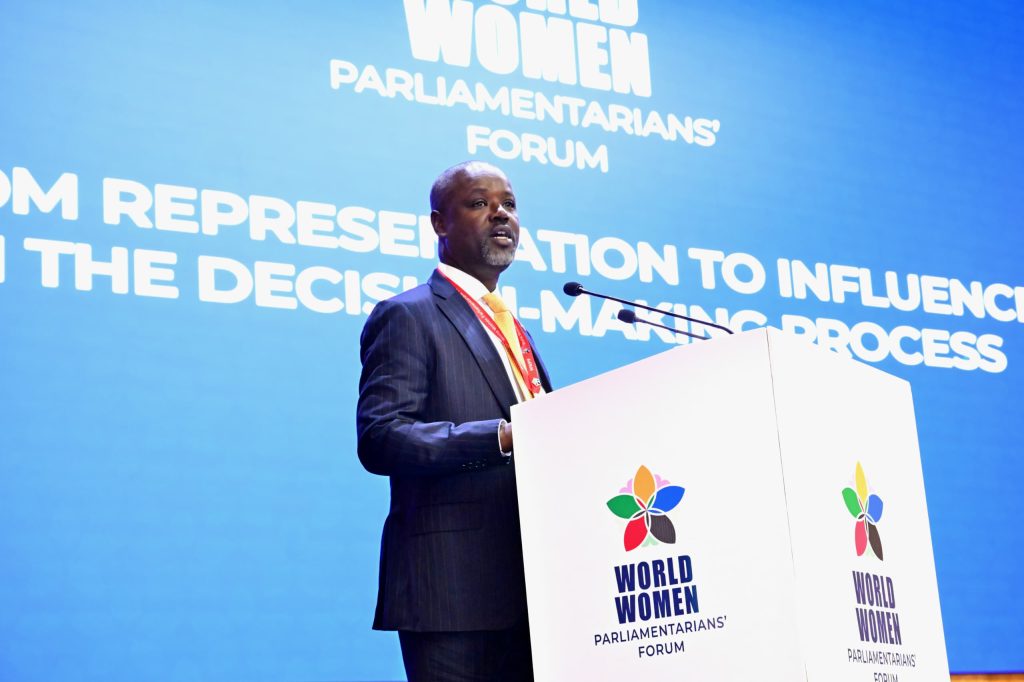
MONGOLIA (UGNEWSLINE) – Uganda’s Deputy Speaker of Parliament, Thomas Tayebwa, has called for greater influence for women in political decision-making, saying their presence in Parliament and Cabinet must translate into meaningful participation in shaping laws, policies and government budgets.
Speaking at the World Women Parliamentarians Forum in Ulaanbaatar, Mongolia, on Monday, Tayebwa said Uganda had taken deliberate steps to increase women’s participation in leadership since the National Resistance Movement (NRM) government came to power in 1986, including through affirmative action enshrined in the Constitution.
According to figures presented by Tayebwa, women account for 35 per cent of Uganda’s Parliament, with 187 women among its 529 members, and occupy 49 per cent of Cabinet positions.
He cited the presence of women in senior government offices, including the Vice President, Prime Minister and two Deputy Prime Ministers, as evidence of their participation in the country’s leadership.
Tayebwa also highlighted gender and equality assessments in the budgeting process, supported by the Equal Opportunities Commission, as measures designed to ensure that women and other disadvantaged groups are considered in government programmes.
However, he said representation alone was not enough, arguing that the real measure of progress was whether women could influence decisions affecting the lives of citizens.
“Representation is only the beginning. Having women in Parliament is important, but the most important measure of progress is whether women are able to influence the laws, the policies, the budgets and decisions that shape the lives of our people,” Tayebwa said.
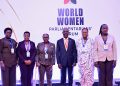
The two-day forum, running from October 12 to 13 under the theme “From Representation to Influence in the Decision-Making Process,” brings together women parliamentarians from different countries to exchange experiences and explore ways to strengthen women’s participation in governance.
Tayebwa described the meeting as an opportunity for countries to learn from one another and identify practical approaches to increasing women’s influence at national, regional and international levels.
“As parliamentarians, we have a responsibility to ensure that women’s voices are reflected not only in our chambers, but also in the decisions that determine the future of our societies,” he said.
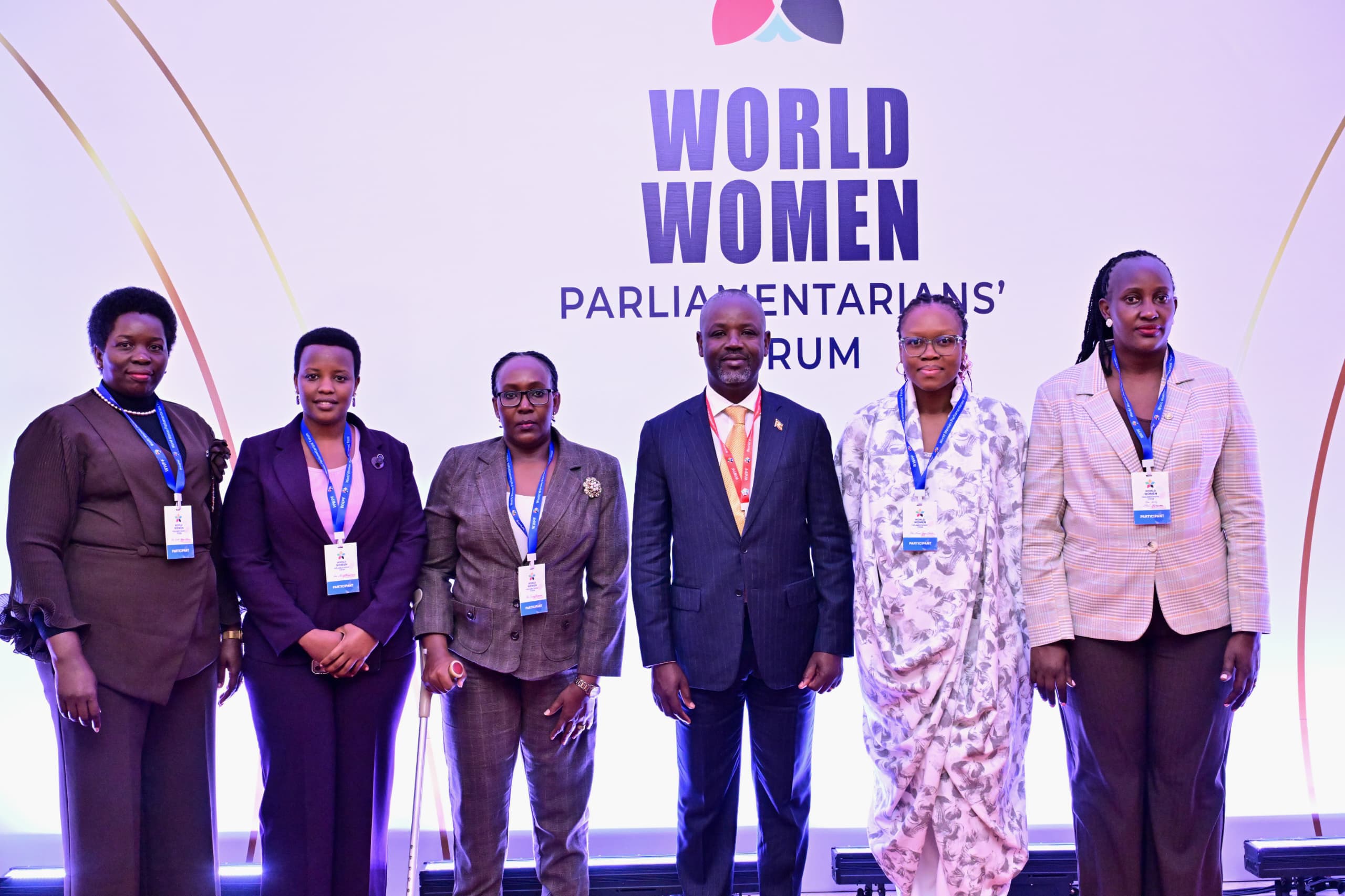
Uganda’s delegation includes Lira District Woman MP Auma Linda Agnes, National Female MP for Persons with Disabilities Laura Kanushu, Wakiso District Woman MP Betty Ethel Naluyima, Soroti District Woman MP Anna Ebaju Adeke and National Female Youth MP Mercy Kanyesigye.
The discussions also highlighted challenges facing other countries in translating women’s representation into greater decision-making power.
Leah Sopiato Sankaire, the Kajiado County Woman Representative who led Kenya’s delegation, said her country had yet to implement the constitutional requirement that no more than two-thirds of the members of any elective or appointive public body should be of the same gender.
Sankaire said Kenya’s Parliament was 31 women representatives short of meeting the required threshold, adding that efforts to address the gap were under way, including through a constitutional amendment bill.
She argued that increasing women’s influence required their participation in key parliamentary structures responsible for allocating public resources, particularly budget committees.
“When these committees are chaired by women, a gender-sensitive budget becomes a reality,” she said.
Parvana Valiyeva, who led Azerbaijan’s delegation, highlighted her country’s history of women’s political participation, noting that Azerbaijan became the first country in the Muslim East to grant women the right to vote and stand for election in 1918.
She also said the first secular school for women in the Muslim East was established in Azerbaijan in 1901.
Valiyeva said the milestones reflected Azerbaijan’s longstanding commitment to advancing women’s rights and representation.
She urged women parliamentarians to ensure that women’s voices were heard and protected in sectors shaping the global agenda, including climate change, technology, economic development, peace and security.
Mongolia’s Foreign Affairs Minister, Battsetseg Batmunkh, meanwhile, credited generations of women activists with helping advance women’s political representation since the 1995 World Conference on Women in Beijing.
She said the progress made since the conference demonstrated the impact of sustained efforts to challenge barriers to women’s participation in public life.
“Since the conference, the representation of women in parliament has more than doubled,” she said. “Many of these achievements we are celebrating today are because of those women who refused to accept limitations imposed on them.”