


KAMPALA, Uganda (UGNEWSLINE) — Uganda’s growing presence in international cue sports received another significant boost after sisters Rukia Naiga and Rashida Mutesi returned home with gold and silver medals from the 2026 Commonwealth Cue Sports Championships in Ahmedabad, India, while calling for greater government investment in a sport that continues to deliver international honours despite persistent infrastructure and funding challenges.
Naiga claimed the women’s Blackball title with a 5–3 victory over South Africa’s Prudence Nkosi, while Mutesi secured silver in the women’s Heyball category after losing 5–4 to England’s Kelly Fisher in a deciding frame.
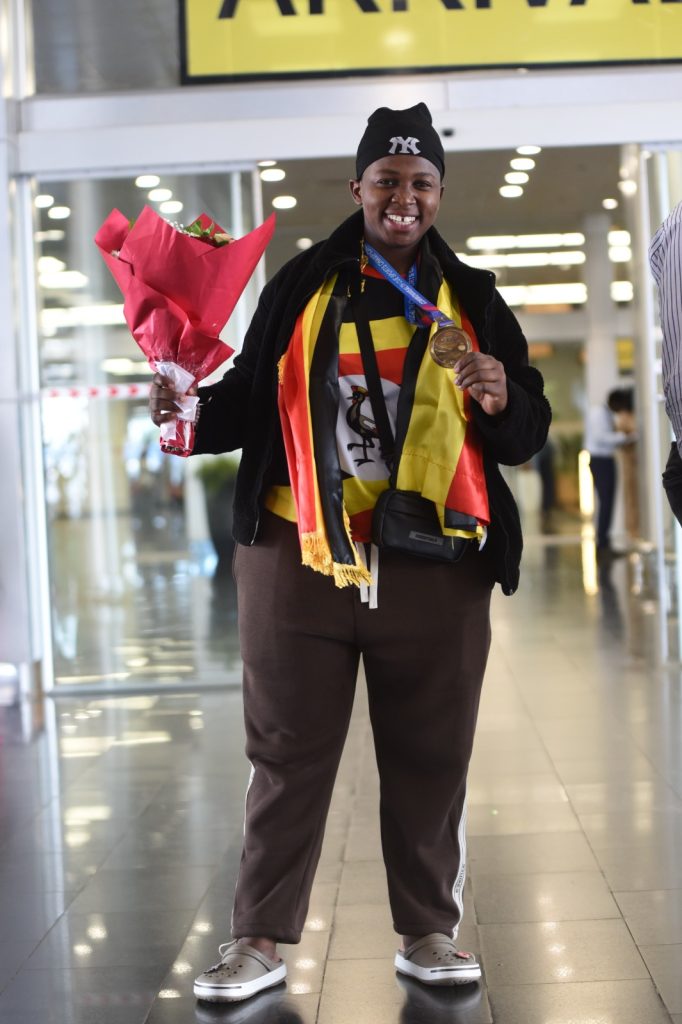
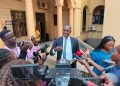
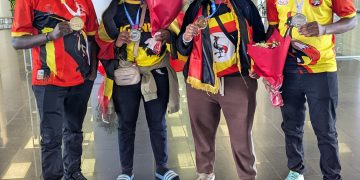
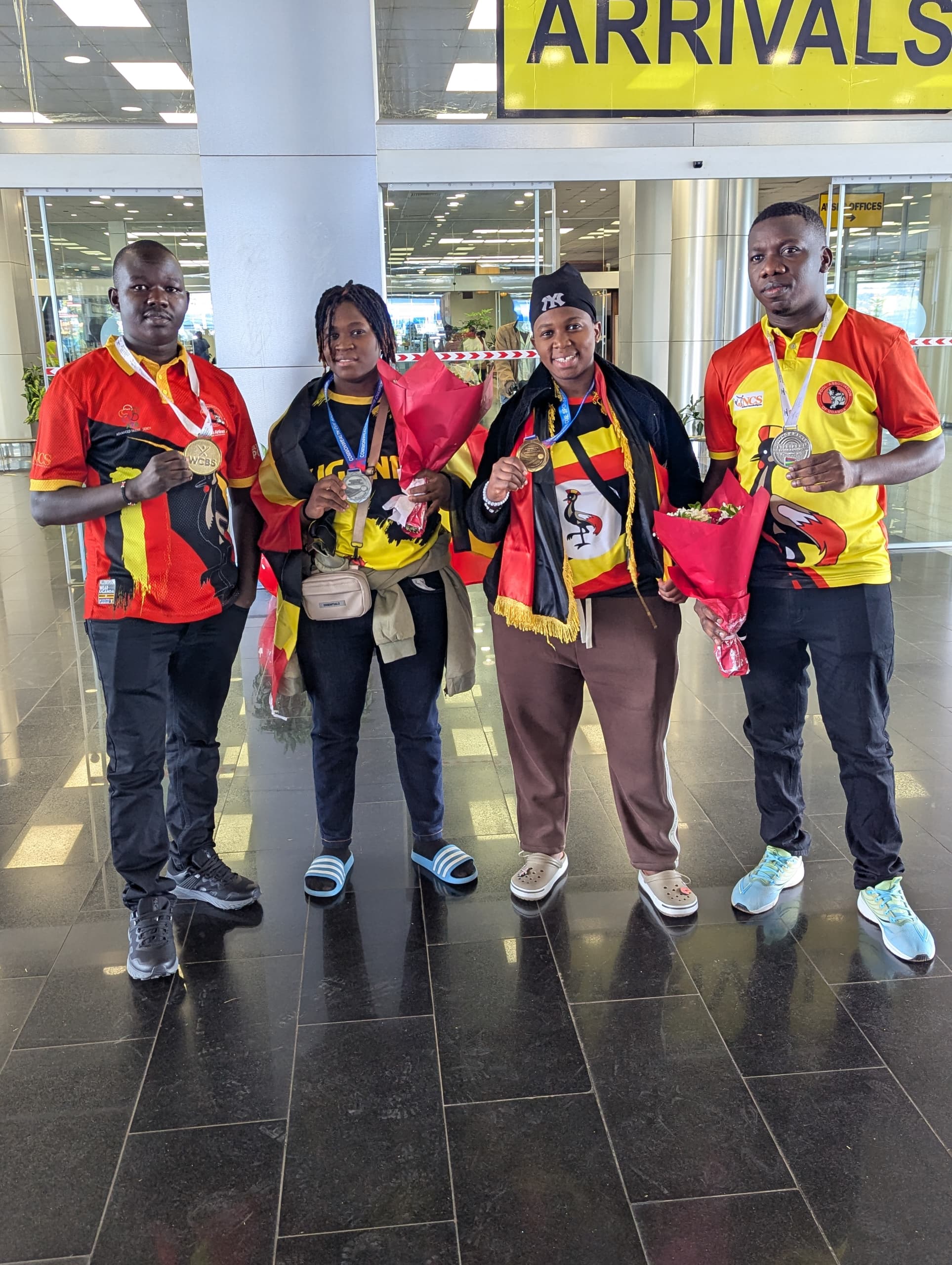
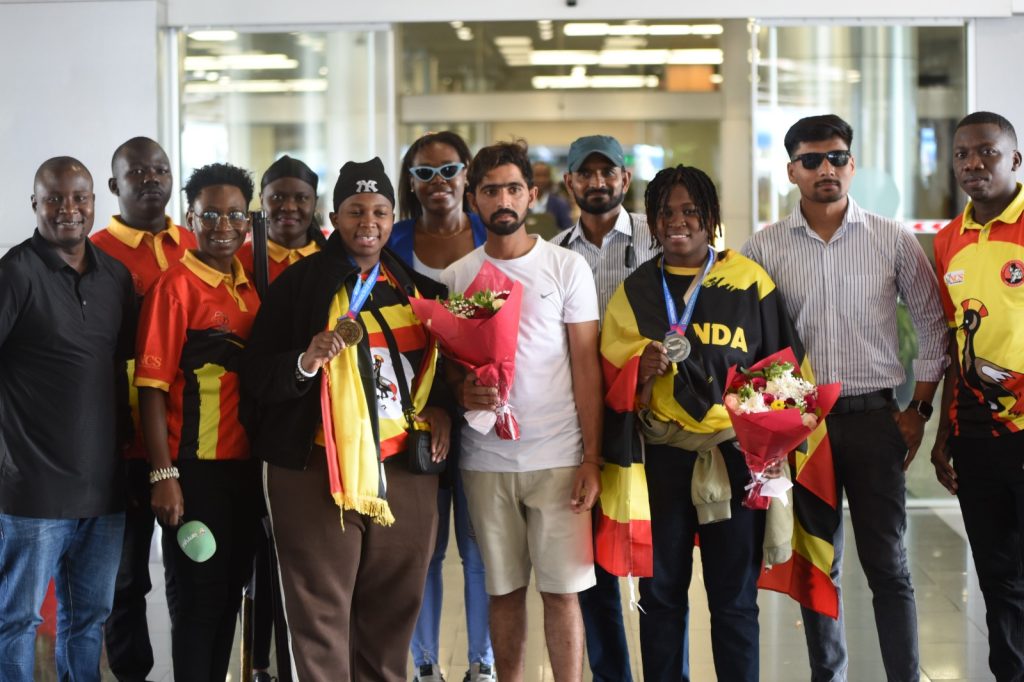
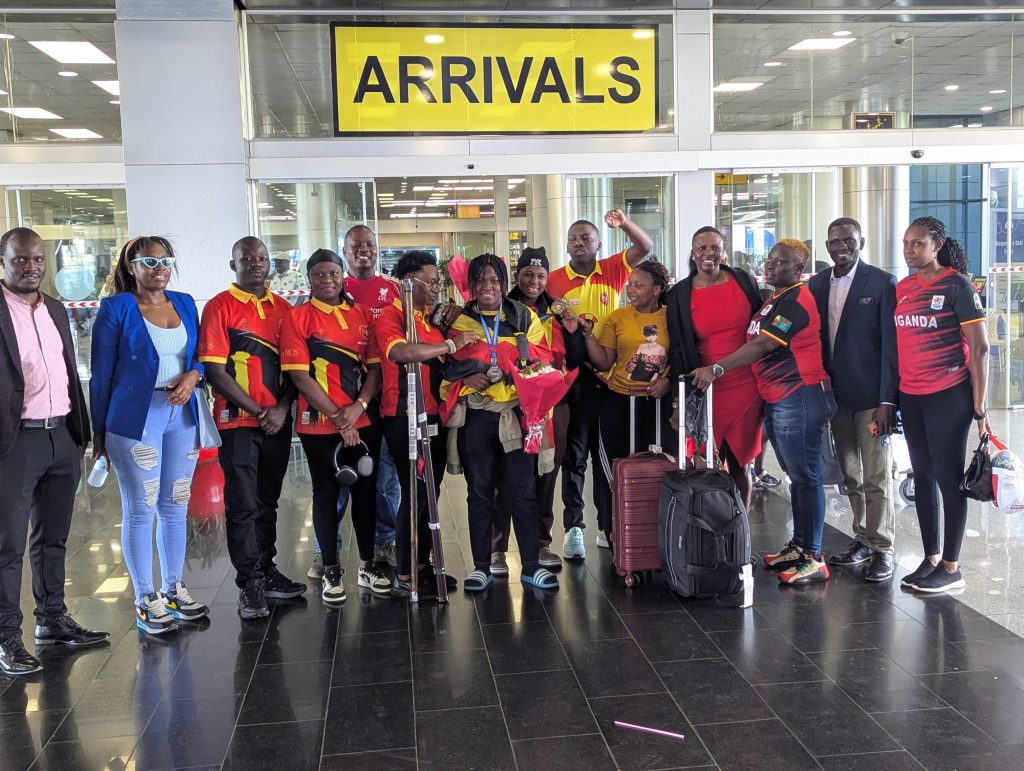
The sisters received a heroes’ welcome at Entebbe International Airport on Monday, where fans, Pool Association of Uganda (PAU) officials and fellow players celebrated their achievements.
Among those present was defending National Open men’s champion Caesar Chandiga, who missed the trip to India because of illness, Uganda’s Seed One Joseph Kasozi.
But alongside the celebrations was a pointed message to the government: Uganda’s growing success in pool must be matched by investment in facilities, equipment and athlete development if the country is to sustain its international progress.
Mutesi welcomed her silver medal but said the shortage of Heyball tables in Uganda had made preparation for the competition difficult, highlighting the challenges facing players seeking to compete across different international disciplines.
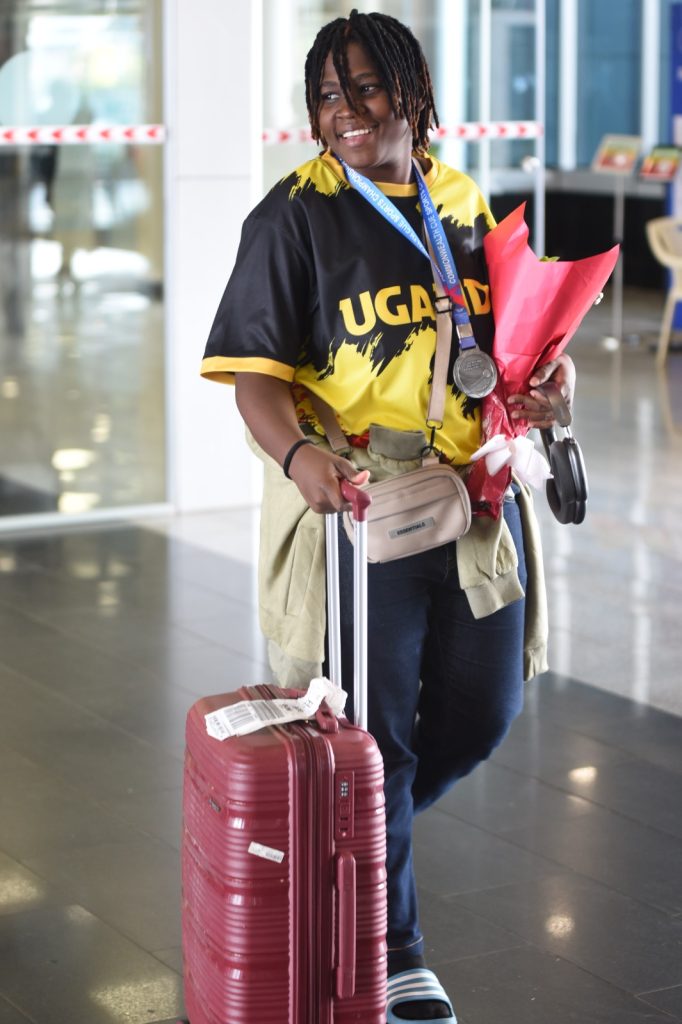
“I’m excited with the silver medal. Heyball is a new discipline, but we don’t have tables in Uganda. It was hard, but I played my best,” Mutesi said.
“We ask the government to create an environment that enables us to play all disciplines of pool.”
Their remarks place the spotlight on a sport that has produced notable international results for Uganda but continues to face questions over the resources available to its athletes.
The latest medals build on Uganda’s breakthrough at the inaugural Commonwealth Billiards Championship in Mauritius in July 2025, when Chandiga won gold in the men’s Heyball competition, Kasozi claimed silver in men’s Blackball, and Ugandan women secured two bronze medals.
Chandiga, popularly known as “The Scorpion”, defeated India’s Shivam Arora 9–7 in the men’s Heyball final, delivering a landmark victory for Uganda at the championship, held from 2 to 6 July.
 Kasozi also reached the final in men’s Blackball before losing 7–3 to South Africa’s Senzo Gumede.
Naiga won bronze in women’s Heyball, while Sheila Kisakye secured bronze in women’s Blackball.
The tournament brought together competitors from across the Commonwealth and featured Blackball, Heyball, 10-ball pool and snooker, alongside a carom demonstration. It offered emerging cue-sport nations an opportunity to measure their players against international opposition across multiple disciplines.
For Uganda, Chandiga’s victory was significant because it demonstrated that the country could convert its growing reputation on the African circuit into a major international title.
The silver and bronze medals also showed that the country’s strength was not confined to one player or discipline.
The Mauritius results provided a foundation for Uganda’s latest achievements in India, reinforcing the country’s credentials as an increasingly competitive participant in international pool.
Naiga’s gold is particularly important given her record in African and international competitions.
She has established herself as one of Uganda’s leading female cueists, winning the All Africa Pool Association women’s championship in 2022 and adding further international honours in subsequent years.
 In April 2025, Naiga won the women’s title at the Queens International Pool Tournament in Zimbabwe, underlining her ability to compete successfully outside Uganda.
She has also played a central role in the national women’s team, the She Pool Cranes, which retained the Ultimate African Pool Championship title in South Africa in 2025.
At that tournament, Uganda defeated Namibia 13–1 in the team competition. Naiga also won the Life One and Life Two singles finals against compatriot Amina Faith Nganda, earning the women’s Most Valuable Player award.
Mutesi has developed an equally impressive record, establishing herself as one of Uganda’s leading competitors across different pool formats.
She won the women’s title at the 2025 National Open Pool Championship and has continued to make her mark in continental competition.
Her latest Commonwealth silver in Heyball is especially significant because the discipline presents a particular challenge for Ugandan players: access to appropriate training equipment remains limited, according to her account.
The sisters’ achievements have helped raise the profile of women’s pool in Uganda and demonstrate the country’s capacity to produce athletes who can challenge established international opponents.
Their success also provides an example for younger players seeking to progress from domestic leagues to continental championships and international tournaments.
Historical reporting has placed both sisters among Africa’s prominent female pool players.
A 2023 profile by Daily Monitor described Naiga as a leading African champion and Mutesi as one of Uganda’s strongest competitors, noting that Mutesi had previously ranked second in Africa behind her elder sister.
Those positions reflect their standing at the time and should not be presented as current rankings.
Cue sports operate through different ranking systems and tournament circuits for disciplines such as Blackball and Heyball, making it necessary to consult the relevant official rankings before assigning either player a current continental or world position.
Nevertheless, their recent results provide strong evidence of their continued competitiveness.
Naiga’s Commonwealth gold and Mutesi’s silver demonstrate that Uganda can contend for titles across different disciplines rather than relying on success in a single format.
The results also come amid a wider expansion of Uganda’s competitive presence in African pool.
At the 2025 Ultimate African Pool Championship in South Africa, the women retained their continental team crown, while the men narrowly missed out on the title after losing 13–12 to hosts South Africa.
Taken together, Uganda’s Commonwealth medals and continental performances suggest that its pool programme is developing beyond isolated individual achievements.
However, maintaining that progress will require resources to support athletes through training, competition and preparation.
Mutesi’s comments about the absence of Heyball tables illustrate one of the sport’s most immediate challenges.
Athletes preparing for international tournaments need access to the same type of equipment used in competition, allowing them to develop the technical precision and familiarity required at elite level.
The financial demands extend beyond facilities. International participation requires funding for travel, accommodation, entry fees, coaching and other preparation costs.
Without consistent support, athletes can struggle to gain regular exposure to international competition, while administrators face difficult decisions over which players and disciplines can be represented.
Greater government investment could help address these challenges through the development of standardised training facilities, the acquisition of specialist tables, coaching programmes and structured youth competitions.
Support for international participation would also help Uganda build on its recent successes and give more players the opportunity to compete abroad.
Partnerships between government, the Pool Association of Uganda, private sponsors and local clubs could provide a more sustainable development model, helping to expand participation while preparing athletes for the demands of elite competition.
The issue is not simply whether Uganda can produce champions. Naiga, Mutesi, Chandiga, and Kasozi among others have already demonstrated that it can.
The challenge is whether the country can establish the facilities and support systems required to make international success a regular feature of its sporting programme.
For the sisters, the medals from Ahmedabad represent personal milestones and national achievements. For Uganda’s pool community, they strengthen the case for greater recognition and investment in a sport that has repeatedly demonstrated its competitive potential.
Their return also comes at a busy time on the domestic calendar, with the Ladies League scheduled to begin ahead of the National Open Pool Championship.
The competitions offer an opportunity to build on the momentum created by the Commonwealth results and encourage more players to pursue the sport.
Uganda’s gold and silver in India, following Chandiga’s gold and Kasozi’s silver in Mauritius in 2025, provide a clear measure of the country’s progress in international cue sports.
The next test will be turning those achievements into lasting development.
Without reliable facilities, financial backing and institutional recognition, the burden of sustaining Uganda’s success will continue to fall heavily on individual athletes.
The Commonwealth medallists have delivered the results. Their appeal to the government is for the support that could help ensure those results become the beginning of a stronger and more sustainable future for Ugandan pool.