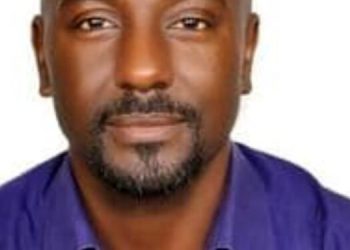




FORT PORTAL, Uganda — For years, Prince Edward Rukidi Kijanangoma was more accustomed to sitting behind a television desk than a royal throne.
Viewers knew him as a journalist and broadcaster, a familiar face on Uganda’s national television service. He worked as a news anchor and editor at Uganda Broadcasting Corporation, presenting current affairs to an audience accustomed to hearing him interrogate politicians, explain events and report the news of the day.
Now the news has turned to him.
The Babiito royal clan has selected Kijanangoma to succeed the late Omukama Oyo Nyimba Kabamba Iguru Rukidi IV as the next king of the Tooro Kingdom, placing a former television journalist at the centre of one of Uganda’s most consequential traditional institutions.
The announcement was made at Karuziika Palace in Fort Portal on Wednesday, September 9, by representatives of the Babiito clan and the succession committee.
The declaration was read Msgr in the presence of clan leaders and members of the 21-person succession committee.
For Kijanangoma, the path to the throne has been anything but conventional.
The journalist who was born into royalty
Long before he became the subject of breaking-news bulletins, Kijanangoma belonged to the royal family.
He is the son of the late Prince Christopher Paul Kijanangoma and grandson of Omukama Sir George David Rukidi Kamurasi III, placing him within the Babiito lineage from which Tooro’s kings are traditionally selected.
But rather than immediately making the palace the centre of his public life, Kijanangoma built a career in journalism and opted to live a humble life.
He became associated with UBC as a news anchor and editor, appearing on the broadcaster’s news and current-affairs programmes. Recent UBC programme records also show him presenting News Tonight and other broadcasts.
It was a profession that demanded a different kind of authority.
A journalist’s influence comes from asking questions, establishing facts and explaining complicated events to the public. A traditional king’s authority, by contrast, comes from ancestry, custom and the confidence of the royal clan.
Kijanangoma is now being asked to bring both worlds together.
From reporting the news to becoming the news
His elevation is particularly striking because Kijanangoma has not always remained a distant observer of Tooro’s internal affairs.
He previously emerged as a vocal critic of King Oyo’s administration.
In 2021, he publicly challenged Oyo’s leadership and declared himself king, making allegations about the management of kingdom affairs and arguing that the sitting monarch had become detached from the kingdom. At the time, Kijanangoma said he and his supporters had taken steps towards establishing an alternative administration.
Some media outlets reported that Kijanangoma had criticised Oyo over his residence in Kampala, the role of Queen Mother Best Kemigisa in kingdom administration and what he regarded as failures in the running of the institution.
Those disputes now acquire a very different significance.
The man who once questioned the direction of the kingdom has been chosen to lead it.
That makes his succession more than a simple change at the top. It is also a return to the palace for a royal prince who spent much of his professional life outside it.
The kingdom he inherits
Kijanangoma succeeds Oyo at a moment of mourning and uncertainty.
Oyo died on August 27, 2026, aged 34, after receiving medical treatment in the United States. He had ruled Tooro since 1995, when he became king at only three years old following the death of his father.
His extraordinary childhood accession made him internationally famous. He was widely described as the world’s youngest reigning monarch, a distinction that brought global attention to a kingdom whose political authority is largely ceremonial under Uganda’s constitutional order.
Oyo later grew into the role.
He became associated with youth empowerment, education, health advocacy, HIV/AIDS awareness and environmental conservation. He also promoted the Tooro Kingdom Vision 2045 development framework.
His death therefore leaves Kijanangoma with a difficult inheritance.
The new king will have to preserve the cultural legitimacy built over decades while addressing questions about the relevance, administration and future direction of the institution.
A succession that attracted international attention
The process has also exposed the unusual complexity of Tooro’s royal succession.
In the days following Oyo’s death, there were conflicting reports about who would take the throne. Some international reports said George Desmond Kamurasi, another member of the royal family living in Britain, had been selected by the succession committee.
Those reports created a brief succession mystery.
The latest announcement from the Babiito clan has now placed Kijanangoma’s name at the centre of the process.
According to reports, out of the 21-member succession committee, 19 members voted in his favour.
The formal enthronement will follow the customs and ceremonies of the Babiito.
What kind of king will he be?
That may be the question now being asked across Tooro.
Kijanangoma enters the role with an unusual combination of experiences.
He is a prince by birth, but a journalist by profession.
He has experience in front of cameras, but will now become the subject of them.
He has spent years interpreting public events for audiences, but will now have to interpret the meaning of the monarchy itself for a younger generation.
And unlike Oyo, who inherited the throne as a child and spent his formative years growing into it, Kijanangoma arrives as an adult with an established professional identity and a history of speaking publicly about the kingdom.
His journalism background could prove valuable.
A modern cultural institution depends not only on ceremony but on communication, explaining its role, managing public expectations and maintaining relevance in a society where traditional kingdoms no longer exercise governmental power.
Kijanangoma understands that world.
He has spent years working inside it.
The shadow of Oyo
Yet the new reign will inevitably be measured against the one that came before it.
Oyo’s reign lasted more than three decades. His image was established in the public imagination when he was still a toddler sitting beside adults at royal ceremonies.
His journey from child king to adult monarch was watched both inside Uganda and abroad.
Kijanangoma’s story is different.
He does not inherit a kingdom from childhood.
He steps into it after a career.
That difference could define the next era of Tooro.
The challenge will be to transform royal lineage into effective cultural leadership while avoiding the disputes that have periodically divided members of the royal family.
His previous criticism of Oyo’s administration means his accession will inevitably attract scrutiny. Supporters may see his selection as an opportunity for reform. Critics may question whether old divisions within the royal family can truly be put aside.
For the moment, however, the Babiito have made their choice.
From the anchor’s desk to Karuziika Palace
There is an almost cinematic quality to Kijanangoma’s rise.
A man who once introduced television news to Ugandans is now himself making headlines.
The transition from journalist to king is not simply a change of profession. It is a movement from observer to institution, from asking questions about power to becoming one of the most visible symbols of traditional authority in western Uganda.
At Karuziika Palace, the next chapter of Tooro’s history is now taking shape.
Prince Edward Rukidi Kijanangoma, the broadcaster who came from the royal family but built his public identity in journalism, is preparing to exchange the newsroom for the throne.
The cameras that once followed him as a journalist will now follow him for another reason.
He will be the story.