


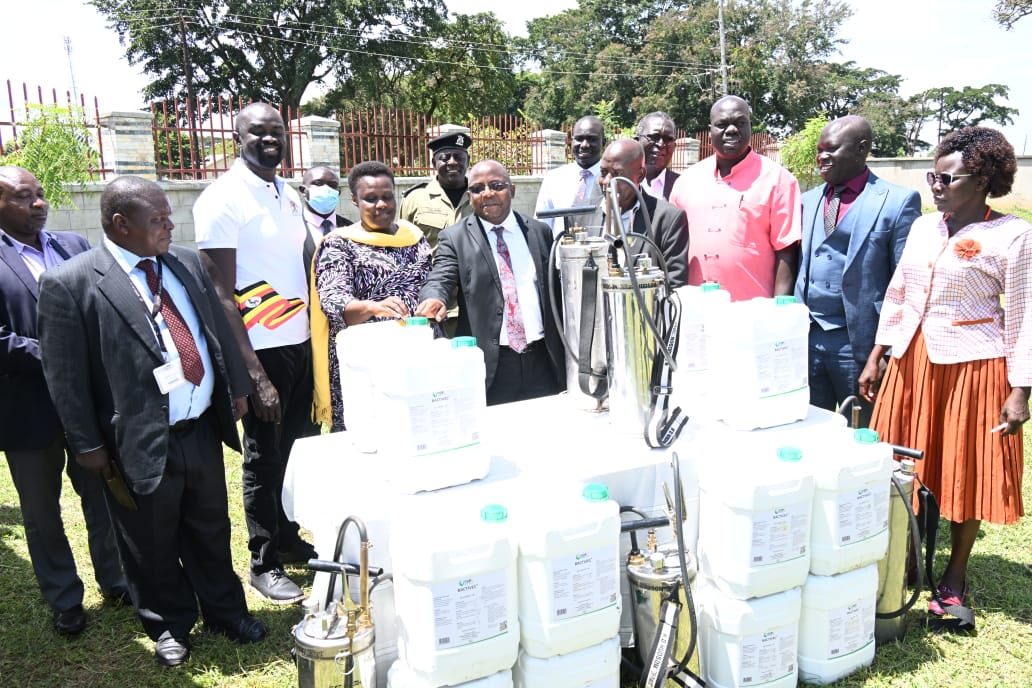
Katakwi District– Ministry of Health has introduced larvicides as an alternative in the fight against malaria in Katakwi District, eastern Uganda.
A larvicide is a type of insecticide used to control mosquitoes both indoors and outdoors. It works by killing mosquito larvae before they can grow into adults.
According to Dr. Alfred Mubangizi, the Assistant Commissioner of Vector-Borne and Neglected Tropical Diseases in the Ministry of Health, the chemicals will be used in both man-made and natural mosquito breeding sites in the district.
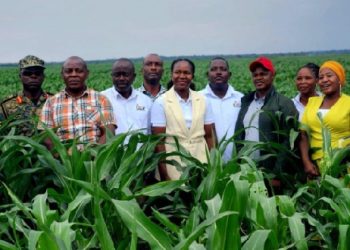
These include pools, drainages, burrow pits, ponds, roadside pools, channels, and riverbed pools. He said the spraying will target these breeding sites of Anopheles mosquitoes, which are the primary malaria vectors.
Mubangizi emphasized that the insecticides have been scientifically proven to be effective in the fight against malaria and have already been used in the districts of Namutumba, Pallisa, and Kibuku in Eastern Uganda.
In Uganda, malaria is the leading cause of death, illness, and poverty. According to statistics, the country spends US$658 million (about UGX 1.6 trillion) on malaria annually, which is equivalent to 10 percent of the Ministry of Health’s budget.
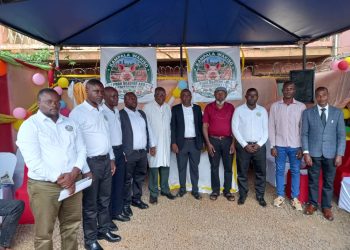
While launching the programme at the Katakwi District Headquarters, Vice President Maj. (Rtd) Jessica Alupo said the NRM government is committed to fostering a healthy and productive population that contributes to socio-economic growth and national development. She noted that this is why significant investments are made in disease prevention and treatment.
She sincerely thanked President Yoweri Kaguta Museveni, describing him as a leader and champion of health initiatives, for spearheading the fight against major killer diseases in the country, including malaria, HIV/AIDS, and others.
She said Katakwi District has suffered repeated malaria epidemics despite existing control measures such as indoor residual spraying, long-lasting insecticide-treated mosquito nets, and case management.
Malaria is one of the deadliest vector-borne diseases in Uganda and is spread by the bite of the female Anopheles mosquito.
“The entire population is at risk of malaria, with children under five years of age and pregnant women being the most vulnerable,” she said.
Mosquitoes also transmit other diseases such as lymphatic filariasis (elephantiasis), yellow fever, Zika virus, dengue fever, and Chikungunya.
She stressed that controlling mosquitoes will not only reduce malaria but also help curb other mosquito-borne diseases, which are significant public health threats.
She reiterated President Museveni’s message of prevention as key to securing Uganda’s future. “There is a need for investment in disease prevention to reduce illness, suffering, healthcare costs, and deaths,” she said.
The Vice President expressed her satisfaction that the Ministry of Health has now included Larval Source Management, including larviciding, as part of the national vector control package and is working with partners to scale up this intervention across the country.
“This initiative should continue to be supported and popularized in communities. We must teach our people how to identify breeding sites and promptly manage those that can be handled locally by filling, draining, or clearing bushes,” she said.
Alupo explained that the Ministry of Health has been implementing the larviciding programme in eleven malaria-epidemic districts, and its impact has been significant.
It is against this background that the Vice President requested the Ministry of Health to extend the programme to Katakwi District, given its epidemic status.
She urged District Local Government officials, in collaboration with local leaders and community members, to embrace the programme and provide the necessary support to ensure its implementation in all malaria-affected communities.
“While the Ministry of Health will mobilize resources such as larvicides and equipment, implementation will be carried out by local residents, supervised by the District Health Team. Therefore, I urge you to own this programme,” she said.
The Vice President assured the public that the larvicide is made from natural ingredients found in the environment and poses no risk to people, animals, or the environment.
She thanked the Ministry of Health team, led by Hon. Minister Dr. Jane Ruth Aceng, for their relentless efforts in delivering quality health services to the masses, embracing science and technology, and being data-driven.