


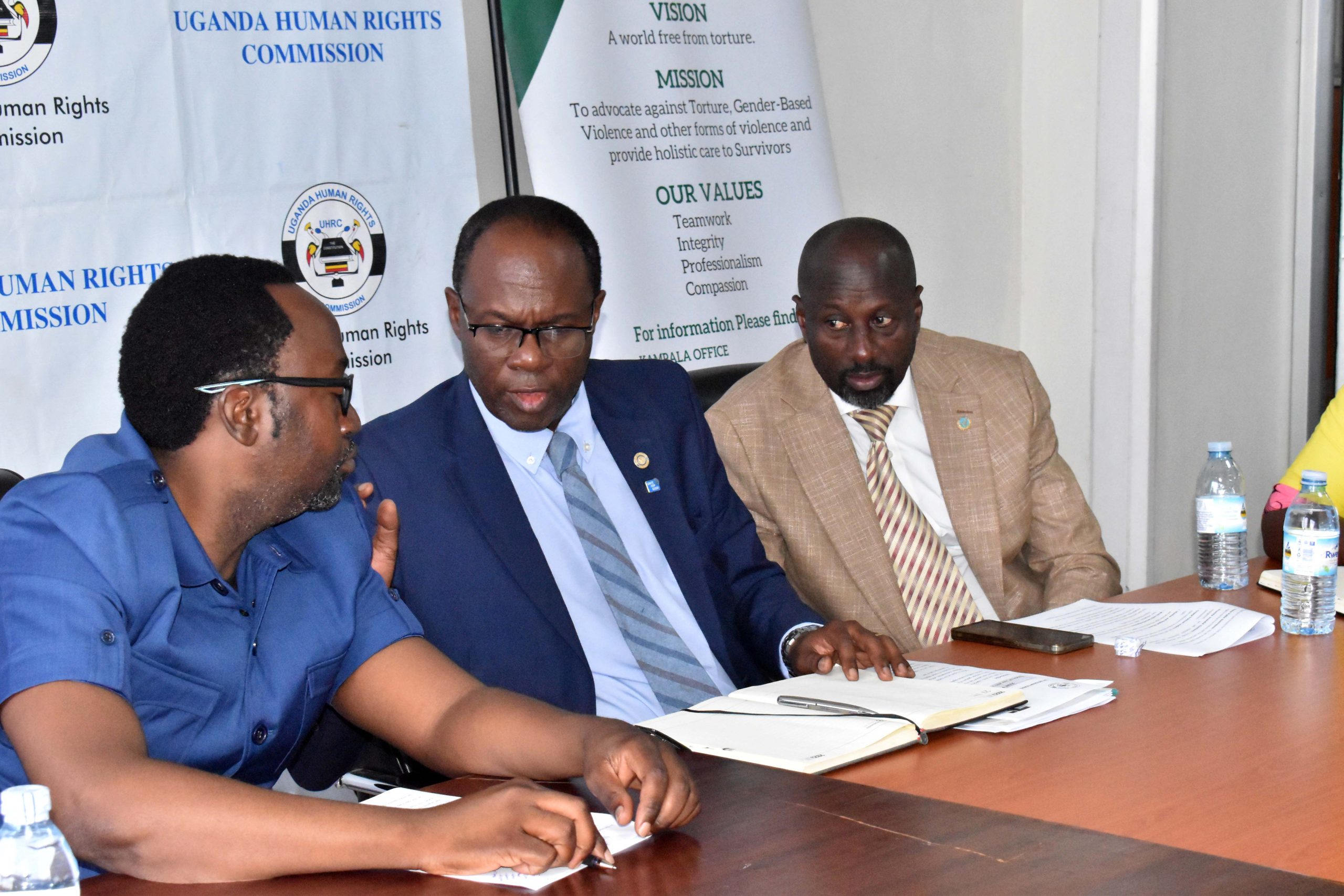
The Uganda Human Rights Commission (UHRC), together with human rights defenders from civil society, have issued a powerful call for a peaceful, free, and fair electoral process ahead of 2026 general elections.
Speaking ahead of the United Nations International Day in Support of Victims of Torture on June 26, Commissioner Crispin Kaheru of the UHRC stressed that this day serves as a critical moment for Uganda to renew its commitment to ending all forms of torture, upholding human dignity, and ensuring justice for survivors.
“Torture is not just illegal, it is deeply immoral,” Commissioner Kaheru declared. “It degrades and dehumanizes, violating not only the body but the very essence of our humanity. No society that claims to respect the rule of law can tolerate such acts.”
Kaheru emphasized that Uganda’s legal framework is clear and unwavering. The 1995 Constitution explicitly guarantees freedom from torture as an absolute right, while the Prevention and Prohibition of Torture Act of 2012, alongside Uganda’s ratification of the UN Convention Against Torture, legally bind the nation to eradicate torture in every form. “These laws are not mere words on paper; they demand enforcement without fear or favor,” Kaheru insisted.
Acknowledging the courage of survivors, Kaheru highlighted the lasting physical and psychological scars they bear, wounds that ripple into families and communities. “Their resilience inspires us, but it also challenges us. We must listen, believe, and provide survivors with justice, rehabilitation, and meaningful redress,” he urged.
The Commissioner also sounded a cautionary note about the upcoming elections, noting that periods of political contestation have historically seen spikes in violence and abuse, including torture. “While our electoral laws promote peaceful and inclusive participation, laws alone are insufficient without accountability and respect for human rights,” Kaheru warned. “Security must never come at the expense of human dignity.”
He called on law enforcement and security agencies to uphold their constitutional duties with professionalism and restraint, ensuring their actions protect rather than intimidate citizens. “The conduct of security forces during this electoral season will shape not just the safety of the process but the integrity of our democracy,” Kaheru observed.
Kaheru also drew attention to the hidden wounds of torture survivors, mental health challenges such as depression, anxiety, and PTSD, exacerbated by limited access to psychosocial care in Uganda. He appealed to government and partners to prioritize support systems for survivors, insisting that healing is a fundamental right.
The Commissioner reaffirmed the UHRC’s zero-tolerance stance on torture, calling for swift investigations and transparent legal processes to hold perpetrators accountable, regardless of their position. “Silence breeds impunity, and impunity destroys public trust,” Kaheru emphasized.
He reminded all security agencies to act in full compliance with the Constitution and international human rights standards, underscoring that respecting human rights is not optional but a binding legal and moral duty.
As Uganda approaches a critical electoral milestone, Kaheru highlighted the vital role of civil society, medical professionals, and legal advocates in supporting survivors and holding systems accountable. He called for strengthened partnerships between state institutions and civil society, stressing that protecting human rights is a shared responsibility.
In the weeks ahead, the UHRC and its partners pledge to intensify public education on freedom from torture, promote peaceful electoral participation, engage political leaders in dialogue around tolerance and respect, monitor and report abuses, and continuously remind security agencies of their obligations under the law.
Commissioner Kaheru concluded with a rallying message to all Ugandans: “Every one of us is a human rights defender. The fight against torture cannot rest on institutions alone. We must all raise our voices, refuse to look away, and stand in solidarity with survivors. Let this International Day in Support of Victims of Torture be a turning point, no more silence, no more torture, no more impunity.”
Robert Samuel Kirenga, Executive Director of the National Coalition of Human Rights Defenders, urged every Ugandan to join the fight against torture by speaking out against abuses.
“We can’t arrest perpetrators, but by raising our voices, we hold those in power accountable to act,” Kirenga said. “Speaking out is a powerful tool to demand justice as citizens.”
Meanwhile, Pauline Nansamba, UHRC Director of Complaints Investigations and Legal Services, explained the commission’s operational limitations, noting that it struggles to assist victims who have already entered the judicial process.
“Once a victim’s case is before the courts, our hands are tied to some extent,” she said, underscoring the need for robust collaboration across institutions.
Commissioner Shifrah Lukwago emphasized that maintaining peace during this period is not a choice, but a duty, especially for state institutions.
“It is the responsibility of every government institution, particularly our security agencies, to ensure that Uganda holds elections free from violence and torture,” said Lukwago. “We just call for a peaceful election process, and as UHRC, we are going to continue engaging all the relevant security agencies on how to achieve this.”