


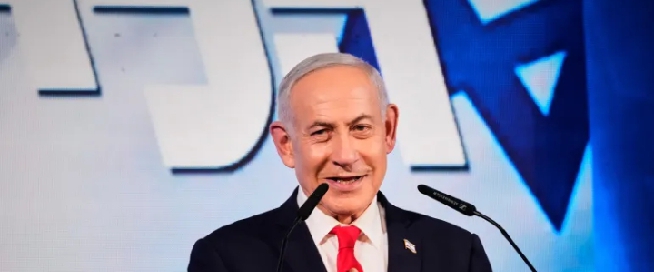
ISRAELI (UGNEWSLINE) – Israeli Prime Minister Benjamin Netanyahu has taken an early lead in the country’s closely watched parliamentary election, with his right-wing bloc projected to win 57 seats against 47 for the opposition as nearly 42% of ballot boxes are counted.
The preliminary figures, released by Israel’s Central Elections Committee on Wednesday, leave the contest far from settled, with Arab-led parties holding the remaining 16 seats in the 120-member Knesset, Israel’s parliament.
Netanyahu’s bloc remains short of the 61 seats required for a parliamentary majority, meaning the veteran leader could face difficult negotiations to secure another term at the head of the government. The opposition, led by former military chief Gadi Eisenkot, also has no clear route to power without support beyond its current projected numbers.
The count marks a significant shift from exit polls released after voting ended on Tuesday, which had suggested a tight contest and, in some projections, a narrow advantage for the opposition. The official figures remain provisional and could change as additional ballots are processed.
The predominantly Arab Joint List and the Ra’am party could emerge as influential players in the negotiations that follow the final count. Their combined projected representation could affect whether either main camp can assemble a governing coalition or secure enough parliamentary support to survive confidence votes.
However, cooperation with Arab parties presents political difficulties for both Netanyahu and Eisenkot, who have faced pressure over their positions on whether to rely on Arab lawmakers to form a government.
That could complicate efforts to break a deadlock even if the final numbers favour one side.
Netanyahu, Israel’s longest-serving prime minister, has presented himself as the leader best equipped to confront the country’s security challenges. His campaign came against the backdrop of the Hamas-led attacks of 7 October 2023 and the wars that followed, which have placed national security, military strategy and the government’s handling of the conflict at the centre of public debate.
The election is also a test of public confidence in Netanyahu’s leadership following criticism over the security failures that preceded the 2023 attacks. He has defended his record and highlighted military operations against Israel’s regional adversaries.
Eisenkot, a former chief of the Israeli military, has campaigned as an alternative to Netanyahu, seeking to unite parties opposed to the prime minister while presenting himself as a credible security leader.
High voter participation has added to the significance of the vote. Turnout reached 77.7%, the highest level in more than two decades, according to Israel’s Central Elections Committee.
With counting continuing, the immediate question is whether Netanyahu can turn his early lead into a workable majority. If neither camp can secure sufficient support, coalition negotiations could drag on for weeks, leaving Netanyahu in a caretaker role while political leaders attempt to form a new government.