



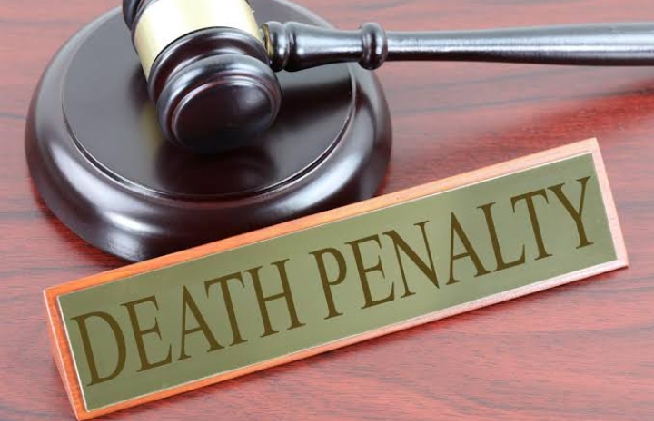
BURKINA FASO (UGNEWSLINE) – Burkina Faso has reopened one of the most contentious debates in international justice, restoring the death penalty nearly eight years after abolishing it, even as much of the world continues to move towards ending executions.
The West African country’s military-led government says tougher criminal penalties are needed to confront terrorism and protect national security. But human rights advocates warn that bringing back capital punishment risks deepening abuses in a country already struggling with insecurity, restrictions on civil liberties and weaknesses in its justice system.
The country’s transitional legislature unanimously approved a revised penal code on 20 October, reinstating capital punishment for offences including terrorism, treason, espionage, parricide and the importation of expired or prohibited products in circumstances specified by the law.
All 71 members of the assembly backed the measure, reversing the abolition introduced in 2018 under former elected president Roch Marc Christian Kaboré. Burkina Faso’s last known judicial execution took place in 1988, according to human rights organisations.
Justice Minister Edasso Rodrigue Bayala defended the decision as part of the government’s effort to combat armed groups linked to al-Qaeda and Islamic State. He argued that the previous penalties could encourage militant recruitment by allowing convicted attackers to avoid execution.
The insurgency has devastated communities across Burkina Faso, killing thousands and displacing millions of people in a crisis that has spread across the Sahel. The military government, led by Captain Ibrahim Traoré since the September 2022 coup, has made restoring security a central justification for its policies.
But the return of capital punishment has put the government on a collision course with international human rights organisations, which argue that even the most serious crimes do not justify an irreversible punishment.
Ilaria Allegrozzi, Human Rights Watch’s senior Sahel researcher, said the decision would not resolve the country’s security crisis and warned of its potential consequences for civilians.
“Reinstating the death penalty won’t solve the security crisis in Burkina Faso,” she said, arguing that the policy could add to the suffering associated with the government’s counterterrorism campaign.
Human Rights Watch has also warned that restoring executions in a justice system affected by procedural failures could increase the risk of wrongful convictions.
The organisation has raised concerns about restrictions on political parties, media outlets and civil society groups under military rule, making safeguards against the misuse of state power particularly important.
Amnesty International, which opposes capital punishment in all circumstances, has similarly argued that executions violate the right to life and carry the permanent risk of killing innocent people.
The disagreement reflects a wider international divide over whether the death penalty is an effective response to serious crime or a punishment that places too much power in the hands of the state.
China, Iran, Saudi Arabia, Iraq and Yemen were among the countries with the highest recorded numbers of executions in 2024.
Amnesty International’s latest report, covering 2025, recorded at least 2,707 executions in 17 countries, a sharp increase from the previous year’s documented total.
China, where execution figures are classified as state secrets, was excluded from that count, as were executions believed to have taken place in some other countries where information is difficult to obtain.
Iran recorded at least 2,159 executions in 2025, according to Amnesty, while Saudi Arabia recorded at least 356. The United States also continues to use capital punishment, alongside countries including Japan and Singapore.
These figures, however, do not mean that all countries retaining the death penalty carry out executions every year.
Some maintain capital punishment in law but have long-standing moratoriums or rarely implement death sentences.
The persistence of executions in a relatively small group of countries contrasts with a longer-term movement towards abolition.
Amnesty International reported that, by the end of 2025, 113 countries had abolished the death penalty for all crimes, while 145 had abolished it in law or practice.
The arguments underpinning abolition extend beyond disagreement over criminal justice. Opponents say the death penalty is incompatible with the right to life, can amount to cruel, inhuman or degrading punishment, and cannot be corrected when a conviction later proves to be wrong.
They also point to disparities in who receives death sentences, arguing that defendants from disadvantaged backgrounds and marginalised communities may face greater risks because of unequal access to legal representation and other failures within justice systems.
Another concern is the use of capital punishment in politically sensitive cases, particularly where judicial independence is weak.
Human rights advocates warn that broad definitions of terrorism and national security offences can expose people to disproportionate penalties when due process is not properly protected.
The international movement towards abolition has been reinforced by United Nations resolutions calling on countries to establish a moratorium on executions with a view to ending capital punishment.
These resolutions do not create a universal legal ban, but they reflect sustained international pressure to reduce its use.
Supporters of the death penalty counter that it provides retribution for the gravest crimes and may deter potential offenders.
Governments facing terrorist attacks and serious violence often argue that severe punishment demonstrates the state’s resolve to protect the public.
However, abolitionists maintain that there is no convincingy evidence that executions deter crime more effectively than long-term imprisonment, while the possibility of judicial error remains unavoidable. They argue that effective investigations, fair trials and consistent enforcement of the law are more reliable foundations for public safety.
For Burkina Faso, the debate is especially consequential because terrorism-related cases are handled by a specialised judicial system that Human Rights Watch has criticised for slow investigations and serious procedural shortcomings.
The return of the death penalty therefore raises questions not only about punishment but also about whether the courts can reliably distinguish the guilty from the innocent in a country under intense security pressure.
Beauty pageants suspended to protect cultural values
The controversy over criminal punishment is unfolding alongside a separate government effort to reshape cultural life, including a nationwide suspension of beauty pageants.
Burkina Faso’s Ministry of Communication, Culture, Arts and Tourism announced the suspension on 8 June, saying competitions would remain on hold while new rules were developed to ensure they respected the country’s traditions, cultural identity and social values.
Authorities stopped issuing permits for pageants during the suspension. Officials have presented the move as an effort to reform the competitions rather than permanently prohibit them.
The government has also promoted alternatives that place greater emphasis on women’s education and scientific achievement.
In August, it introduced HAKILI Mousso, a national science competition involving 84 young women in mathematics, physics and chemistry. Participants received recognition and educational support, and Traoré later met the winners.
The initiative highlights the government’s stated interest in encouraging young women to pursue science and technology. Yet the pageant suspension has also prompted broader questions about personal freedom, gender expectations and the state’s role in deciding which forms of public expression are acceptable.
Supporters of the new approach argue that celebrating traditional dress, hairstyles and academic achievement can strengthen national identity and widen opportunities for young women. Critics, however, may question why promoting education should require restricting participation in beauty competitions.
The suspension was announced months before the death penalty was restored, meaning the two measures are separate policy decisions rather than parts of a single legislative package.
Nevertheless, both have drawn attention to the wider question of how far the military-led government intends to reshape public life and how it balances national security and cultural identity with individual rights.
For human rights advocates, the central issue is whether governments can pursue security and social reform without weakening the protections that limit state power.
Burkina Faso’s decision places it against the direction taken by much of the international community on capital punishment. While the government insists that tougher penalties are necessary to confront terrorism, critics argue that justice is strengthened not by the severity of punishment alone but by the fairness of trials, the reliability of evidence and the protection of fundamental rights.