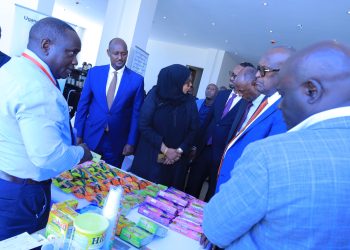




The Uganda Free Zones and Export Promotions Authority (UFZEPA) has conducted a training workshop for newly licensed Free Zone Developers and Operators on the effective use of the Uganda Electronic Single Window (UESW), reaffirming its commitment to enhancing investor support, regulatory compliance, and operational readiness within Uganda’s Free Zones.
The training, facilitated by the Uganda Revenue Authority (URA), brought together representatives of newly licensed Free Zones and UFZEPA technical staff to deepen their understanding of electronic trade facilitation processes and the role of the Uganda Electronic Single Window in enabling efficient business operations.
Participants received practical training on system registration, user access and navigation, customs documentation procedures, import and export processes, cargo clearance requirements, bond management, and operational reporting.
Speaking at the opening of the workshop, Ms. Rebecca Nalumu, Senior Manager for SEZ Operations and Compliance at UFZEPA, underscored the importance of digital trade facilitation in the successful operation of Free Zones.
“Effective utilization of the Uganda Electronic Single Window is critical for supporting import and export processes, customs documentation, bond management, cargo clearance, regulatory compliance, and accurate reporting of trade transactions. To achieve efficiency and compliance, Free Zone operators must be equipped with practical knowledge and hands-on experience in the use of the system,” she said.
The workshop featured practical demonstrations and interactive discussions on common challenges encountered when using electronic trade systems. These sessions enabled participants to clarify procedures, strengthen their understanding of compliance requirements, and enhance their capacity to manage trade-related transactions through government digital platforms.
Addressing participants during the training, Mr. Charles Rumanyika, Senior Customs and Risk Management Officer at the Uganda Revenue Authority (URA), highlighted the broader economic benefits of formalizing trade through systems such as the Uganda Electronic Single Window.
“Our goal through initiatives like this is to bring more Ugandans into the formal economy. This is not only about attracting large investors; it is also about enabling small and medium-sized enterprises to formalize their businesses, create jobs, and contribute to national revenue. When more people buy Ugandan products, we stimulate local production, expand the tax base, and build a stronger and more resilient economy,” he noted.
The training forms part of UFZEPA’s broader investor aftercare and capacity-building programme aimed at supporting the successful establishment and operation of Free Zones across Uganda. Through such initiatives, the Authority continues to provide technical guidance and support to investors and exporters while promoting compliance, competitiveness, and sustainable export growth.
UFZEPA remains committed to fostering a conducive environment for investment, industrialization, and export development in line with its mandate of driving Uganda’s economic transformation and prosperity.