



By: Sekuma S Peter, Executive Director- NETWAS Uganda
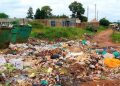
The majority of communities already certified as Open Defecation Free are not, by any serious measure, sanitation-safe
On 23 March 2026, Uganda launched the world’s first Water, Sanitation and Hygiene National Adaptation Plan, a landmark that positions Uganda as a global leader in climate-resilient WASH policy. But this milestone will remain incomplete unless Uganda confronts a failure hiding in plain sight.
According to the WHO/UNICEF Joint Monitoring Programme (JMP), only 20 percent of Ugandans have access to safely managed sanitation services as of 2024. Uganda’s Economic Policy Research Centre (EPRC) estimates that inadequate WASH costs the country approximately UGX 5.9 trillion annually, nearly 3 percent of GDP through premature deaths, healthcare costs, and lost productivity, with around 114,000 WASH-related deaths each year, most among children under five. Most of these deaths are preventable. We are paying an enormous price for stopping at the wrong milestone.
Uganda’s Community-Led Total Sanitation (CLTS) programme has genuinely changed behaviour across hundreds of rural communities. But research consistently shows that more than half the investment in producing ODF communities is lost during the maintenance phase. ODF certification confirms that every household has a latrine on the day of verification. It says nothing about what happens when the pit fills, when the structure floods, or when the household grows. A built latrine is not the same as a safe one.
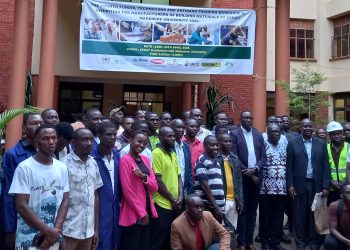
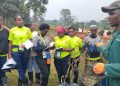
Recent work in Agago District provides critical insights into this transition. In an effort to strengthen post-ODF sustainability, the District Health Team found that existing checklists capture latrine coverage and the absence of open defecation but contain no indicators for groundwater contamination risk, structural durability, climate resilience, or accessibility for persons with disabilities and older persons. “There are gaps in what we are currently measuring,” acknowledged District Health Inspector Samuel Okiror, granting permission to revise the district’s tools. A community can score 100 percent on the standard checklist while remaining actively exposed to fecal-oral disease pathways. This is not a technical failure. It is a monitoring failure and Agago is not an exception.
Climate change is accelerating the problem across the region. In August 2025, floods across Northern Uganda waterlogged nearly 700 toilets in Alebtong District alone. Across the Acholi sub-region, rising groundwater collapses latrines each rainy season, forcing communities back to open defecation while they wait to rebuild. For many families, each collapsed latrine means renewed exposure to disease and loss of dignity. Uganda’s new WASH-NAP rightly identifies climate as the defining threat to WASH infrastructure. But climate-resilient infrastructure means nothing if our monitoring systems cannot detect when sanitation is failing.
The World Health Organization’s Sanitation Safety Planning (SSP) framework offers a practical way forward. SSP is a tool that helps identify and manage health risks at every stage of the sanitation process from waste containment and collection to transport, treatment, and safe disposal. Piloted originally in Kampala and updated in 2022 to incorporate climate risk, it is not a foreign concept. Embedding SSP into post-ODF monitoring would mean that an inspector in Agago or anywhere in Uganda asks not only whether a household has a latrine, but whether it is safely sited, structurally resilient, and part of a managed service chain. Not a new system. A better checklist.
Communities deserve sanitation systems that remain safe long after a village is declared open-defecation-free. Three actions can help achieve this. The Ministry of Water and Environment should anchor community-level SSP as a core mechanism in the WASH-NAP implementation roadmap. And development partners financing post-ODF programmes should align their monitoring frameworks to these revised national standards rather than maintaining parallel, project-specific metrics.
Uganda has something worth protecting. Two decades of CLTS have shifted norms and built a foundation few countries in this region can match. But as the evidence from Agago confirms, the tools we use to protect that foundation are not yet fit for purpose. A latrine that is safely sited, structurally sound, emptied through a managed chain, and accessible to every member of the household is a public health achievement. Uganda certified the former. It is time we insisted on the latter.
We therefore ask the government specifically District Local Governments (DLGs) and the line ministries of Health and Water and Environment to jointly revise the National Post-ODF Sustainability Guidelines, embedding Sanitation Safety Planning (SSP) risk indicators into the national monitoring frameworks executed by district health teams nationwide, because sanitation that fails silently still costs lives.