


Uganda has entered a critical 42-day surveillance period required by the World Health Organization (WHO) before the country can be officially declared free of its latest Ebola outbreak, following the discharge of the final confirmed patient.
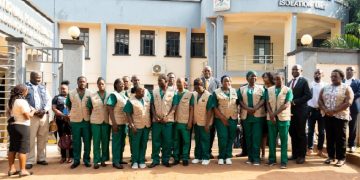
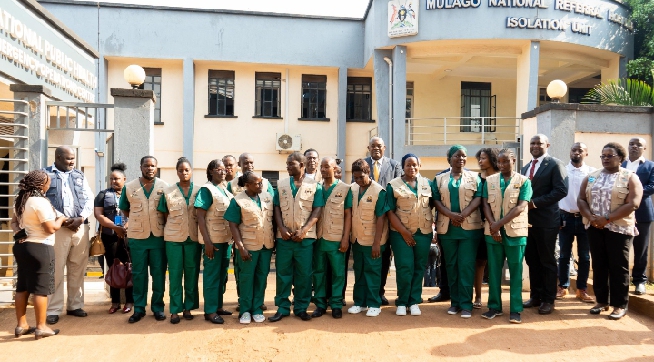
The survivor, who was infected with the Bundibugyo strain of the Ebola virus, was released from the Ebola isolation unit at Mulago National Referral Hospital on July 16, 2026, marking a major milestone in Uganda’s response to the outbreak.
Health Minister Dr. Chris Baryomunsi presented the patient with an Ebola Virus Disease (EVD) discharge certificate, confirming that medical tests showed the survivor was no longer infectious and could safely return to normal community and professional life.
“This certificate confirms that, as of July 16, 2026, the survivor does not pose a risk of transmitting Ebola to others,” Baryomunsi said during the discharge ceremony. “His health condition does not present a danger to the community, and he can resume his daily activities.”
The WHO’s 42-day countdown represents two full incubation periods of the Ebola virus. If no new confirmed infections are recorded during this period, Uganda will be officially declared free of the outbreak.
The outbreak was caused by the Bundibugyo strain, a less common variant of the Ebola virus that has previously affected Uganda.
The country has experience managing Ebola outbreaks caused by both the Sudan and Bundibugyo strains and has developed one of the continent’s strongest emergency response systems.
Health authorities credited improved treatment approaches and stronger clinical support systems for helping increase survival rates among patients during the latest outbreak.
While there is no universally approved specific cure for Ebola, patients receive intensive supportive care, and some experimental treatments may be provided under special medical guidelines.
Uganda’s response included rapid case identification, contact tracing, laboratory testing, infection prevention measures, and community awareness campaigns.
The Ministry of Health worked alongside the WHO and other international partners to contain the spread of the virus.
Officials emphasized that despite the successful recovery of the last patient, heightened surveillance will continue throughout the 42-day monitoring period to quickly identify and respond to any possible new cases.
Uganda has repeatedly demonstrated its capacity to control Ebola outbreaks through swift public health action.
Authorities remain optimistic that the country will soon achieve official Ebola-free status if no further transmission occurs during the surveillance period.