


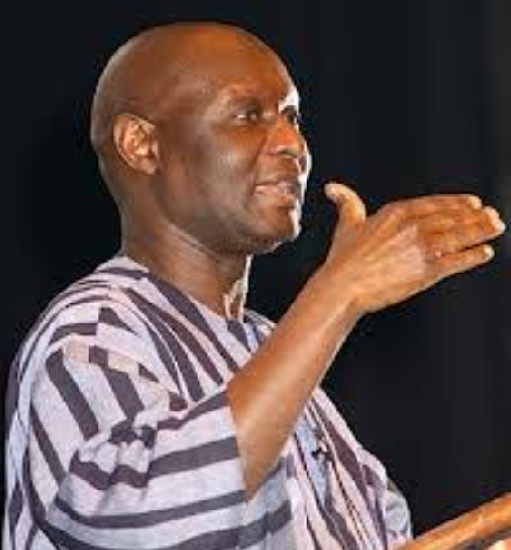
Uganda’s candidate for United Nations secretary-general, Olara Otunnu, has made a surprise advance in the latest Security Council straw poll, gaining support despite entering the race only last month.
According to an article by Salim Lone in New York, Otunnu received five “encourages” in Friday’s confidential poll, up from two in July.
Reports indicate that Otunu was the only candidate to increase his support, while several of his more established rivals lost ground.
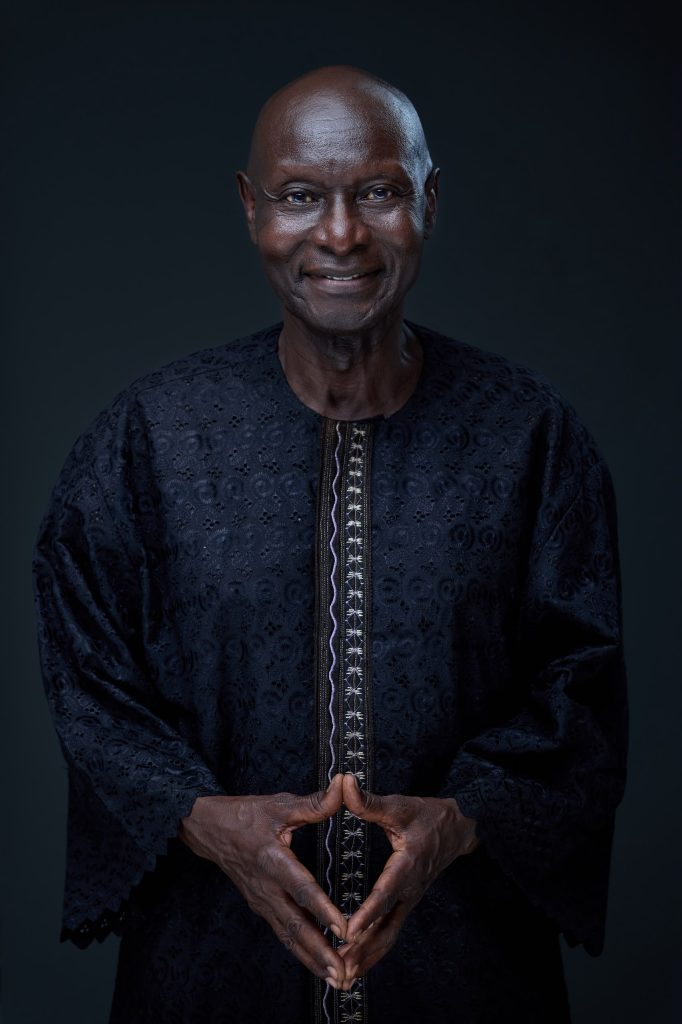
Argentina’s Rafael Grossi remained on seven votes and Senegal’s Macky Sall on six. Guyana’s former foreign minister Carolyn Rodrigues-Birkett, who had led the field with 10 votes in July, fell by two. Former Chilean president Michelle Bachelet also lost two votes.
The result came just two days after Otunnu presented his vision for reforming the United Nations during an interactive dialogue with members of the General Assembly and civil society groups.
His performance appeared to give fresh momentum to a candidacy that initially seemed unlikely to gain traction. Otunnu was nominated by President Yoweri Museveni in late July, decades after he twice came close to securing the UN’s top job.
The timing of his nomination has raised questions about whether he can overcome the advantages enjoyed by candidates who began campaigning much earlier, as well as the growing pressure for the UN to elect its first woman secretary-general.
Latin America and the Caribbean are also seeking greater consideration, having not produced a secretary-general for more than three decades.
Yet Otunnu has an unusual history with the UN leadership contest.
In 1981, at the age of 31, he became president of the Security Council at a moment when Cold War divisions had paralysed the body. The council had failed repeatedly to agree on a successor to Secretary-General Kurt Waldheim, who was seeking a third term.
Otunnu helped broker a compromise that cleared the way for Peru’s Javier Pérez de Cuéllar to become secretary-general. During the process, he also introduced the confidential straw-poll system used by the Security Council to test candidates’ acceptability before a formal vote.
The method became known as the “Otunnu Formula” and remains part of the selection process — meaning the system he helped create is now being used to assess his own candidacy.
Otunnu subsequently served as Uganda’s foreign minister and later became president of the International Peace Academy in New York. He was also a leading contender for the secretary-generalship in the 1990s.
In 1991, his bid was blocked amid opposition from the Ugandan government. In 1996-97, he again emerged as a serious contender, but the United States backed Kofi Annan after Washington opposed a second term for Boutros Boutros-Ghali.
Annan later appointed Otunnu as UN under-secretary-general and special representative for children and armed conflict, a position he held from 1998 to 2005.
In that role, Otunnu became known for publicly identifying governments and armed groups responsible for abuses against children in conflict zones, helping to elevate the issue on the international agenda.
His latest campaign has also been shaped by an unusual period away from international politics.
About five years ago, Otunnu returned to Gulu in northern Uganda after decades in the international diplomatic arena. He began working at community level to support the region’s recovery from the devastation caused by the Lord’s Resistance Army insurgency and the wider civil war.
The decision took him largely out of the global spotlight. Supporters argue that the experience strengthened his understanding of the gap between international declarations and the realities faced by communities emerging from conflict.
Following Museveni’s nomination, Otunnu asked that former Ugandan prime minister Ruhakana Rugunda lead his lobbying team. Rugunda, a veteran of Uganda’s political establishment, has since played a prominent role in the campaign.
The latest straw poll does not, however, determine who will become secretary-general.
The final choice rests with the Security Council’s five permanent members, the United States, China, Russia, France and Britain — before the General Assembly formally appoints the successful candidate.
Their strategic interests, as well as geographical and political considerations, are likely to shape the final outcome.
The contest is unfolding against a backdrop of wars, geopolitical tensions, widening inequality and growing questions about the effectiveness and authority of multilateral institutions.
For Otunnu, the central argument is that the UN’s greatest asset remains its moral authority, an authority he says must be restored through stronger leadership and institutional reform.
Whether that message can translate into the votes needed to reach the secretary-general’s office remains uncertain.
But Friday’s result has already altered the dynamics of the contest: a candidate who entered the race late has, for the first time, begun moving up the field.