



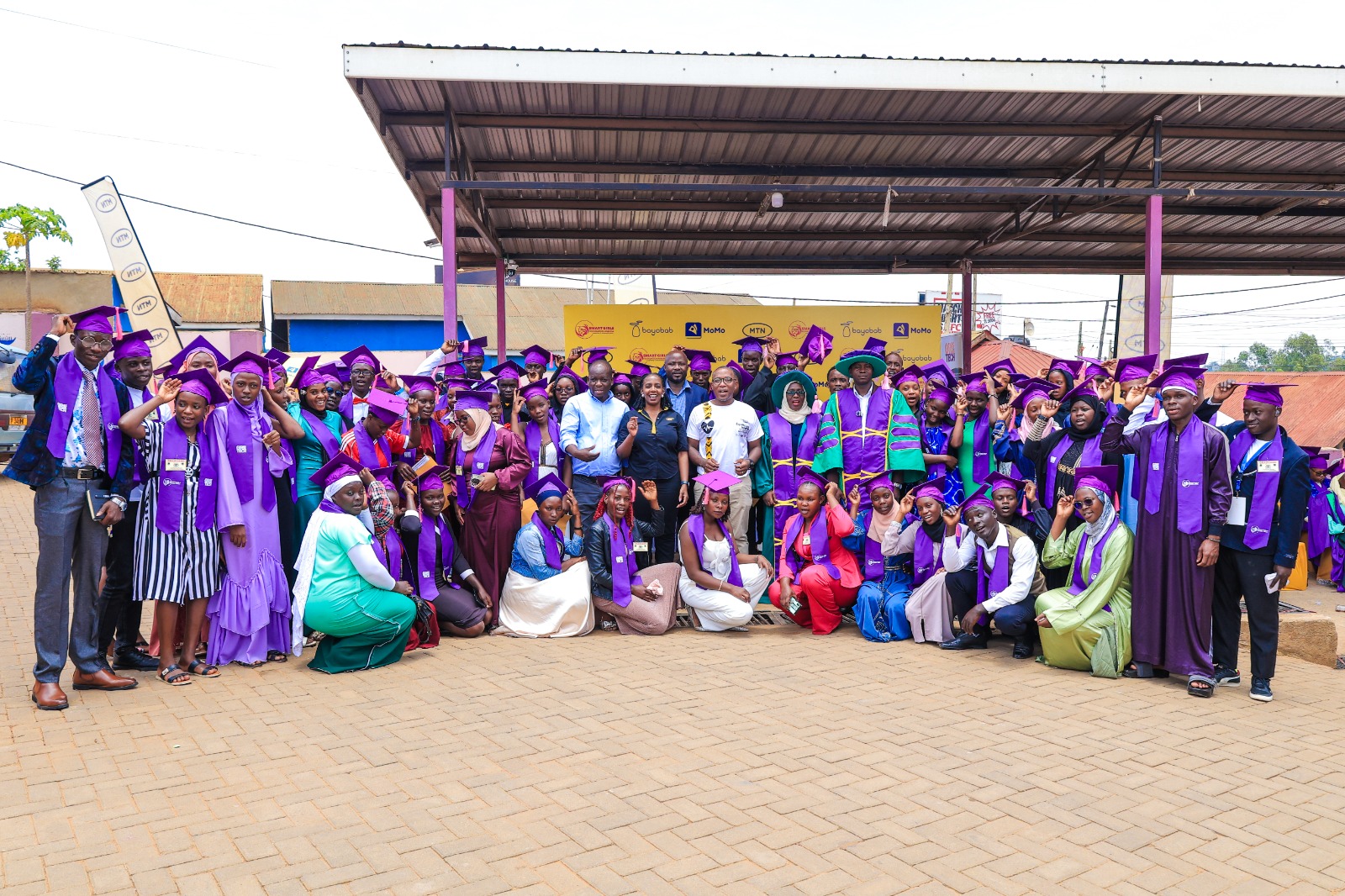
MTN Foundation and Smart Girls Foundation have graduated 201 young people from digital and vocational training programmes, advancing a shared commitment to youth economic empowerment by equipping young people with the skills, knowledge and confidence needed to pursue employment, start businesses and improve their livelihoods.
They include 183 young graduands who completed information and communications technology training under the Girls in Tech programme and 18 young graduands who completed training in vocational disciplines such as electrical installation, plumbing, motor vehicle mechanics and tailoring.
The graduands received certificates from the Uganda Vocational and Technical Assessment Board, which operates under the Ministry of Education and Sports, responsible for the assessment of technical and vocational training programmes.
The initiative comes at a time when Uganda is seeking to unlock the economic potential of its youthful population. With more than 70% of the population below the age of 30, expanding access to skills, employment and entrepreneurship opportunities remains critical to creating inclusive economic growth and addressing youth unemployment.
Speaking at the graduation ceremony, Rhona Arinaitwe, MTN Senior Manager Corporate Communications and Public Relations, said the programme is designed to give young people the tools they need to become economically independent and contribute meaningfully to national development.
“Today’s celebration is about more than completing a course. It is about opening doors to opportunity and creating pathways to economic independence.”
“By equipping young people with practical digital and vocational skills, we are enabling them to secure employment, start enterprises, generate income and build better futures for themselves, their families and their communities.”
The partnership between MTN Foundation and Smart Girls Foundation began in 2019 with 30 young women trained in motor vehicle mechanics. Since then, more than 1,300 young people have completed digital and ICT training, while over 130 have acquired vocational skills through the programme.
The growth of the initiative reflects increasing demand for market-relevant skills that prepare young people to participate productively in Uganda’s economy. As industries continue to evolve, practical training has become an important pathway to employment, entrepreneurship and self-reliance.
Jamila Mayanja, Founder of Smart Girls Foundation, said the programme continues to transform lives by helping young people access opportunities that were previously beyond reach.
“We started with 30 girls in mechanics. Today we are seeing hundreds of young women gaining skills that position them to earn an income, build careers, start businesses and participate in sectors that are shaping the future economy.”
The programme is also helping increase women’s participation in industries where they have traditionally been underrepresented, including technology, electrical installation and motor vehicle mechanics.
While the programme prioritises girls and young women, who make up 80% of participants, it also allocates 20% of places to young men as part of a broader commitment to inclusive development. The approach reflects a shared belief that sustainable economic empowerment is achieved when both women and men have access to the skills, opportunities and support needed to participate meaningfully in the economy.
For graduates such as Halimah Nairah Nanyange, the training has already translated into economic opportunity. After completing electrical installation training, she went on to establish a solar energy business.
“This training gave me the confidence to pursue a career that once seemed unattainable. Today, I have the skills to support my family, run my own business and contribute to my community.”
The Chief Guest, Kasangati Town Council Mayor Baker Kazibwe, commended the partnership between government, the private sector and civil society in creating opportunities that prepare young people for the future of work and strengthen their economic resilience.
The initiative forms part of MTN Foundation’s broader strategy to drive youth economic empowerment through skills development. Complementary programmes such as MTN ACE and the MTN Skills Academy provide digital and technology-focused training that equips young people to participate meaningfully in the digital economy as employees, entrepreneurs and innovators.
Through these interventions, MTN Foundation continues to invest in creating a generation of economically empowered young people capable of creating jobs, driving innovation and contributing to Uganda’s long-term socio-economic transformation.
The programme also supports Uganda’s Vision 2040 aspirations and contributes to the achievement of the Sustainable Development Goals related to quality education, decent work and economic growth, gender equality and innovation.