



The Minister of Lands, Housing and Urban Development, Judith Nabakooba, has warned government officials against developing an “appetite” for public land as the government moves to establish a comprehensive inventory of its land and clean up the national land register.
Nabakooba said government land has suffered extensive grabbing, encroachment and unplanned developments, with some officials allegedly allowing public land to be converted into private investments and settlements.
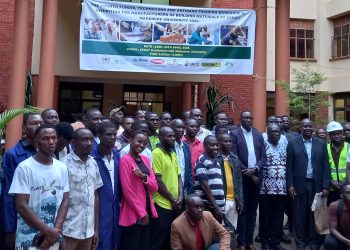
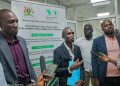
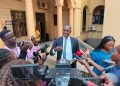
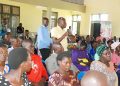
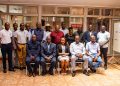
She made the remarks on Thursday at Ridar Hotel in Seeta, Mukono, during a regional stakeholders’ workshop on the development of a comprehensive government land inventory.
The workshop brought together district leaders and land management stakeholders from Mukono, Wakiso, Buikwe, Kayunga, Nakasongola, Luweero, Nakaseke, Buvuma and other districts.
The exercise seeks to establish accurate information on government land, including its location, size, ownership, use and documentation, while identifying land that has been encroached upon or affected by irregular transactions.
 Nabakooba said the time had come for local leaders to take deliberate action to protect public land.
“Government land has suffered from grabbing, from encroachers, from putting unstructured things or developments. This is the time as leaders to wake up, be intentional and committed to protect government land,” she said.
She warned government officials against treating public land as an opportunity for personal investment.
“The issue of people feeling like government land is not theirs. We should know that, of course, government land is not ours. It is for Ugandans, and we are holding it or keeping it on behalf of Ugandans,” Nabakooba said.
“And that’s why people in government should refrain from developing the appetite for government land. They should refrain from developing the appetite for government land.”
The Minister said government officials should instead serve as the first line of defence in protecting public assets.
“We should be the first line of defence or protection of such pieces of land. Then we know how to use it on behalf of the people of Uganda,” she said.
Nabakooba said some individuals have established private investments and settlements on government land without legal authority, with some continuously expanding their developments.
“We are saying no. Enough is enough. We must protect government land as institutions,” she said.
She also revealed that the government intends to scrutinise land that has already been encroached upon and require occupants to explain how they acquired it.
“The land which is encroached. We are going to engage stakeholders and task them to provide documentation on how they came onto that piece of land,” Nabakooba said.
“If they don’t have, then I’m worried they may have to leave such pieces of land, especially if it is government land.”
Over 1,000 Titles Cancelled in Mukono
Nabakooba cited the scale of land management problems in Mukono, saying the government had previously cancelled more than 1,000 titles arising from one block.
“Last year we cancelled over 1,000 titles on that one block in Mukono. Me, that shows the extent of the problem we are tackling,” she said.
She said the government must systematically clean the land register to eliminate overlaps and double titling.
“That means that we have to handle and clean our register systematically to remove the overlaps, but also the double titling,” Nabakooba said.
The Uganda Land Commission Chairperson, Prof. Pen-Mogi Nyeko, clarified that the commission is not opposed to government land being allocated for private investment but said such allocations must follow the law.
“When I say giving out government land is not good, I am meaning where you give it illegally,” Nyeko said.
He said government land should be allocated to individuals by the Uganda Land Commission rather than district land boards.
“Government land should only be given to individuals by the Uganda Land Commission, not the District Land Board,” he said.
According to Nyeko, district land boards are responsible for land belonging to individuals, while investors seeking government land should apply through the Uganda Land Commission.
“Somebody who wants land from government for his investment must come to Uganda Land Commission,” he said.
Nyeko said the problem with the irregular allocation of government land is that it deprives future generations of space needed for public infrastructure.
He cited schools and health centres whose land is increasingly being grabbed by private individuals.
“Many government school lands are being grabbed by individuals. The land belonging to health centres are being grabbed by individuals, but the population is growing,” Nyeko said.
He warned that the government could eventually be unable to expand public facilities if the land surrounding them is given away.
“Government may want to expand the hospital because with more population growing, there will be need to put more infrastructure in a school, more infrastructure in a health centre. But now, if you have given away that land to individuals, government will not be in a position to expand that hospital,” he said.
Nyeko said government land allocated for private investment should be leased rather than given away on freehold tenure.
“It is leased because this land belongs to government, but you lease it for use,” he said.
He gave an example of an investor who could be given government land for a hotel for a specified period, after which the government could recover the land for another public purpose if necessary.
“If government wants to put their hospital, a government project, they will take it away from you, put their public hospital, a public university, or a public development,” Nyeko said.
He urged district leaders to protect government land so that future public projects can be accommodated in the same areas.
“The local leaders in every district, the chairman LC5, the chairman Land Board, the RDC… and everybody must make sure they don’t give government land to individuals,” he said.
Mukono RDC Raises Concerns Over Land Boards
Mukono Resident District Commissioner Hajati Fatumah Nabitaka said the district has experienced challenges involving the allocation and management of public land.
She said some district land boards have allocated public land to investors and individuals despite the land being required for government purposes.
“We’ve had quite a lot of challenges in the district, Mukono, where I work, that the district land boards do parceling or give out land to different investors and other stakeholders for individual uses,” Nabitaka said.
“Yet this public land is supposed to be for government use.”
Nabitaka said the inventory would help the government establish exactly what land it has and preserve it for future investments and public projects.
“We are supposed to do the inventory of this land to see what we have in our custody as government, so that when we have an investor that is willing to do something that is for… government, we can have an allocation which is intact,” she said.
She said parts of Mukono are already experiencing encroachment and disputed land allocations.
“When you move around Mukono in the sub-counties of Mpata, Nteng, we are seeing encroachment,” Nabitaka said.
She also raised concerns about decisions made by land boards without adequate involvement of other stakeholders.
“We are here to see the roles of each stakeholder to see how best we can have data, which data is not like data which is not having enough evidence,” she said.
Nabitaka further questioned why some public land is allocated to individuals for private interests instead of being reserved for strategic government development.
“We are here to see why allocations are given to people who are having individual interests instead of having intentional decision makers,” she said.
She said authorities would also examine ways of cancelling titles that were fraudulently or irregularly issued and strengthen systems to prevent double titling.
“For example, in Mukono Central Division, we have a plot of 330 that had almost three titles for each plot. But those titles were cancelled, and the system was cleared. Now we are having one title,” Nabitaka said.
The RDC also criticised the conversion of public land into freehold land, saying the practice creates costly legal battles for the government.
“We are seeing a challenge of having public land, and again another tenure system of having a freehold, changing the tenure from public land to freehold, which is costing a lot of money for the government and for the ministry to go to courts of law,” she said.
She called for reforms in the land management system to prevent politically influenced decisions and improve accountability within district land boards.
“We need to streamline the issues, and we get a better land management system in the country,” Nabitaka said.
ULC Seeks Detailed Government Land Database
Meanwhile, Uganda Land Commission Secretary Andrew Nyumba said the commission already has records of government land, but the existing information is not comprehensive enough to provide a complete picture of public land across Uganda.
He said the new inventory will go beyond simply compiling a list of titles.
“A comprehensive government land inventory should ultimately provide government with a reliable, structured and continuously updatable picture of its land assets,” Nyumba said.
He said the exercise should establish key information about every government land holding, including its location, size, boundaries, ownership, responsible institution, current use, intended public purpose, registration status and whether it is occupied or encroached upon.
Nyumba said the commission will verify information from multiple sources, including land registries, ministries, local governments, district land boards, survey records, institutional asset registers, historical records and communities.
“The objective is, therefore, not to force every parcel into a clean database regardless of the underlying evidence, but to produce an inventory whose reliability can be assessed and whose understanding gaps are clearly identified,” he said.
He added that discrepancies between records will be treated as areas requiring further investigation.
“A discrepancy in information is not necessarily a failure of the exercise. It is also information. It tells us where further technical work is required,” Nyumba said.
The comprehensive inventory is expected to help the government identify and secure land for public facilities, infrastructure, industrialisation and other future development while reducing encroachment, double titling, irregular allocations and land disputes.
Nabakooba said the government is undertaking the exercise not only to protect existing public assets but also to ensure that land remains available for future generations.
“We are doing it for today, but also for the future generations to come,” she said.