


President Yoweri Museveni has directed the Office of the Prime Minister (OPM) to stop relying on its contracted suppliers to distribute emergency food relief in the drought-hit Karamoja sub-region, instead ordering that the exercise be handled by the Uganda People’s Defence Forces (UPDF) and the Uganda Prisons Service.
The directive comes as the government rolls out an emergency relief operation targeting hundreds of thousands of people facing acute food shortages after months of prolonged drought.
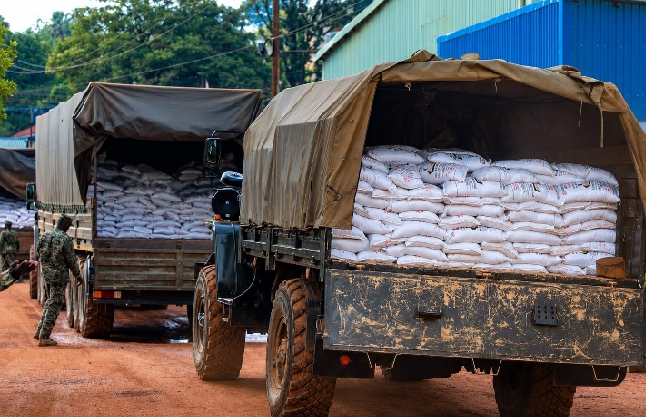
Last week, the government flagged off the distribution of 552 tonnes of maize flour and 238 tonnes of beans to the worst-affected districts of Kaabong, Kotido, Moroto, Karenga and Nabilatuk. The relief effort is being financed through Shs45 billion in emergency funding authorised by President Museveni.
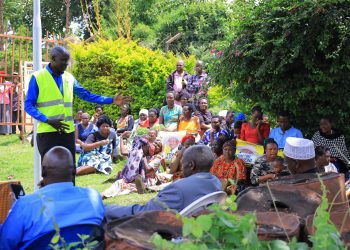
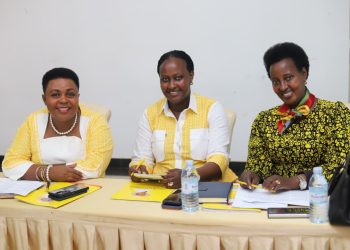
Speaking in Rubirizi District on July 17, the Minister of State for Northern Uganda in the Office of the Prime Minister, Grace Freedom Kwiyucwiny Akori, said the President had instructed the government to entrust the supply of relief food to the UPDF and the Uganda Prisons Service rather than private contractors previously engaged by the OPM.
“I want to thank the President for his wise guidance. This time we are not using contractors,” Akori said.
“He argued that we should not rely on the suppliers that OPM has procured. We should rely on the UPDF and the Prisons, who have sufficient food stocks. OPM has therefore signed a memorandum of understanding, and NEC will handle the supply of the food.”
Akori said the OPM would retain responsibility for overseeing the exercise to ensure relief reaches the intended beneficiaries.
“Our role is to monitor the delivery of the food until it reaches the local governments,” she said. “From there, local governments will take over the distribution. We have instructed that the food be delivered directly to sub-county headquarters to minimise delays and prevent mishandling.”
She expressed confidence that the new distribution arrangement would improve accountability and ensure timely delivery of food to vulnerable households.
Karamoja is experiencing one of its most severe droughts in recent years after rains largely failed following the first week of May.
The prolonged dry spell devastated crops planted at the beginning of the season, worsening food insecurity across the sub-region, where many households depend on rain-fed agriculture.
According to the Office of the Prime Minister, about 600,000 vulnerable people are currently facing acute hunger and require urgent humanitarian assistance.
Akori said the government, through Operation Wealth Creation (OWC), had also secured seed supplies that would be distributed before the expected onset of rains in August to enable farmers to plant immediately.
She said the intervention forms part of broader government efforts to support long-term food security in Karamoja, including promoting the four-acre farming model to help households improve agricultural production and reduce poverty.