



The Government of Uganda has officially launched a nationwide mandatory newborn screening programme for sickle cell disease (SCD) as part of a comprehensive effort to reduce mortality and long-term complications associated with the genetic condition.
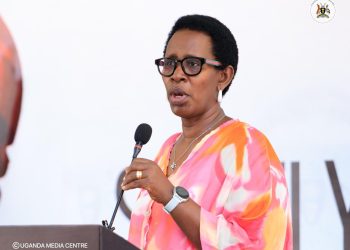
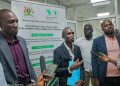
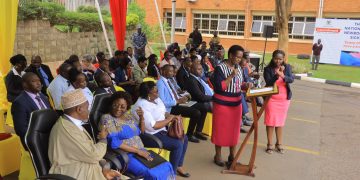
The programme was launched on Monday at the Ministry of Health headquarters by the Permanent Secretary, Dr Diana Atwine, under the theme “Every child in Uganda must have a known sickle cell status.” The initiative is an evidence-based intervention aimed at strengthening the prevention, early diagnosis and management of sickle cell disease across the country.
Under the new programme, all babies born in Uganda will be screened for sickle cell disease at birth, enabling early identification of affected infants before the onset of symptoms and facilitating timely, life-saving interventions.
Dr Atwine said the government has fully integrated sickle cell disease prevention, diagnosis and care into the national public health system to ensure universal coverage.
“We have integrated sickle cell disease prevention, diagnosis and care into our public health system. We no longer want this to be verticalised. Wherever you go in our hospitals, children will be screened at birth, and those found with sickle cell disease will be followed up,” she said.
She further noted that government has established specialised sickle cell clinics across the country to manage complicated cases, including children presenting with severe complications such as organ failure.
“That is why we need highly specialised care, and that is why we have established sickle cell clinics where these children can receive proper treatment,” Dr Atwine added.
According to the Permanent Secretary, health workers nationwide have been trained using standardised clinical guidelines to ensure uniform, high-quality care for patients with sickle cell disease.
“Government has disseminated clinical guidelines and trained health workers across the country so that they all know how to take care of children with sickle cell disease,” she said.
The programme will also be supported by the introduction of rapid diagnostic test kits, similar to those used for HIV testing, to make newborn screening faster and more accessible. Dr Atwine confirmed that the Ministry of Health is ensuring the availability of these kits in health facilities as the programme is scaled up nationwide.
In addition, medicines for the management of sickle cell disease have been included on the national essential medicines list, guaranteeing consistent supply in public health facilities.
Uganda remains one of the African countries most affected by sickle cell disease, with approximately 13.3 percent of the population carrying the sickle cell trait and more than 20,000 babies born with the disease each year.
During the launch, Dr Atwine also encouraged couples to undergo premarital screening to know their sickle cell status before planning to have children.
“With the excitement of Valentine’s Day, we encourage couples to take time to know their sickle cell status before planning for childbirth. If you both find that you are carriers, reconsider the relationship,” she said.
She cautioned that while emotional attachment may be strong, the lifelong burden and cost of caring for a child with sickle cell disease can be overwhelming.
The launch builds on the government’s broader efforts to combat sickle cell disease. In October last year, while launching the Sickle Cell Prevention and Management Scale-Up Programme in Soroti, the Minister of Health, Dr Jane Ruth Aceng, directed the immediate establishment of a National Taskforce for the Prevention of Sickle Cell Disease.
The taskforce is mandated to coordinate prevention, screening, treatment and public education initiatives aimed at reducing the burden of sickle cell disease on affected families and the national health system.