


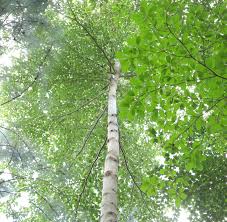
Kampala, Uganda — Uganda’s forests are making a remarkable recovery, thanks to long-term European Union support through the Sawlog Production Grant Scheme (SPGS). Since its launch in 2004, this flagship EU–Government of Uganda initiative has transformed the country’s commercial forestry landscape, boosted livelihoods, and restored vast areas of degraded land.
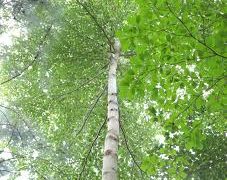
Now in its third phase, the EU-funded SPGS has established over 80,000 hectares of high-quality forest plantations, restoring thousands of hectares of previously degraded land and adding more than 28,000 hectares to Uganda’s total forest cover.
A Sustainable Response to Deforestation
Uganda once faced one of the highest deforestation rates in Sub-Saharan Africa—losing an estimated 2.4 million hectares of forest between 1990 and 2017 due to agricultural expansion, charcoal burning, and settlement. In response, the European Union partnered with the Government of Uganda to introduce SPGS as a long-term solution, promoting sustainable commercial forestry and reducing pressure on natural forests.
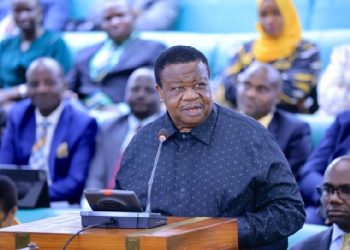
“The project was instrumental in building the entire commercial forestry value chain in Uganda,” said Alfred Okot Okidi, Permanent Secretary at the Ministry of Water and Environment. “SPGS brought structure, quality, and sustainability—from nurseries to plantation management.”
Restoring Forests and Creating Economic Opportunities
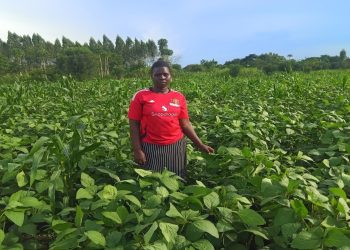
Beyond environmental recovery, SPGS has become a driver of rural development and employment. By providing grants and technical support, the project has empowered both smallholder and large-scale tree growers, even in semi-arid regions like Karamoja.
“Everyone is amazed that Karamoja can grow these trees,” said Hillary Agaba, Director of the National Forestry Resources Research Institute. “Through research and site-species matching, we’ve proven that commercial forestry is viable even in dry zones.”
Empowering Communities and Institutions
Implemented by the Food and Agriculture Organization of the United Nations (FAO), the third phase of SPGS focused on expanding private sector participation and community engagement. More than 240 rural community groups and 250 public and private institutions—including schools and hospitals—received training, quality seedlings, and technical support to establish woodlots for bioenergy, income generation, and climate resilience.
“Good planting material gives us good trees, and good trees give us better products—whether timber or charcoal,” noted Evlyn Namukasa, a nursery grower from Kiboga.
Building Markets and Value Chains
To ensure sustainability, the EU has also supported value addition and market linkages. With SPGS backing, the Uganda Timber Growers Association (UTGA) has introduced modern processing technologies and launched a digital marketplace connecting producers and buyers, strengthening Uganda’s timber value chain.
“SPGS is bridging the gap between production and processing,” explained Leonidas Hitimana, SPGS Project Coordinator at FAO Uganda.
Training the Next Generation of Foresters
At Nyabyeya Forestry College, the EU-funded initiative has helped modernize forestry education by integrating courses on commercial forestry, tree nurseries, and plantation management.
“We used to focus on natural forest management,” said Richard Kisakye, Principal of the College. “Now we’re training foresters for the future—professionals who understand both conservation and commercial forestry.”
Sustaining the Gains
As the third phase concludes, partners are looking toward the future—calling for deeper investment in value addition, sustainable financing, and regional market access to ensure lasting impact.
“The EU is proud to have supported Uganda in building a sustainable forestry sector that benefits people, the environment, and the economy,” said Nadia Cannata, Head of Section for Sustainable Development at the European Union Delegation to Uganda. “We now need to strengthen synergies between conservation and commercial forestry for long-term growth.”
Antonio Querido, FAO Representative in Uganda, added: “SPGS has made a lasting contribution to reforestation and afforestation. It’s not just about trees—it’s about sustainable livelihoods and resilient ecosystems.”
A Model for Green Growth
The EU–Uganda partnership through SPGS stands as a model for effective public-private collaboration—one that restores landscapes, drives economic growth, and empowers communities to build a greener, more sustainable future.
Disclaimer
The views and opinions expressed in this article are those of the author(s) and do not necessarily reflect the official position of the European Union. Responsibility for the content lies solely with the author(s) and the publishing platform.